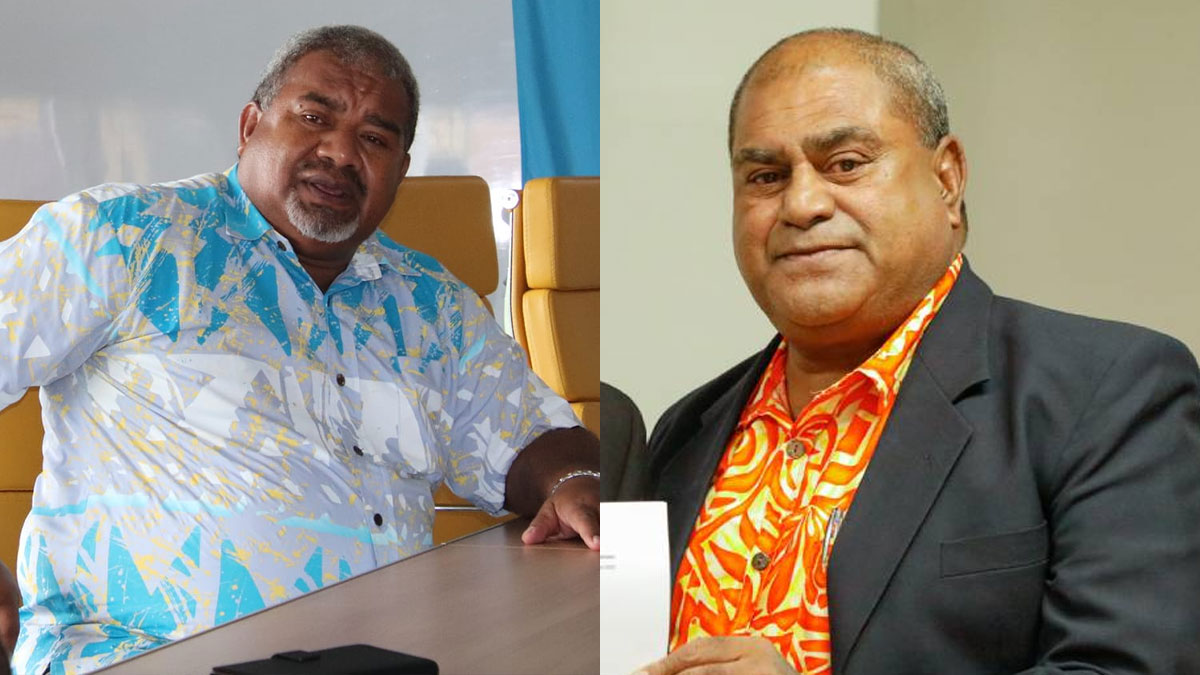
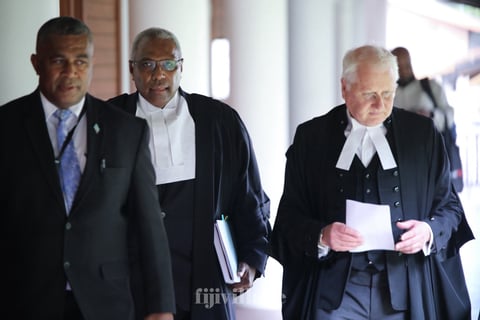
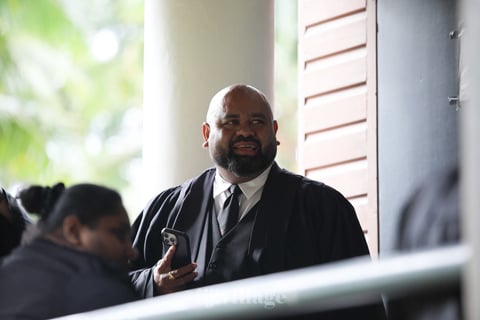
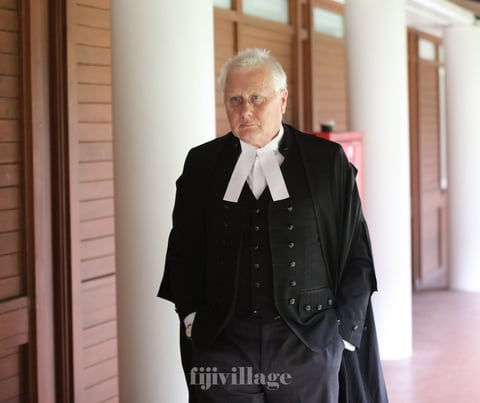
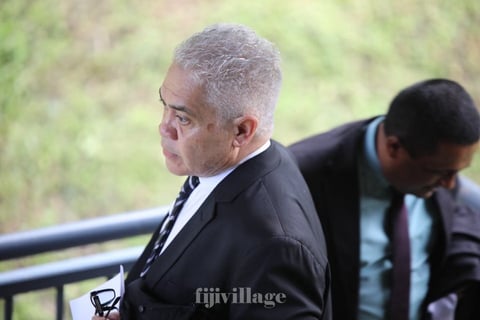
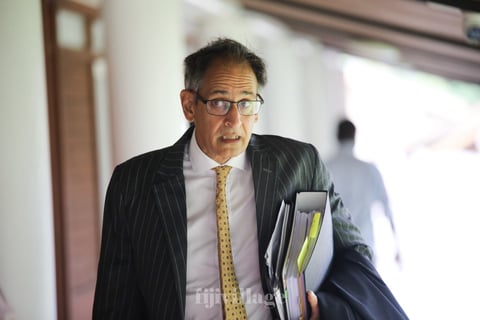
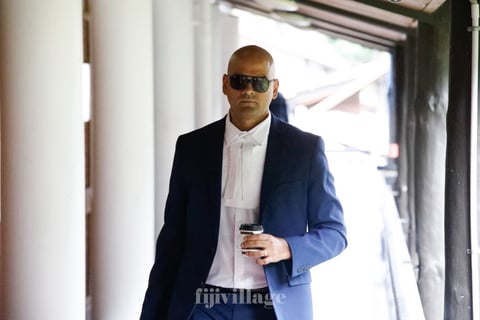
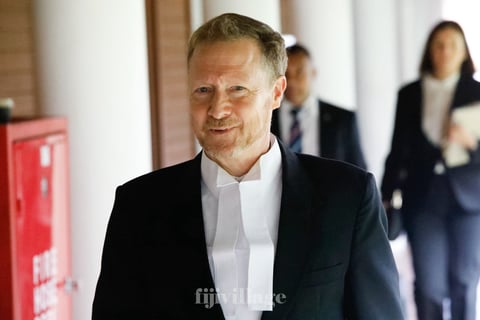
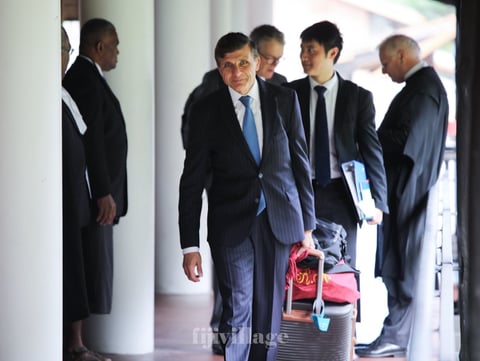
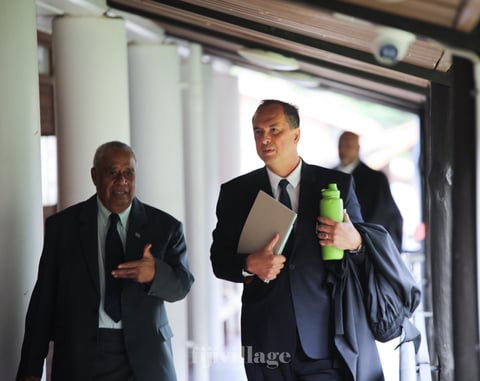
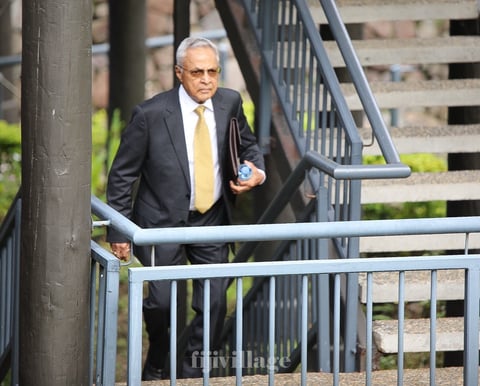
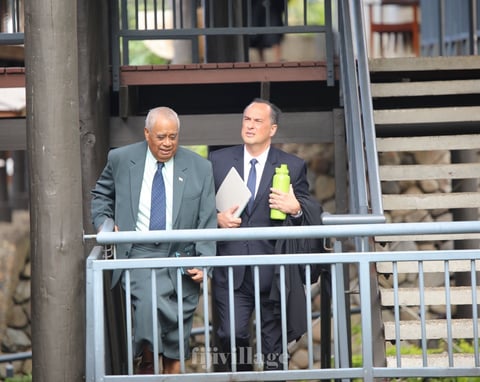
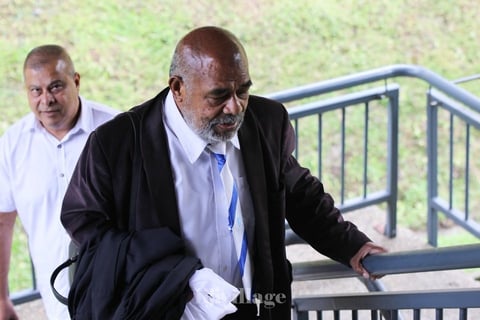
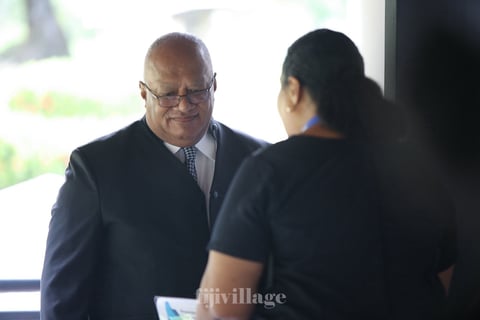
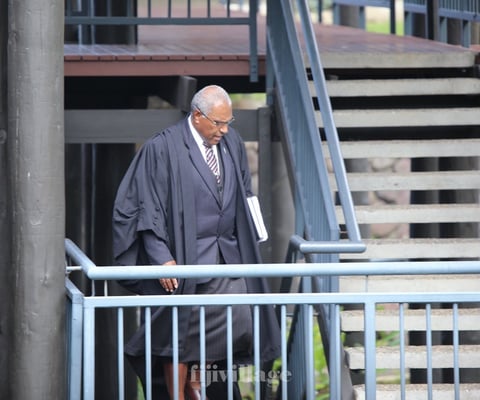
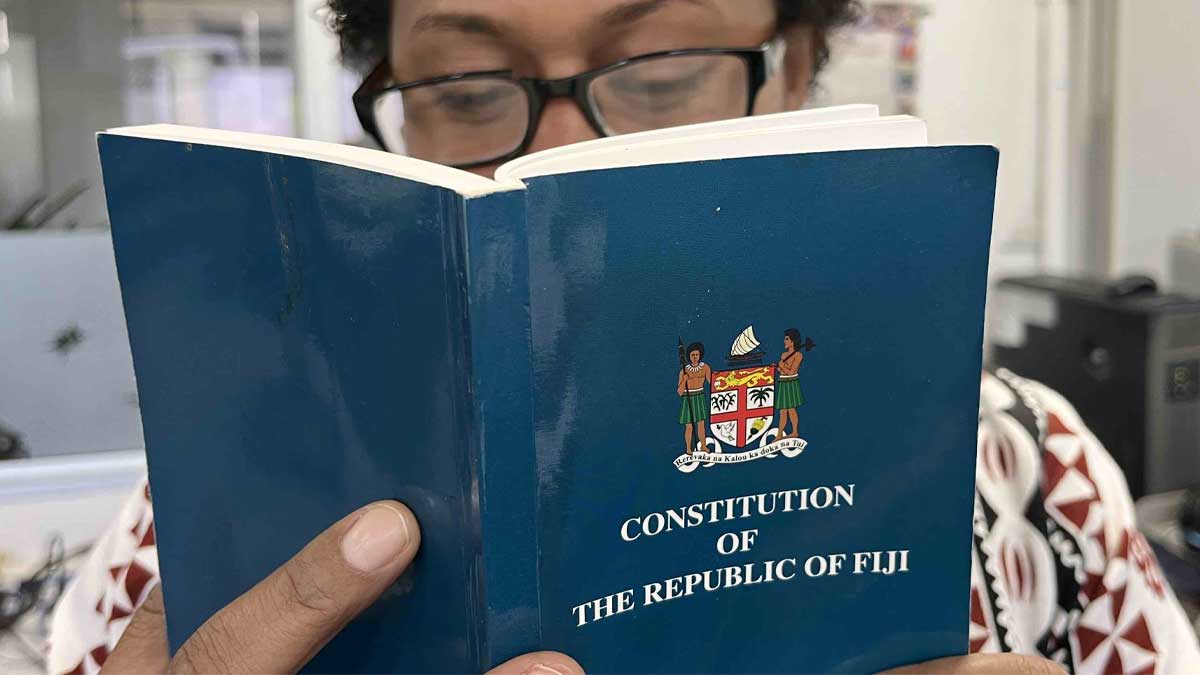
All parties represented in Parliament including the People’s Alliance, the National Federation Party, SODELPA, Leader of Opposition Inia Seruitatu’s faction, and Minister for Policing Ioane Naivalarua’s faction, Unity Fiji Leader Savenaca Narube, Fiji Labour Party Leader Mahendra Chaudhry, the Human Rights and Anti Discrimination Commission and the Fiji Law Society have been invited by the Supreme Court to make submissions in the matter where the Cabinet has sought the opinion of the Supreme Court on the interpretation of the 2013 Constitution.
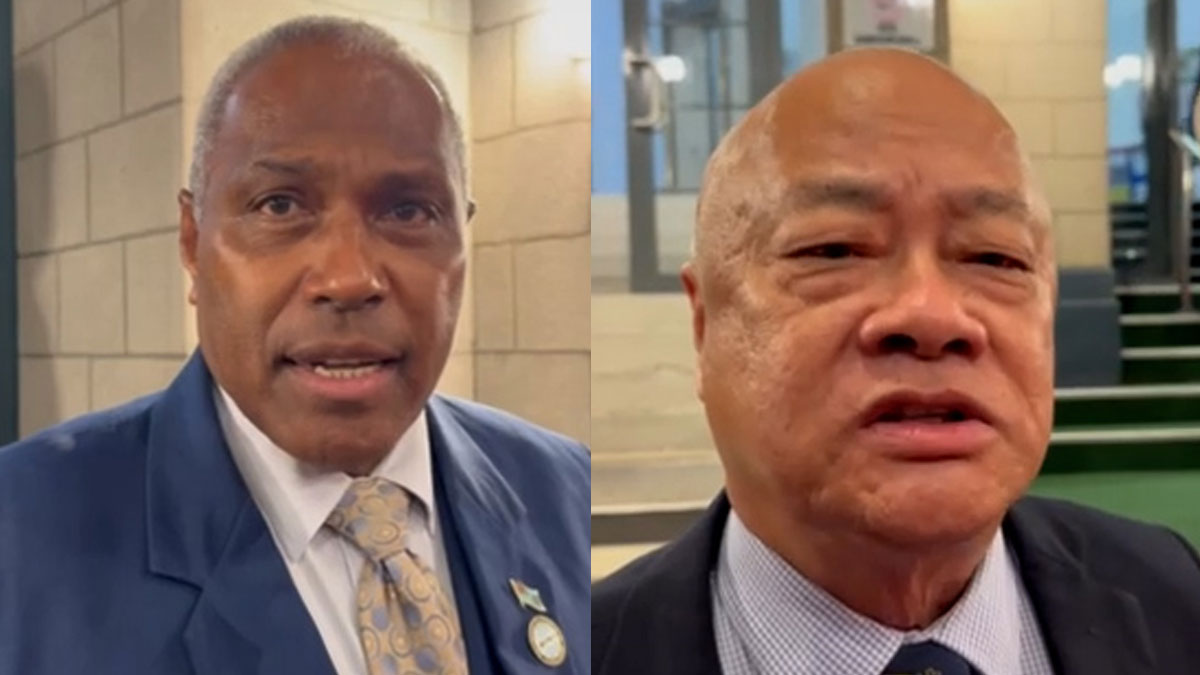
The Coalition Government will now regroup and take the 2013 Constitution amendment issue to the Supreme Court.
Minister for Justice, Siromi Turaga says this is urgent and they could go to court as early as next week.
Attorney General Graham Leung says they will regroup and see what is the next step.
Watch on TikTok
Leung says the constitution needs to be amended.
Deputy Prime Minister and Minister for Finance Professor Biman Prasad says he is disappointed because he feels that the opposition missed a historic opportunity to look at the review of the Constitution.
Professor Prasad says the opposition all agreed for the Constitution to be reviewed, but they were confused about the processes.
Watch on TikTok
He says this was a procedural Bill and one that would have started the process of a successful outcome for the review of the Constitution.
40 MPs voted for the Bill to amend the Constitution, 14 MPs voted against it while 1 did not vote. This means the 75 percent threshold set in the Constitution was not met.
He says this was a procedural Bill and one that would have started the process of a successful outcome for the review of the Constitution.
40 MPs voted for the Bill to amend the Constitution, 14 MPs voted against it while 1 did not vote. This means the 75 percent threshold set in the Constitution was not met.
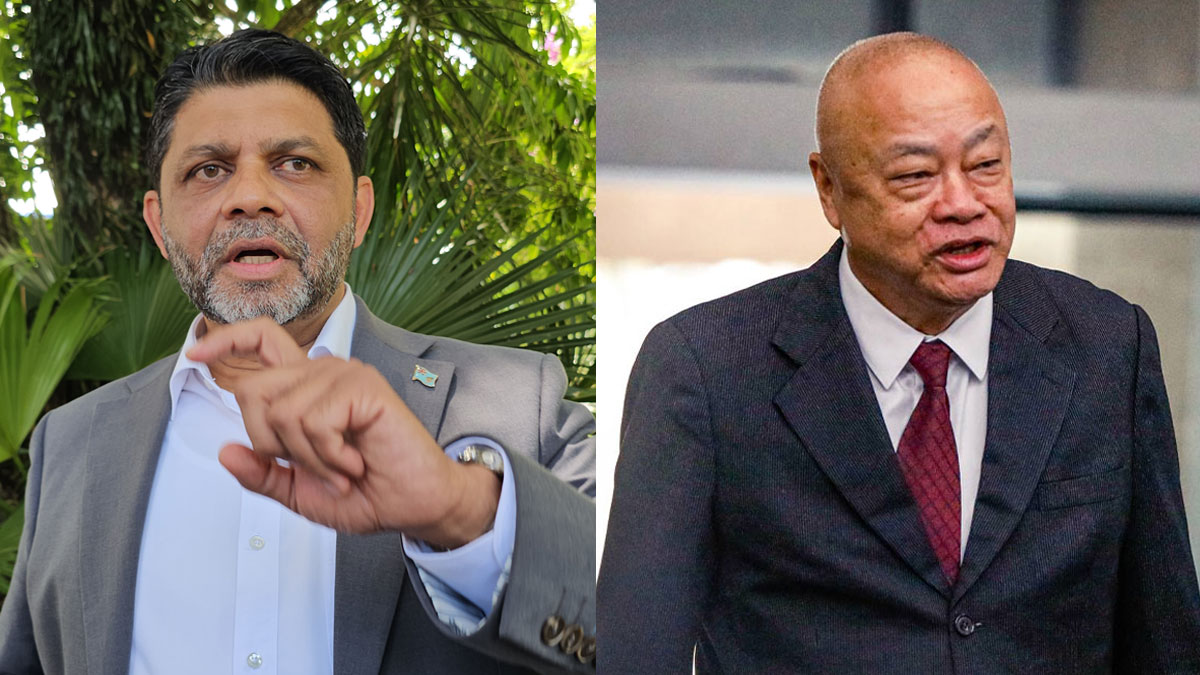
As the coalition government gets ready to take the 2013 Constitution to the Supreme Court for a determination on the amendment provision, former Attorney General who is one of the main architects of the constitution, Aiyaz Sayed-Khaiyum says the government needs to follow the provision that states that 75 percent of MPs and 75 percent of the total registered voters in a national referendum have to agree to any changes.
@fijivillage.com There was already an immunity provision in the previous constitution - Sayed-Khaiyum #fiji ♬ original sound - fijivillage
Although the 2013 Constitution did not go through the parliamentary process before it came into effect and also did not go through the national referendum process, Sayed-Khaiyum says the document was born out of the People’s Charter process and the government should follow what is in the document.
When questioned regarding the immunity clause in the constitution to protect those who were behind the 1987 and 2006 coups, Sayed-Khaiyum says there was already an immunity provision in the previous constitution.
While speaking in support for amendments, Attorney General, Graham Leung had said the current amendment provision makes it one of the hardest Constitutions in the world to amend.
@fijivillage.com Aiyaz wants parliament and referendum threshold followed #fiji #fyp ♬ original sound - fijivillage
He says it seeks an impossible level of participation and consensus, and it was meant to be that way to preserve forever the handiwork of those who imposed the 2013 Constitution.
Leung says it is not a mechanism to support popular sovereignty - it is and was deliberately designed to be a measures to defeat the will of the people and to exercise perpetual control over them.
He stresses the last Constitution of Fiji that was established by a democratic process, was the 1997 Constitution and it was the product of a review, chaired by the former Governor General of New Zealand, Sir Paul Reeves, and that Constitution, was passed unanimously by the bicameral legislature of Fiji at the time.
Leung adds there are some noble features in the 2013 Constitution and they are not saying that it is wholly bad.
He says for example, equal citizenship, non-discrimination, reduction in the voting age to 18, parts of the Bill of Rights and a common name for our citizens are commendable provisions, and he supports them.
Leung says there is absolutely no intention to change the foundations of the Constitution but there are other parts, of this Constitution which are troubling and should be changed.
He says there is nothing democratic about a constitution which allows for someone with 500 votes to enter Parliament, and yet it shuts the door on a candidate who has received 5000 votes.
Leung says this Constitution does not permit the holding of by-election, and it deprives voters of a chance to assess their support of the sitting Government or of the candidate that has vacated the seat.
He says with due respect, 71 references to the office of the Attorney General and the Attorney himself, is unacceptable, and it vests power in one individual and could be a potential for abuse in the wrong hands.
Leung says if you look at the Section 6(5) of the Bill of Rights, it allows for limitations of human rights that are not specifically laid out in the Constitution.
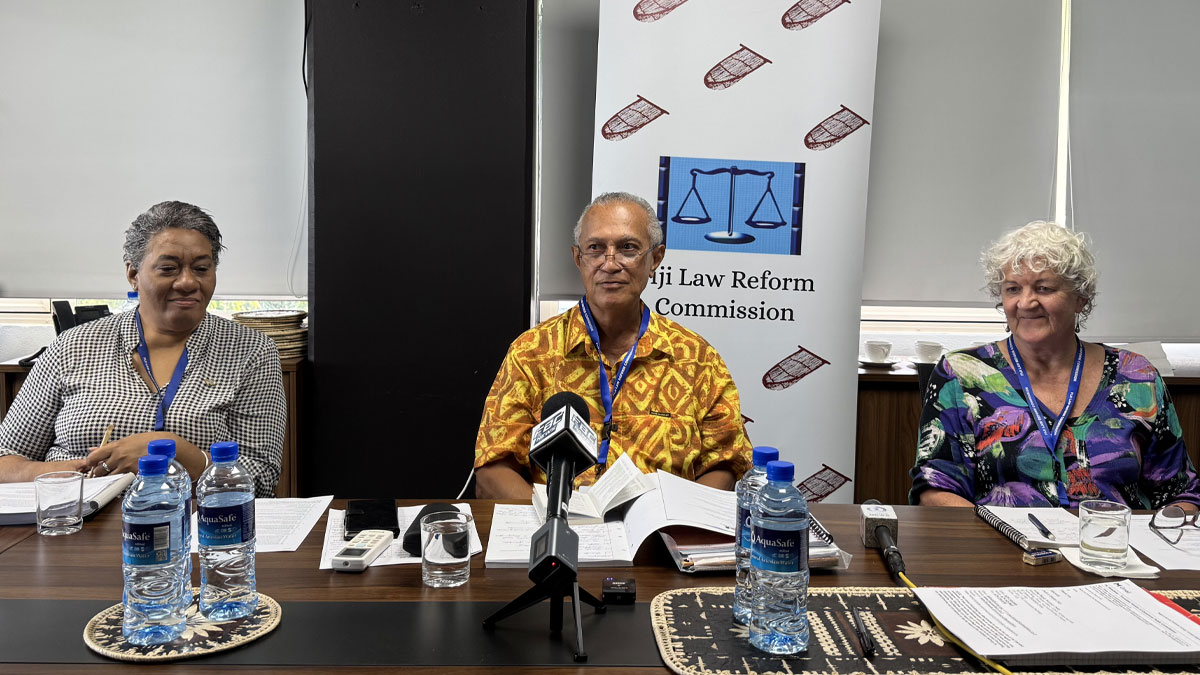
If the 2013 Constitution is not changed, people will be going to have another general election under the same electoral system.
Electoral Law Reform Commission chairman, Daniel Fatiaki stressed this while giving an update on the Commission’s next step regarding the review of the electoral system.
Fatiaki says the new electoral system cannot come into place without constitutional change.
He says they want to leave a legacy behind that will benefit the future generation.
Watch on TikTok
The Chairperson says he is going to give the best electoral system through his report that the people deserve, however, it depends on the people how they want to run with it.
Fatiaki says he can't guarantee that his report will see the light of day because the Constitution is a huge barrier to implementation.
He further says no matter what the government's will is they will still have to move ahead with the Constitution if it remains unchanged.
Fatiaki says it's between now and February 27th to get the constitutional changes put in place and adopt their electoral recommendations.
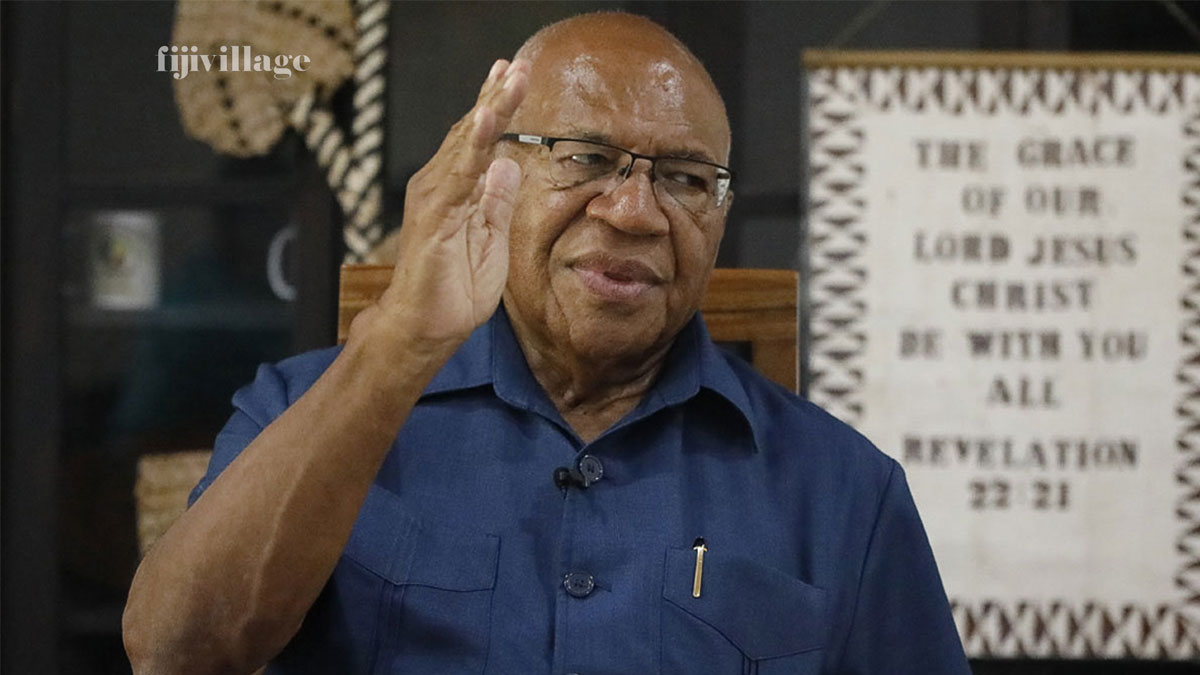
Will there be a change in the electoral system for Fiji before the next elections?
That can only happen if the 2013 Constitution is also changed.
When questioned by fijivillage News, Prime Minister, Sitiveni Rabuka says Electoral Law Reform Commission Chairperson, Daniel Fatiaki is totally correct after he stressed today that the new electoral system cannot come into place without constitutional change.
Rabuka says while previous electoral arrangements were contained in Electoral Acts, the provisions for the elections since the ‘purported’ promulgation of the 2013 Constitution are contained in the Constitution, particularly Chapter 3 thereof.
Meanwhile Fatiaki who is the former Chief Justice says they want to leave a legacy behind that will benefit the future generations.
The Chairperson says he is going to give the best electoral system through his report that the people deserve, however, it depends on the people on how they want to run with it.
Fatiaki says he can't guarantee that his report will see the light of day because the Constitution is a huge barrier to implementation.
He further says no matter what the government's will is they will still have to move ahead with the Constitution if it remains unchanged.
Fatiaki says it's between now and February 27th to get the constitutional changes put in place and adopt their electoral recommendations.
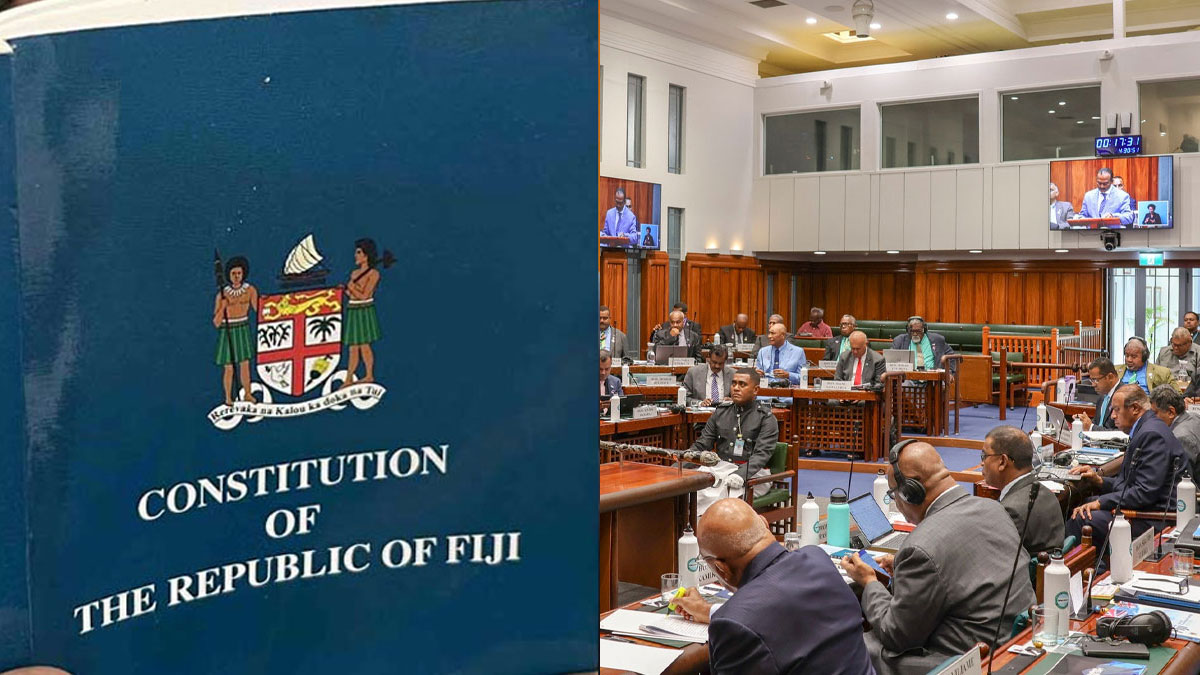
Cabinet has agreed to seek an opinion from the Supreme Court on the interpretation and application of the amendment provisions of the 2013 Constitution.
Cabinet has also approved the engagement of Bret Walker, Senior Counsel, for legal representation in the Supreme Court - Cabinet's Supreme Court Reference filed under section 91(5) of the 2013 Constitution.
The Cabinet says Walker is one of Australia's leading barristers, widely respected for his extensive legal experience and advocacy in constitutional, administrative and appellate law.
This comes as the Bill to amend the 2013 Constitution was defeated in Parliament.
The Bill sought to change the requirement for the 75 percent of the Members of Parliament needed to amend the Constitution and to also entirely remove the requirement of a referendum and support of 75 percent of the registered voters under Section 160.
It also sought to amend Section 159(c) relating to repealing, infringing or diminishing the effect of Chapter 11 of the Constitution which is about amendments to the Constitution.
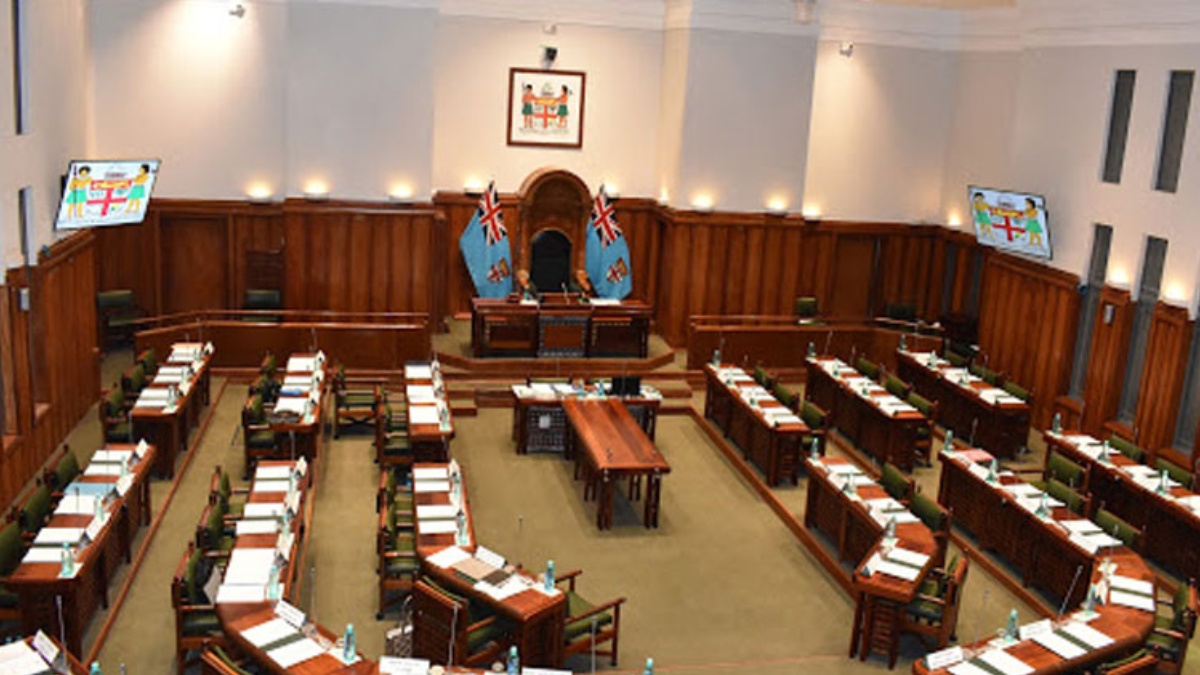
All parties represented in Parliament including the People’s Alliance, the National Federation Party, SODELPA, Leader of Opposition Inia Seruitatu’s faction, and Minister for Policing Ioane Naivalarua’s faction, Unity Fiji Leader Savenaca Narube, Fiji Labour Party Leader Mahendra Chaudhry, the Human Rights and Anti Discrimination Commission and the Fiji Law Society have been invited by the Supreme Court to make submissions in the matter where the Cabinet has sought the opinion of the Supreme Court on the interpretation of the 2013 Constitution.
Supreme Court President and Chief Justice Salesi Temo also says it is always prudent to include the Human Rights Commission and the Law Society as this is their turf.
Solicitor General Ropate Green, who is representing the State, did not object to the inclusion of the interveners.
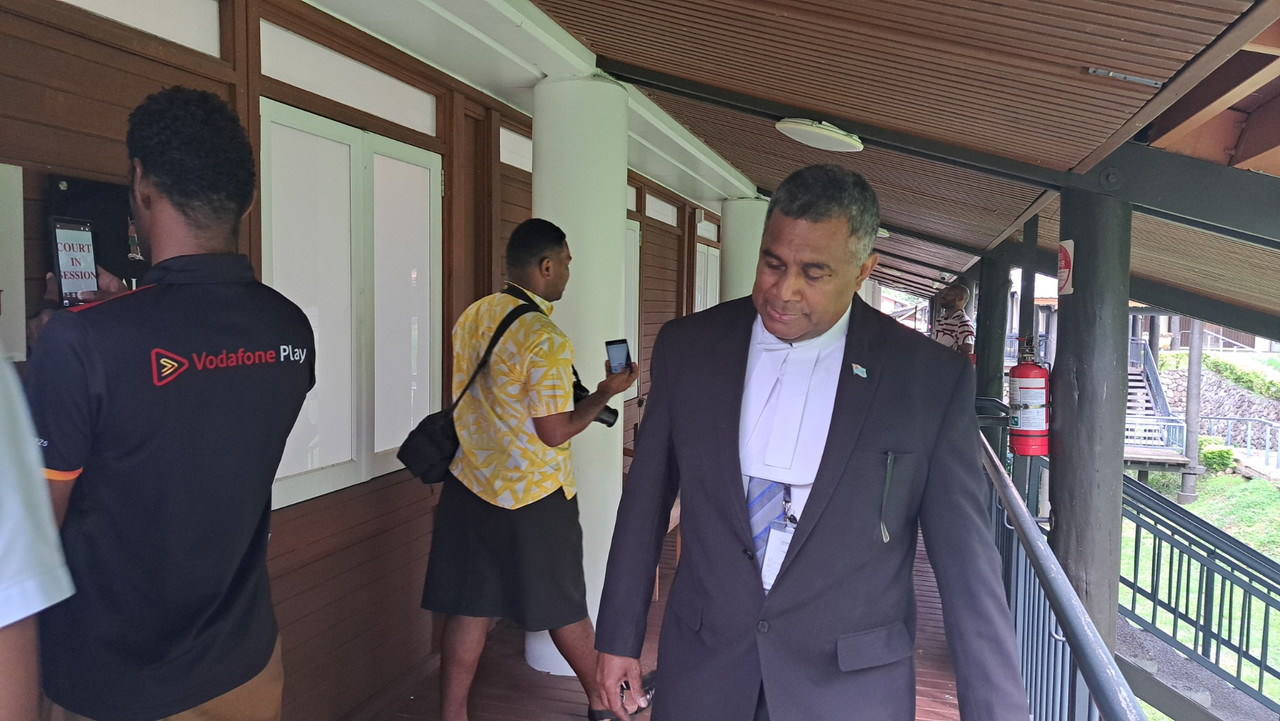
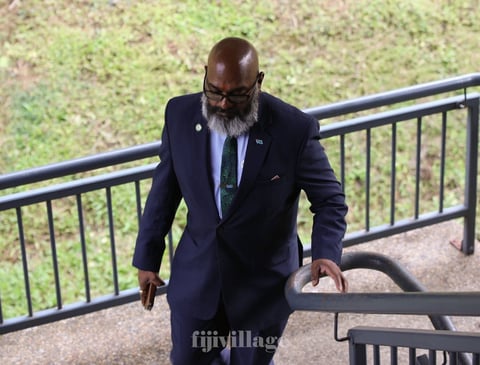
Pictured: Solicitor General Ropate Green
He also requested the inclusion of the Great Council of Chiefs as an intervener but Supreme Court Judge Justice Isikeli Mataitoga denied it, stating that the list for the interveners was decided after careful consideration.
He is asking the Court to provide a response to 5 questions.
The Solicitor General has been given time until the 29th of May to serve the papers to the 9 interveners.
They will be called in court with their Counsel on the 6th of June to inform the Court if they agree to intervene or not.
Green has requested the 18th to the 22nd of August for the hearing date as they are engaging a King's Counsel and those are the dates they will be available.
Chief Justice Temo says he will be given these dates two months from now but also highlighted that the questions the Cabinet is asking is more than the mere amendment to the 2013 Constitution.
He says the questions also involve a critical decision which led to the constitutional uprising of April 23rd 2009. Chief Justice Temo says the question regarding the 1997 Constitution makes it more complicated and more interesting and it described it as putting in ‘spanner in the works’.
While referring to the 1997 Constitution, Justice Mataitoga says this issue is still alive.
Green responded that those are the issues that can be resolved and laid to rest.
Meanwhile, Green also requested liberty and time to file the constitutional facts that any intervener would have to agree to and this is the context for asking these questions.
Chief Justice Temo confirms the bench will include 6 members who are Justice Temo, Justice Mataitoga, Justice Terence Arnold, Justice William Young, Justice Dame Lowell Goddard and he will be asking the Chief Justice of Australia to nominate a judge.
Cabinet, through the Office of the Solicitor-General, has requested the Supreme Court’s opinion specifically on the interpretation and application of the constitutional amendment provisions under Sections 159 and 160 of the Constitution.
Sections 159 and 160 require a three-quarters majority in Parliament and approval from 75 percent registered voters in a national referendum respectively.
Fiji Electoral Law Reform Commissioner Deidre Brookes, Court of Appeal Judge Justice Alipate Qetaki, Fiji Law Society President Wylie Clarke and lawyer Simone Valenitabua were also present in court this morning.
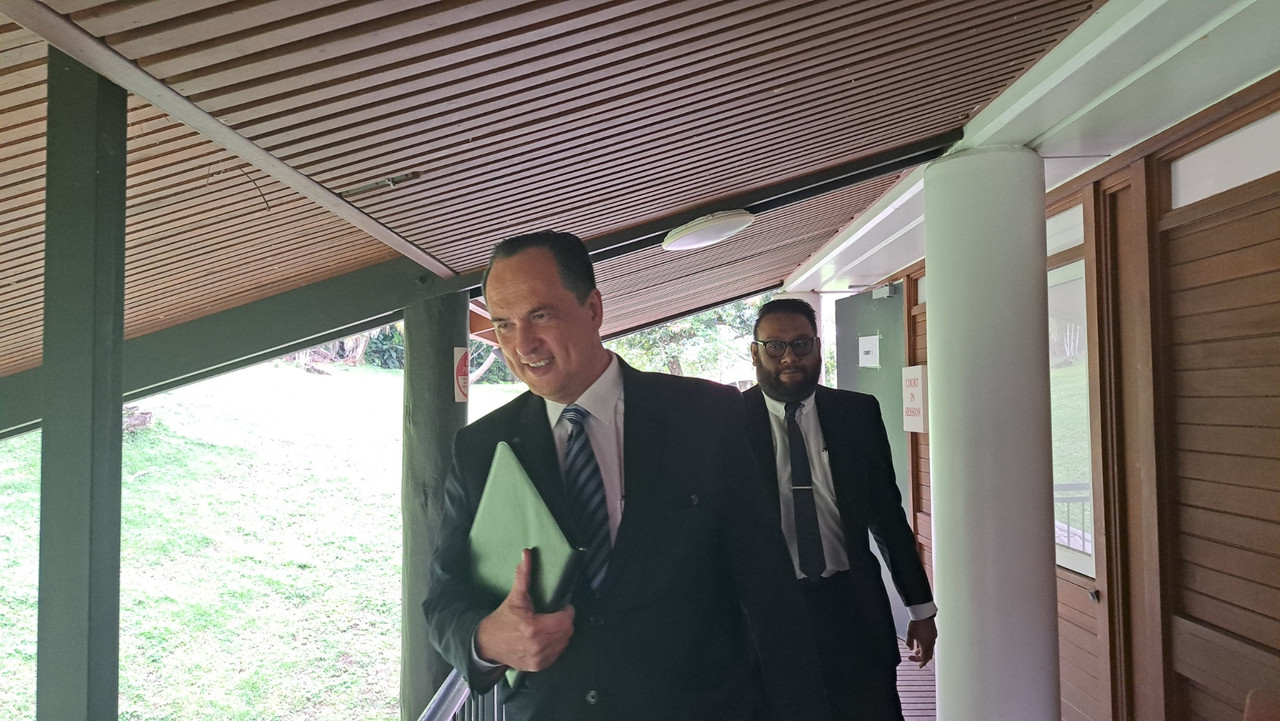
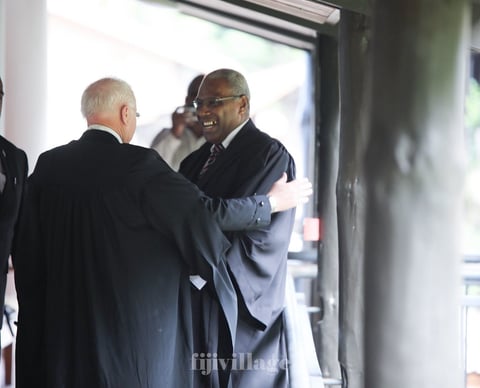
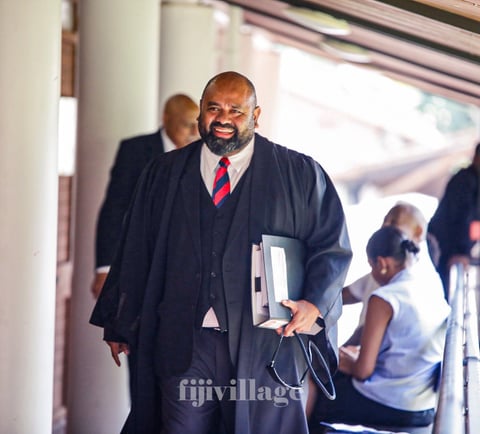
Pictured: Fiji Law Society President Wylie Clarke
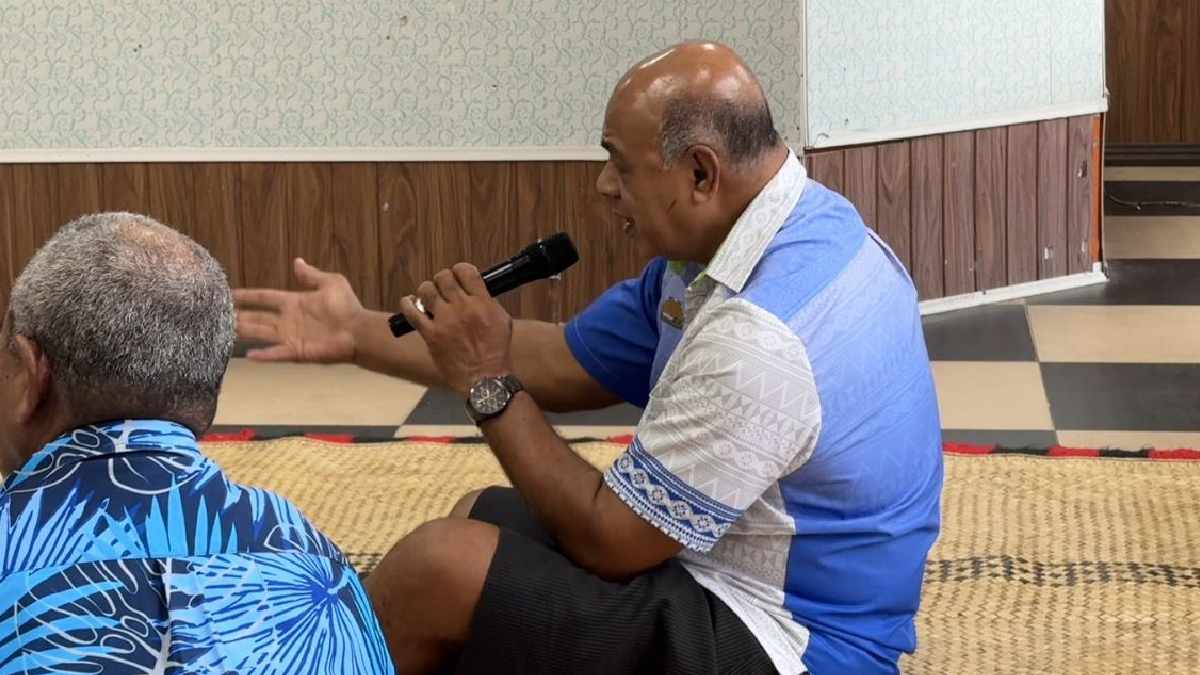
Lau Provincial Council Chairman Ratu Meli Saubulinayau supports the representation of women in Parliament, saying that he feels that women should have one-third of the number of seats in Parliament.
While making his contribution during the consultation on the three Electoral Acts at the Fijian Teachers Association hall, Ratu Meli said if the number of members is 72, 71 or 55, one-third of the number should be women.
He also raised issues regarding the 2013 Constitution and said that it should be thrown out because it did not go through the right channel.
The former senior military officer also raised the need to bring back Party symbols and candidate pictures on the voter list as it was hard for many people to remember the candidate numbers in the previous elections.
He says prisoners should have the right to vote, but they cannot be a candidate or run for a seat in Parliament.
Ratu Meli says mentally ill patients who understand the voting system should be allowed to vote, but not those who cannot.
The Chairman also highlighted the need to bring back the Constituency voting system because the people know who they are voting for and what they are standing for.
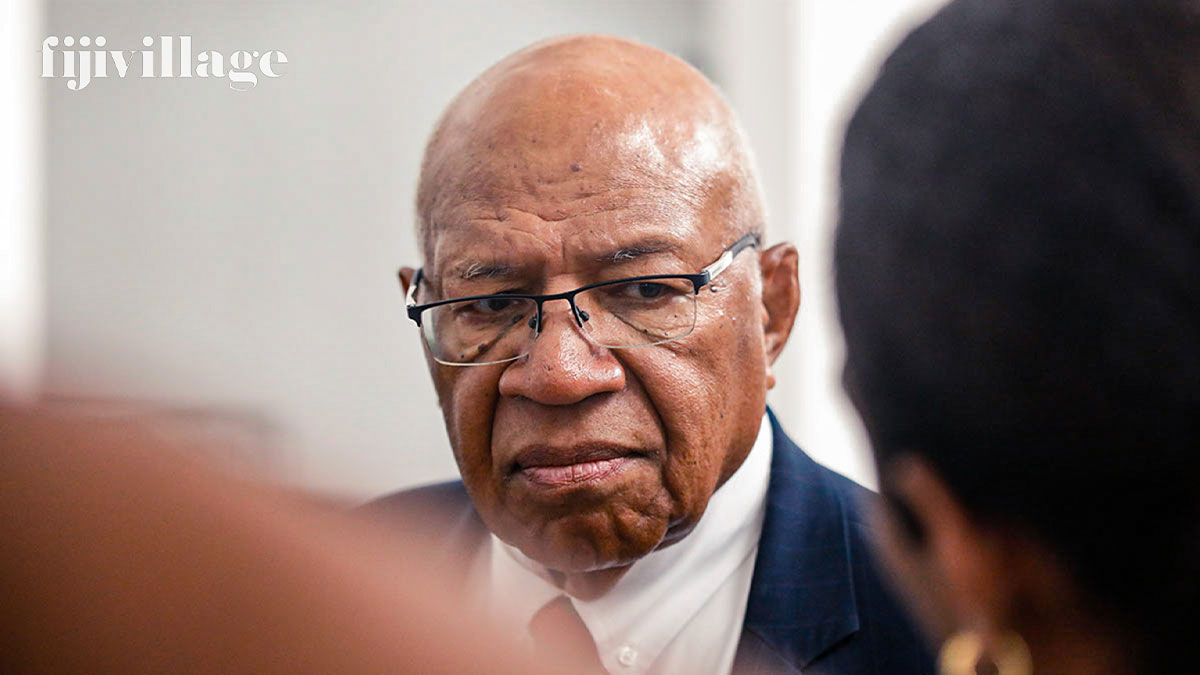
Is the 1997 Constitution still valid and applicable.
That is one of the five questions asked by Prime Minister, Sitiveni Rabuka in the Reference filed in the constitutional case which is currently before the Supreme Court.
This question arises based on earlier discussions on the ‘abrogation’ of the 1997 Constitution by the late former President, Ratu Josefa Iloilo and the way the 2013 Constitution was brought in without a Parliament in place.
Other questions include on whether the provisions regarding the amendment to the 2013 Constitution and the transitional period section of the Constitution are binding on the people of Fiji, the Parliament of Fiji and the Supreme Court with the effect that none of those provisions can ever be amended, regardless of the will of Parliament or of the people voting in a referendum.
Chapter 11 of the 2013 Constitution states that no amendment to the Constitution may ever repeal any provision on the immunity from prosecution for those involved in the 1987 and 2006 coups, and Chapter 12 deals with the transitional period.
Chapter 11 also requires 75 percent of the Members of Parliament and 75 percent of all registered voters in a national referendum to vote for changes in any other section of the Constitution.
Rabuka also asks whether the provisions can be amended following enactment of a Bill in Parliament to do so, in terms thought fit by Parliament.
The Prime Minister further asks the Supreme Court if the approval of any amendment proposed is effective only if approved by the people of Fiji at a referendum.
He also asks if there is any special majority, and if so in what proportion, necessary for an enactment or approval by referendum.
The parties in the case include the Office of the Attorney General, the People’s Alliance Party, National Federation Party, SODELPA, Opposition faction of Inia Seruiratu, Faction of Ioane Naivalurua, Fiji Labour Party, Unity Fiji, Fiji Human Rights and Anti-Discrimination Commission the Fiji Law Society.
The case will be called before the Supreme Court on June 6th.
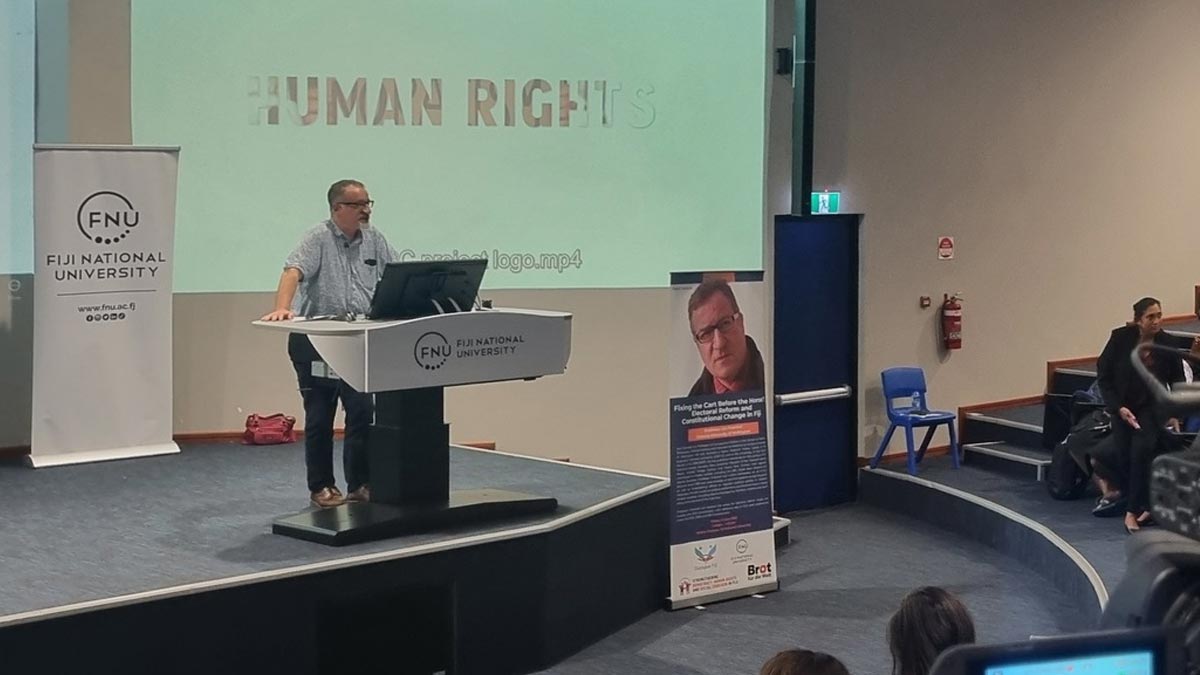
The reform of the electoral system can be done under the current Constitution before the next general elections.
This has been shared by Jon Fraenkel who is a Professor of Comparative Politics at Victoria University of Wellington.
The discussion at Fiji National University Campus in Nasinu, mainly centred around electoral reform within and beyond the 2013 Constitution while also drawing on Fiji’s experiences under the 1970, 1990, and 1997 Constitutions.
Professor Fraenkel talked about the confusing nature of the current Sudoku style ballot paper.
He says it features only numbers, without candidate names or party symbols.
Professor Fraenkel also criticized the use of a single nationwide constituency that elects 55 members of Parliament, arguing that this system fails to provide geographic representation, as the MPs are not tied to specific regions within Fiji.
Professor Fraenkel also highlighted the lack of women representation in Parliament as well.
When questioned by fijivillage News about which body should be responsible for creating electoral boundaries given that no such responsibility is legislated under the current law, Professor Fraenkel noted the relevance of census data and explained that under the 1997 Constitution, a Constituency Boundaries Commission existed, and suggested that similar mechanisms could be considered under the current framework.
He also confirmed that the creation of constituencies is possible under the 2013 Constitution, indicating that a meaningful electoral reform can still be pursued within the existing legal structure.
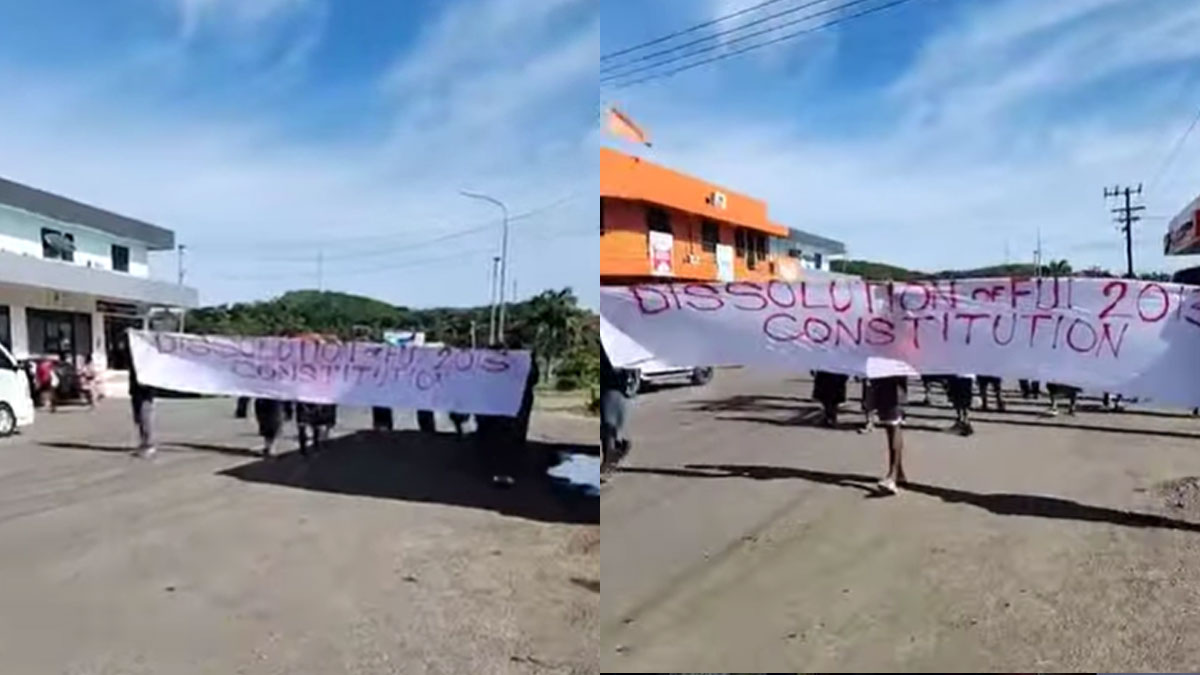
Chiefs of the Vanua of Ra took to the streets of Rakiraki Town this morning, calling for the dissolution of the 2013 Constitution.
Videos on social media show more than 10 people taking part in the march.
They are heard saying that they are conducting a peaceful protest against the 2013 Constitution which has guided us for a few years now.
They say they want a Constitution that protects the iTaukei.
They also say this Constitution has been a hindrance to the development of iTaukei people.
The protesters also say they want to thank the Police for giving them the permit to conduct this peaceful march.
They have thanked the Vanua of Rakiraki and its elders for coming out to be part of this peaceful march.
The protesters also say the 2013 Constitution was put together by only two people – Aiyaz Sayed-Khaiyum and Voreqe Bainimarama and it does not have the people’s voice.
Police confirm the protesters had a permit.
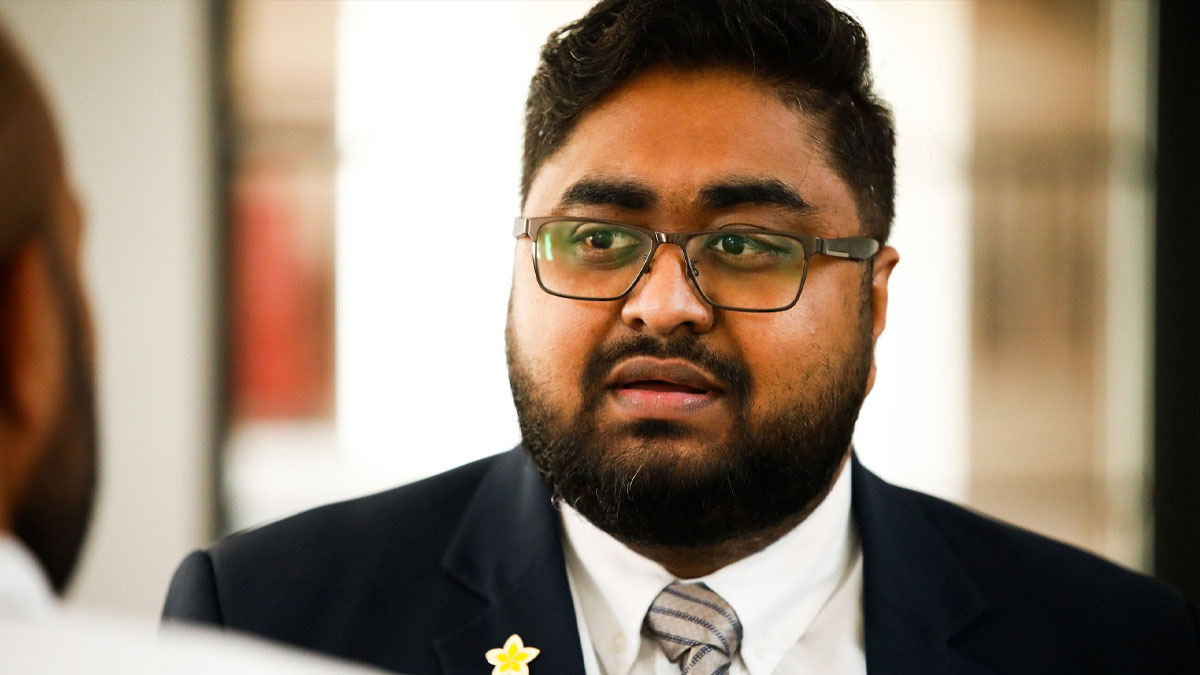
Opposition MP, Ketan Lal says chiefs from the Vanua of Ra marching through town today, calling for the abrogation of the 2013 Constitution, is not just a protest — it is a dangerous signal to the rule of law and to the peace we have worked so hard to build.
Lal says it is shocking that such a march, calling for the removal of our Constitution was allowed to proceed with permits from both the Fiji Police Force and the Fiji Roads Authority.
The Opposition MP stresses the 2013 Constitution is the supreme law of the land.
Lal says it has been the foundation of stability, equal citizenry, and the democratic processes that elected all of them, including this government.
He says calls for its abrogation are not just undemocratic — they border on sedition.
The Opposition MP says these calls risk reopening wounds of our past — wounds that many of us are still healing from.
Lal asks would this same approval be given if the message was against the government of the day.
He says we must remember Fiji has come a long way and our Constitution, though not perfect as claimed by a handful, guarantees equal citizenry, independent institutions, and a platform for peaceful progress.
He says our country has seen too much division in the past — division based on race, religion, province, and power.
Lal stresses those dark chapters in our history must never be repeated.
He says what Fiji needs today is harmony, not hostility, we need dialogue, not demands, and we need unity, not upheaval.
Lal says to the chiefs and individuals behind this march: You are entitled to your views, but no one is above the Constitution.
He says to the government and Prime Minister: Your silence on this matter is unacceptable. You must rise above political calculations and stand firm in defence of our Constitution that you also took an oath to protect and our national harmony.
We have sought comments from Prime Minister, Sitiveni Rabuka.
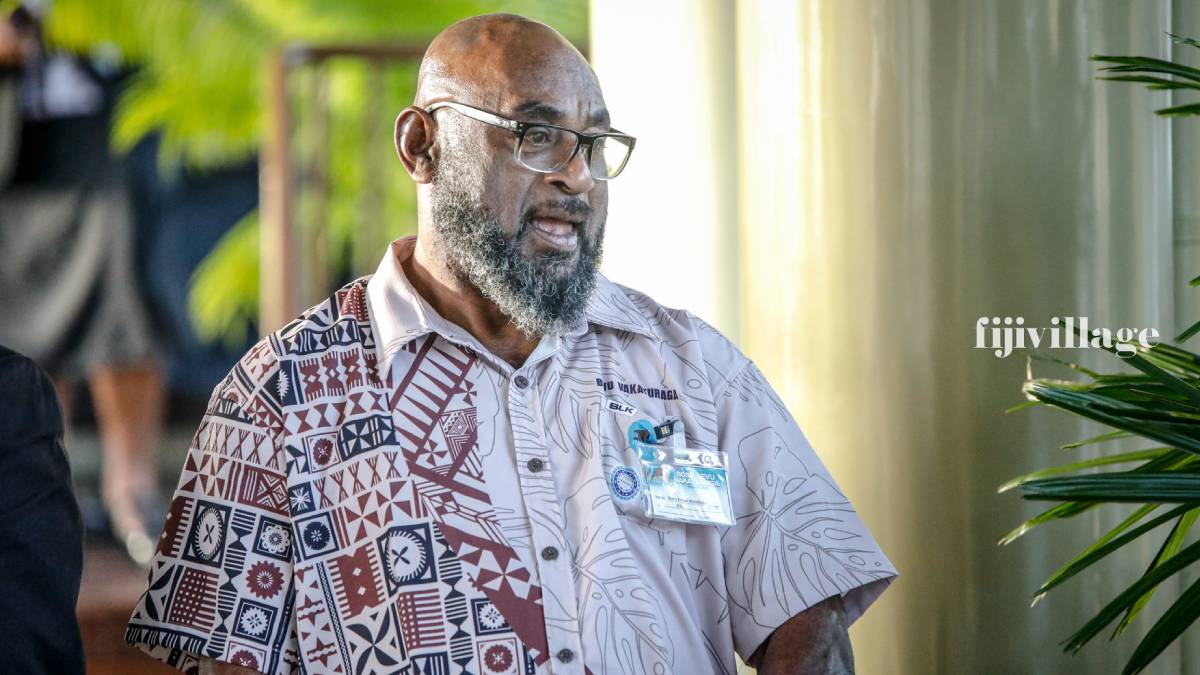
Liuliu Ni Vanua o Rakiraki, Tu Navitilevu, Ratu Emori Bolobolo says their peaceful march in Rakiraki Town this morning was to call for the removal of the 2013 Constitution.
Around 20 people, including the chiefs of the Vanua of Ra, took part in the march.
He says the decision to go ahead with the march was from their Bose Vanua of Rakiraki.
Ratu Emori says there was a unanimous decision from the leaders of the mataqali, yavusa and village heads in the Province of Ra that they make their stand on the 2013 Constitution.
He says they thank the Government and the Police for the permit to conduct the peaceful march.
He stresses this constitution should be removed.
Police also confirm that the protesters had a permit to march.
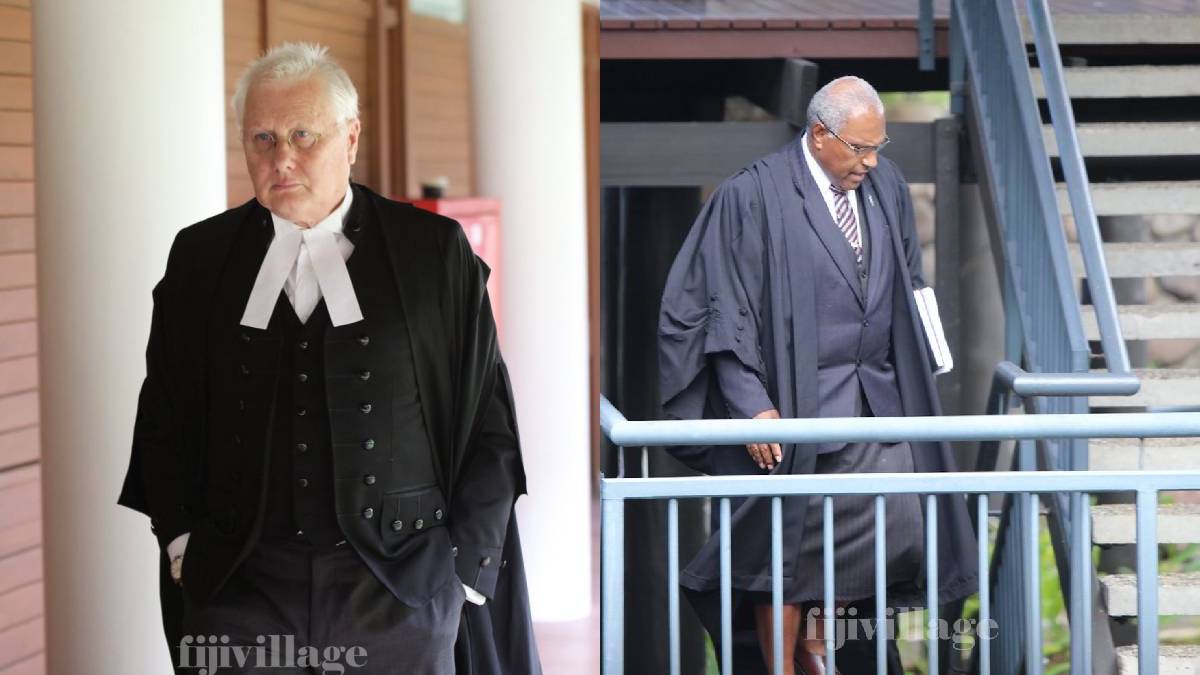
The State representative in the matter where Cabinet is seeking the Supreme Court’s opinion on the interpretation and application of the amendment provisions of the 2013 Constitution, says they do not support an absolute majority in Parliament, and that a two-thirds majority should be required for amendments, while the referendum provisions should be removed.
Kings Counsel Brent Walker says provisions of Section 160 are not hurdles but impenetrable walls.
He says the amendment provisions are a double entrenchment that does not pass constitutional trust because it prevents the exercise of democratic will.
Walker says no existing authority, no constituent assembly and no constitution says immunity provisions are not amendable because they are contained in the cluster of cross reference to the past.
He further says the 1997 Constitution had a divided electorate which is enough to render unthinkable and unrealistic to return to the 1997 Constitution in Fiji today, particularly as there have been three elections.
The hearing continues in the Supreme Court.
The questions asked by Prime Minister Sitiveni Rabuka in the reference filed in the constitutional case before the Supreme Court include whether the 1997 Constitution is still valid and applicable.
Other questions include whether the provisions regarding the amendment to the 2013 Constitution and the transitional period section of the Constitution are binding on the people of Fiji, the Parliament of Fiji, and the Supreme Court, with the effect that none of those provisions can ever be amended, regardless of the will of Parliament or of the people voting in a referendum.
Chapter 11 of the 2013 Constitution states that no amendment to the Constitution may ever repeal any provision on the immunity from prosecution for those involved in the 1987 and 2006 coups, and Chapter 12 deals with the transitional period.
Chapter 11 also requires 75 percent of the Members of Parliament and 75 percent of all registered voters in a national referendum to vote for changes in any other section of the Constitution.
Rabuka also asks whether the provisions can be amended following enactment of a Bill in Parliament to do so, in terms thought fit by Parliament.
The Prime Minister further asks the Supreme Court if the approval of any amendment proposed is effective only if approved by the people of Fiji at a referendum.
He also asks if there is any special majority, and if so, in what proportion, necessary for an enactment or approval by referendum.
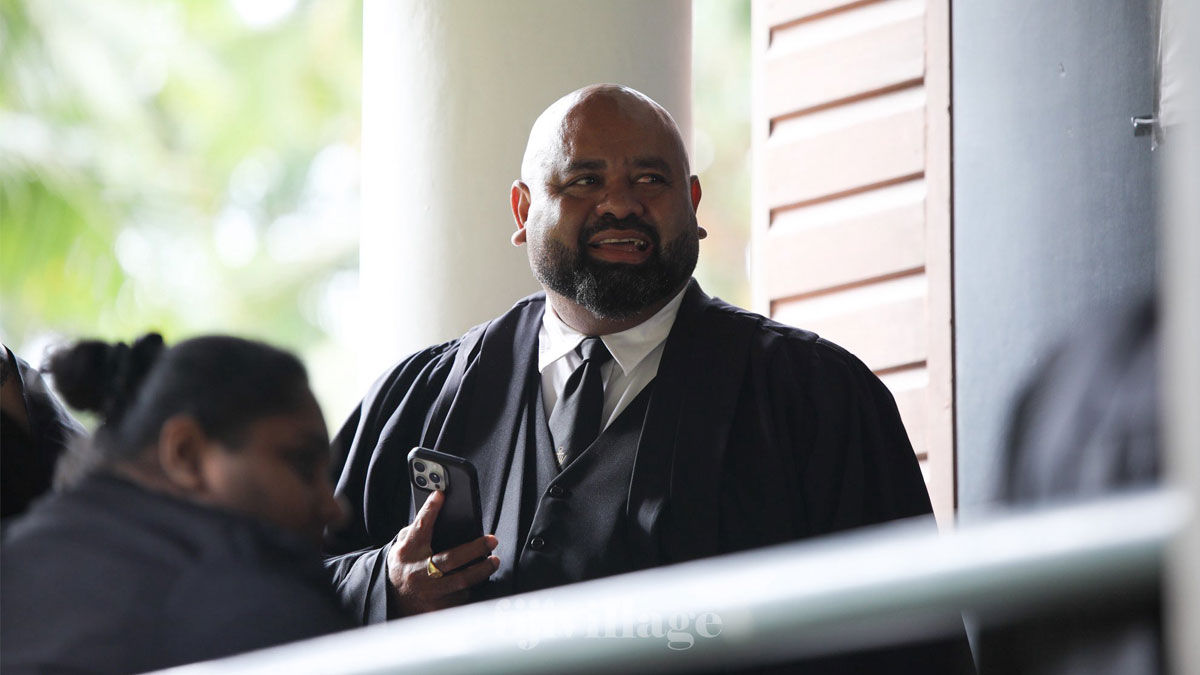
The People's Alliance Party believes that the 2013 Constitution is invalid from the beginning and the 1997 Constitution must be declared still valid and applicable.
While making submissions in the matter where the Cabinet has sought the opinion of the Supreme Court for the interpretation and application of the 2013 Constitution, People’s Alliance Party lawyer, Simione Valenitabua says the 1997 Constitution abrogation has no legal effect as the President does not have the legal power to do so.
Valenitabua says the regime said it was saving Fiji but it was in fact saving itself as there was no natural crisis but their own manufactured crisis.
He says deliberately abrogating the 1997 Constitution when the court declared it valid was contempt of court.
The People's Alliance Counsel says to ensure continuity of governance while constitutional legitimacy is restored, ordinary legislative and administrative acts performed under the invalid 2013 Constitution shall be temporarily validated for a period of 36 months from the date of the judgement.
He says current office-holders, including the President, Prime Minister, Parliament as an institution, and judiciary, shall be recognised as transitional authorities for a period of 6 month and within 36 months, Parliament must be reconstituted in accordance with the 1997 Constitution.
He says the fundamental rights provisions, the judicial independence provisions, and constitutional amendment provisions outlined in the 1997 Constitution should take immediate effect.
Valenitabua says the review and consultations may cover both the 1997 and the 2013 Constitution and to focus drawing from them the most suitable, positive and pragmatic provisions, including those that cover amendments.
He also says the purported immunity provisions in the 2013 Constitution are of no legal effect and cannot shield unlawful actions from prosecutorial and judicial scrutiny.
He says if the 2013 Constitution is the supreme law of Fiji then it is impossible to amend due to its uniquely stringent requirements and therefore it is not binding on the people of Fiji.
The hearing continues in the Supreme Court.
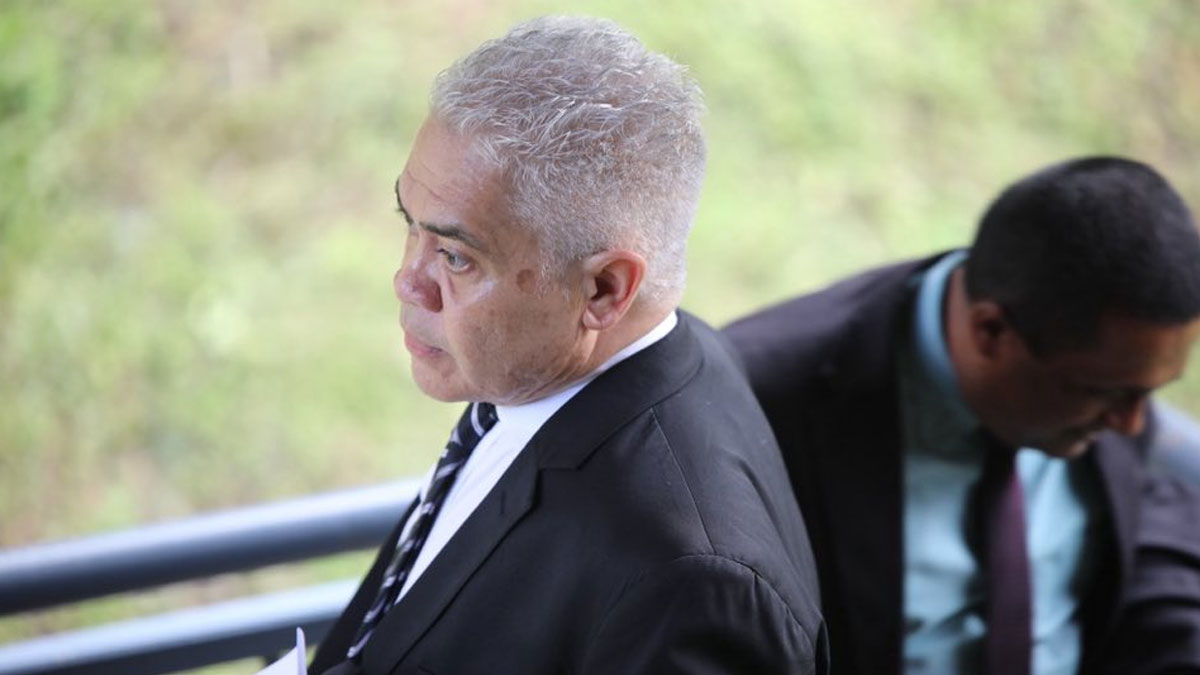
National Federation Party Counsel Jon Apted says the amendment provisions in the 2013 Constitution was deliberately drafted to shield it from amendments.
Apted highlighted this while supporting the State’s submission in the matter where Cabinet is seeking the Supreme Court’s opinion on the interpretation and application of the amendment provisions of the 2013 Constitution.
He says the Bill to amend the Constitution that was not passed in Parliament and received more than two-third may be presented to the President to assent and thereby amend the constitution so that a two-third majority will be sufficient to amend the constitution without referendum provision.
Apted says as a matter of efficacy test, the 2013 Constitution remains and they submit that the amendment provisions should be found ‘unenforcable’.
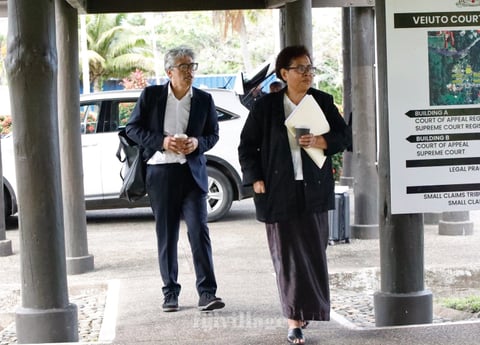
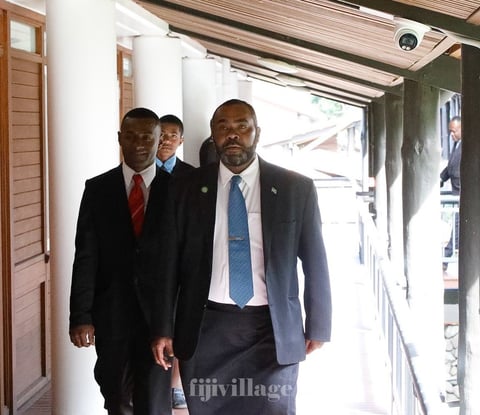
He further says the referendum is not desirable for financial and manipulation reasons.
The NFP Counsel says issues like this are divisive in nature and accommodation, as much as they are, are still fragile and things like a referendum that goes out to the public runs the risk of inviting those who wish to cause division to do so.
While responding to a question by Judge Justice Terence Arnold on referendum provisions in the 2013 Constitution, Apted says there is no referendum law and it proves the State’s case that the amendment was not supposed to be done.

Kunal Singh, the counsel for Leader of Opposition Inia Seruiratu's bloc in Parliament, says the amendment clause in the 2013 Constitution is a deliberate design to protect the Constitution from opportunist and destabilizing changes.
Singh says there have been three elections and the public at large has accepted the Constitution.
He says the referendum requirement is vital to democratic legitimacy, and it is binding on the Parliament, people and the court.
Singh also says that the 2013 Constitution affirms that the supreme law remains on all State institutions and individuals, thus the Parliament cannot assume the supremacy over the Constitution, nor can public opinion alone override the entrenched protection.
He also says some of the parties think in a referendum, 75 percent will not be achievable but this is wrong.
While responding to Justice Terence Arnold's earlier question on laws regarding a referendum, Singh agrees that there is nothing in the Electoral Act in relation to how referendums are to be conducted.
He says it is not necessary for a referendum to be held during a general election or have a particular base where people come in.
Singh adds that it could even be conducted door-to-door, similar to a Census, so people would not need to go to vote.
He also agreed with Justice Isikeli Mataitoga that the Yash Ghai Constitution has a two-third majority requirement but it changed to three-quarter overnight.
He says they would have to divulge with the makers of the Constitution, however, Justice Mataitoga told him not to sidetrack as this is about the issue of democracy and legality that Singh had raised earlier.
Justice Mataitoga told him that if he wants to make a submission then he has to back it up with in terms of what actually happened.
The hearing continues in the Supreme Court.
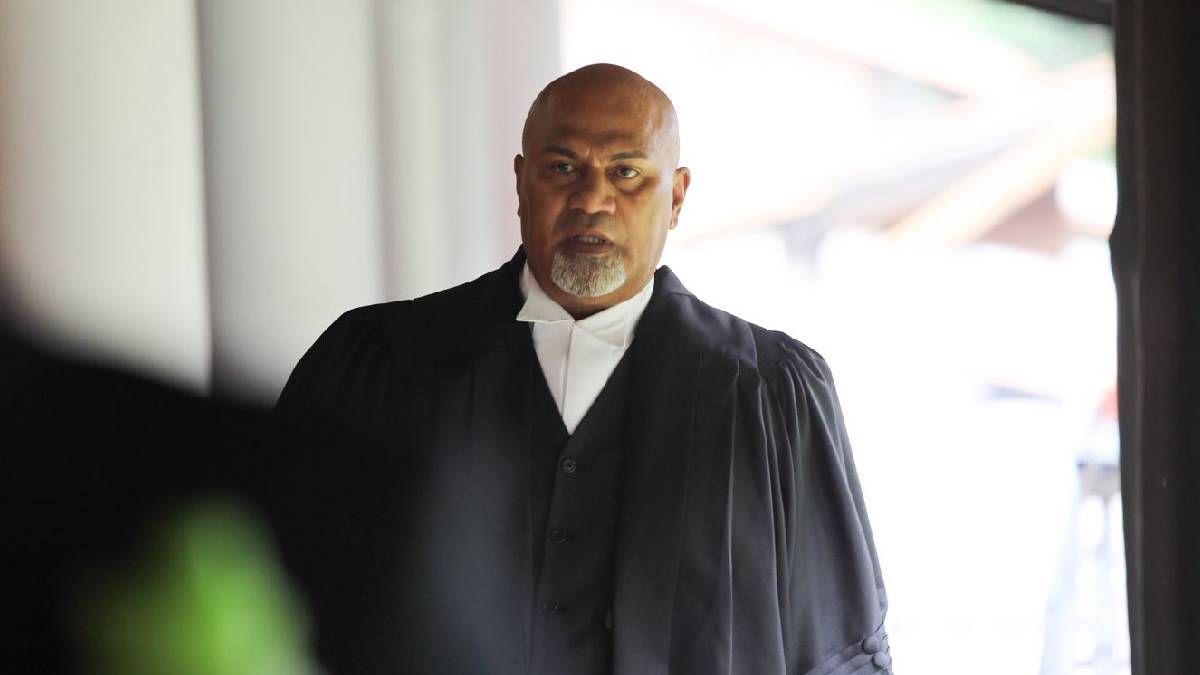
The lawyer for Minister for Policing Ioane Naivalurua’s bloc in Parliament, Tevita Vakalalabure says the 1997 Constitution remains valid and the 2013 Constitution remains defacto but not in law as it does not have a lawful origin.
He says there was no constituent assembly, no referendum or ratification and no proof of voluntary acceptance by the people of Fiji.
Vakalalabure says a constitution, drafted by a handful of officials, without the people’s informed participation or consent cannot claim lawful legitimacy today.
He says there is no evidence that people accepted the 2013 Constitution and that an informed consent was given freely.
The lawyer says they acknowledge that the 2013 Constitution be defacto for pragmatic reason to preserve the continuity of governance.
He says the court may preserve the machinery of government temporarily but the lawful source in Fiji remains the 1997 Constitution until changed by the people through the 1997 procedures.
Vakalalabure further says that necessity permits a temporary reconstitution of the Senate for the limited purpose of satisfying amendment machinery of the 1997 Constitution.
He adds that in politics, time cannot legalise what was unlawful in order.
The hearing continues in the Supreme Court today.
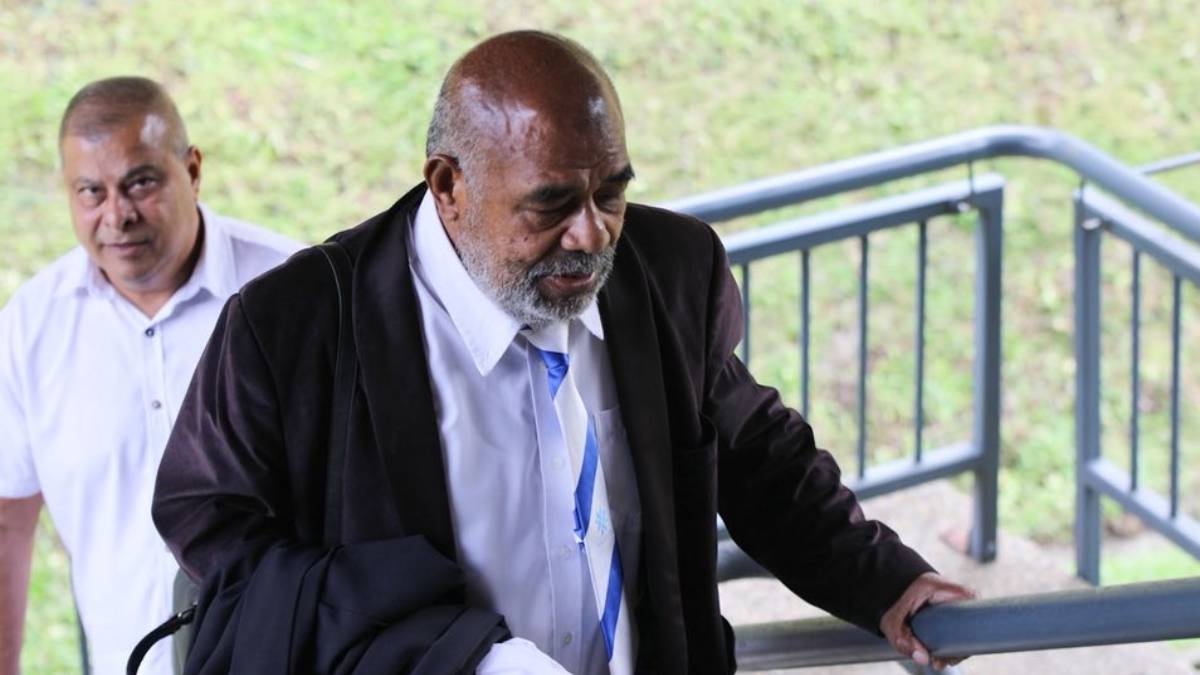
SODELPA counsel Jolame Uludole says the abrogation of the 1997 Constitution in 2009 was a rogue act of the then interim government and it was contrary to the Constitution, invalid and illegal, and they submit that the Supreme Court should determine it as such.
While making submissions in the matter where the Cabinet has sought the opinion of the Supreme Court for the interpretation and application of the 2013 Constitution, Uludole says the 2013 Constitution is not a consensus document as it does not reflect a set of principles that all citizens in a country can agree upon, as was shown when a motion was introduced by Government to amend certain provisions of the Constitution branded as “inoperable.”
He says the court can rule that the 2013 Constitution is invalid and the 1997 Constitution remains the law.
The lawyer says to avoid chaos in governance, the court can also rule that actions taken under the 2013 Constitution remain valid for the ordinary running of the State and for practical reasons on the basis of necessity.
Uludole to bring the 1997 Constitution back into force, a General Election needs to be called under its provisions.
He says to minimise disruption, the present Government can be designated as the Interim Government operating under the 2013 Constitution until completion of its current term.
The hearing continues in the Supreme Court today.
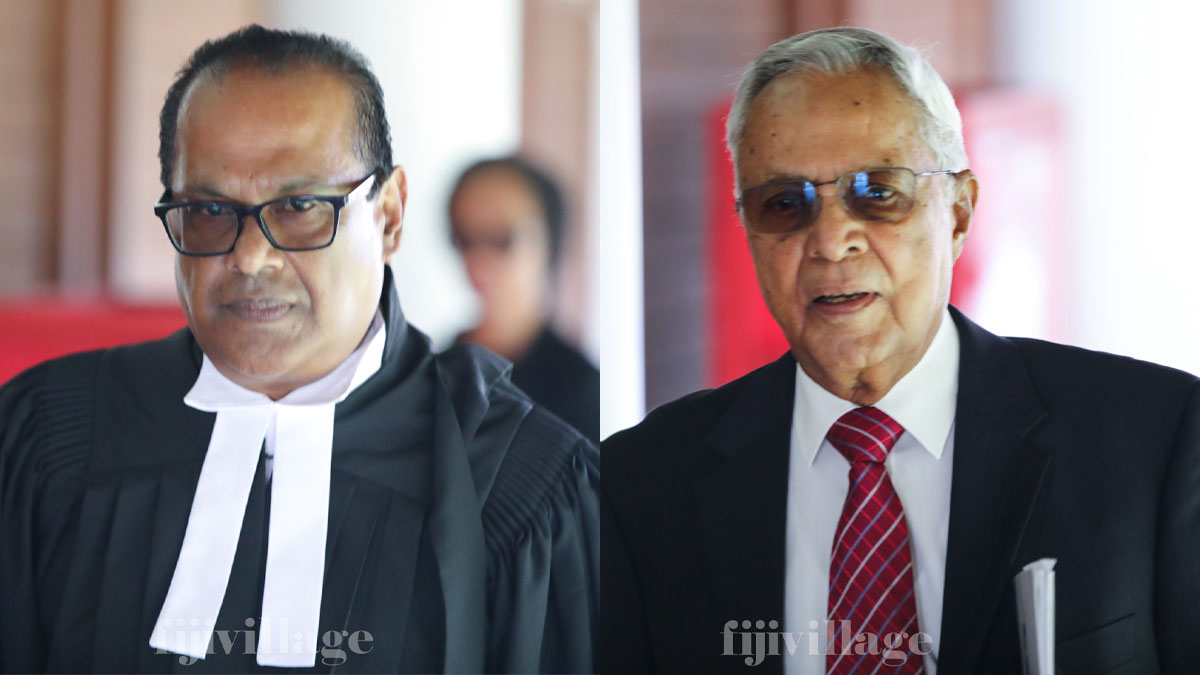
Fiji Labour Party lawyer, Jagath Karunaratne says the 2013 Constitution is not only legally effective but also the supreme law of the land and those who attempt to read down such legislation are trying to import political or democratic notions in an effort to weaken the effect of Section 159, which would be constitutionally impermissible.
While making his submission in the matter where the State has sought the opinion of the Supreme Court in the interpretation and application of the amendment provisions of the 2013 Constitution, Karunaratne says the State appears to be attacking the rule of law as it seeks to make it easier for them to change the Constitution so that they do not have to abide by the concept of equality in a liberal democracy and they do not have to respect human and minority rights if it becomes inconvenienced to the majority.
His co-counsel Siddharth Nandan says the State has put the cart before the horse and they should do the test and determine whether it is constitutional or not.
Nandan says Parliament can still pass the legislation by the rules of the referendum.
He says the State is asking to reduce the threshold requirements that allow it to change the Constitution and therefore by implication, it is also weakening the protections of those entrenched rights.
The counsel say if they have enough support within Parliament one day, public will vote in its own right and will achieve that 75 percent to change those things and make those protections firmer.
The hearing continues in the Supreme Court.
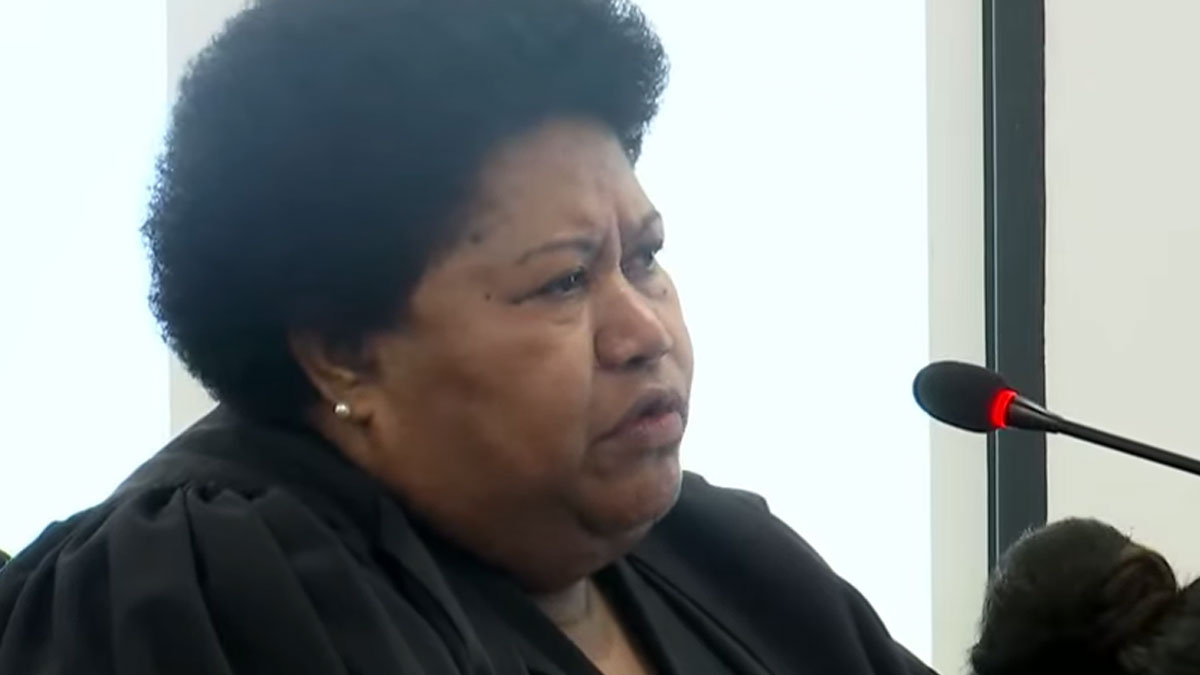
Unity Fiji Party lawyer Naomi Raikaci says the Supreme Court must declare the 2013 Constitution not legitimate and accept the 1997 Constitution although it is not determined on whether it is to be followed.
While making submission in the matter where the Cabinet has sought the opinion of the Supreme Court on the interpretation and application of the 2013 Constitution, Raikaci says the 1997 Constitution is still the supreme law while the 2013 Constitution was brought in by a group of people.
She says during the last 16 years there was a great violation of rights and people who wanted to protest the 2013 Constitution were stopped, taken to the army camp.
Raikaci says this is why, for the past 16 years, the country developed a system of remaining silent because of fear until the new government came in.
She says a group from Rakiraki where a group were finally able to march in the streets to publicly express their non-acceptance of the 2013 Constitution.
The counsel says Unity Fiji, from their voters, came up with a decision in the manifesto to challenge the validity of the 2013 Constitution, and were looking for money to take the matter to court in October but luckily, this case for this reference came up, and has given them an opportunity to raise their voice in the court.
The hearing continues in the Supreme Court.
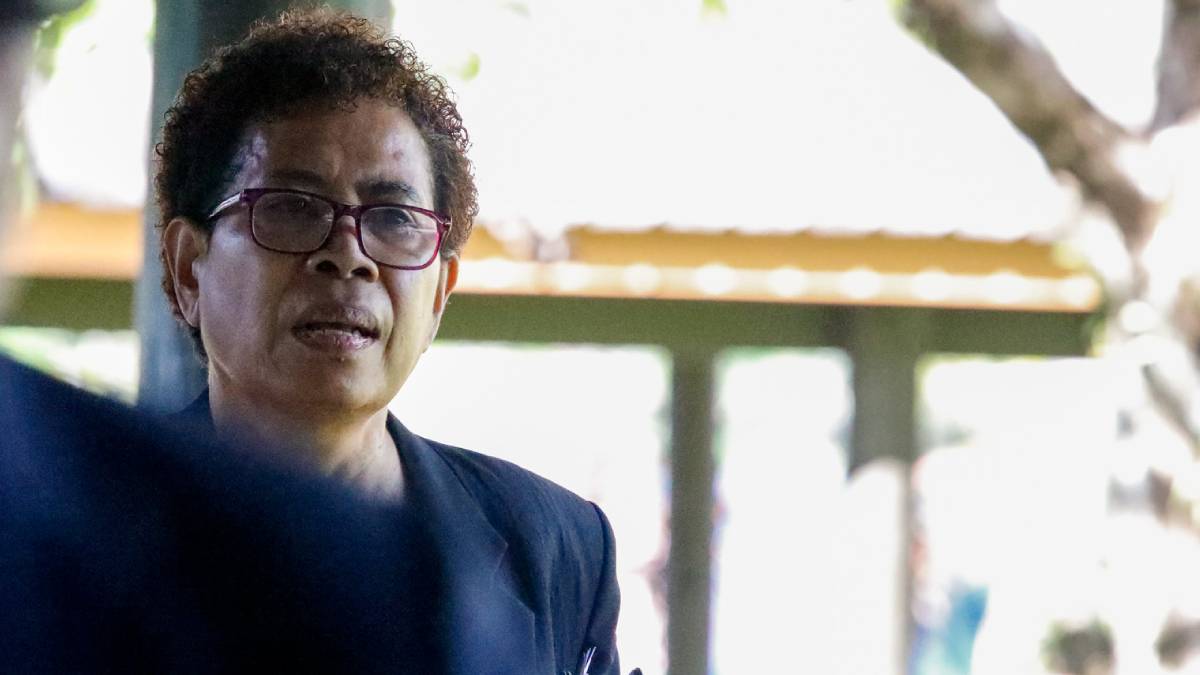
The Fiji Human Rights and Anti Discrimination Commission says the amendments provisions in the 2013 Constitution are overly rigid, undemocratic and must be rendered invalid or revised by the Supreme Court.
While making submissions in the matter where the Cabinet has sought the opinion of the Supreme Court for the interpretation and application of the 2013 Constitution, Human Rights Commissioner Alefina Vuki says these amendment provisions were imposed without genuine public consultation, they originate from an undemocratic process under a military regime, they violate the principle of self determination and popular sovereignty and thus lack democratic legitimacy.
She says in their assessment, they have concluded that the 1997 Constitution was the one most widely consulted and it was active, free, meaningful and accessible to the people of Fiji and therefore reflected the will of the people of Fiji.
Vuki says the amendment provisions in the 2013 Constitution are not absolutely binding and can be amended, though the current process makes it extremely difficult to to do so.
She says the provisions are inconsistent with Article 1 on the right to self determination in the International Covenant on Civil and Political Right and the International Covenant on Economic, Social and Cultural Rights as well as Article 21 on the United Declarations on Human Rights and with Article 25 on on the International Covenant on Civil and Political Rights.
The Commissioner says as a State party must align domestic laws with these obligations.
Vuki also says the 2013 Constitution removed the Great Council of Chiefs, thereby undermining and weakening indigenous representation and the manner in which they did this in the public space was indeed very humiliating and it really hurt a lot of the indigenous people.
She says as an indigenous person, she understands the feeling of humiliation in the manner in which they were removed very publicly but they were revived so it's very important that sensitivity in relation to their rights are actively addressed.
Vuki further says the participation in the 2014, 2018 and 2022 elections under the 2013 Constitution does not necessarily imply acceptance of the constitution itself, because from their research and also because she lived through all of this, the political parties saw elections as the only pathway to restore democracy, not so much as an endorsement of the Constitution.
She says this was an acquiescence of the Constitution under duress for the necessary purpose of restoring democracy because if they did not go that way, the other alternative was for the military regime to continue on the repressive.
While responding to questions from the bench about the favourable assessments of the three elections by Multinational Observer Groups, she says having lived through the events in Fiji, she could not give their credibility a full endorsement.
The Commissioner also says the current requirement of 75 percent of registered voters in a referendum is undemocratic and unrealistic, and must be repealed.
She says a balance must be struck between a constitution that is too rigid, like the current 2013 Constitution, and one that is too easily amendable.
The Commissioner says Parliament can amend these provisions through a bill provided that the terms of amendment align with international human rights standards and democratic principles.
Vuki also says that as an alternative to a referendum could be a constituent Citizens Assembly but they be only consultative and whatever decision they reach is not legally binding, but serves as a gauge to measure the people's will and their mood concerning particular issues.
With apprehension, she says another alternative could be the doctrine of necessity.
The doctrine of necessity is a legal principle that allows otherwise unlawful or unconstitutional actions to be considered valid if they are taken to preserve the stability, continuity, or functioning of the state in extraordinary circumstances.
She says in relation to the doctrine of necessity and the Constitutional Advisory Committee, the Supreme Court may consider whether the doctrine of necessity can justify amending sections 159 and 160 through legislation that bypasses the 75 percent thresholds.
Vuki says if so, the Court may consider advising the government to form a special advisory committee of constitutional experts to determine where a supermajority should apply to protect entrenched human rights provisions.
The hearing continues in the Supreme Court.
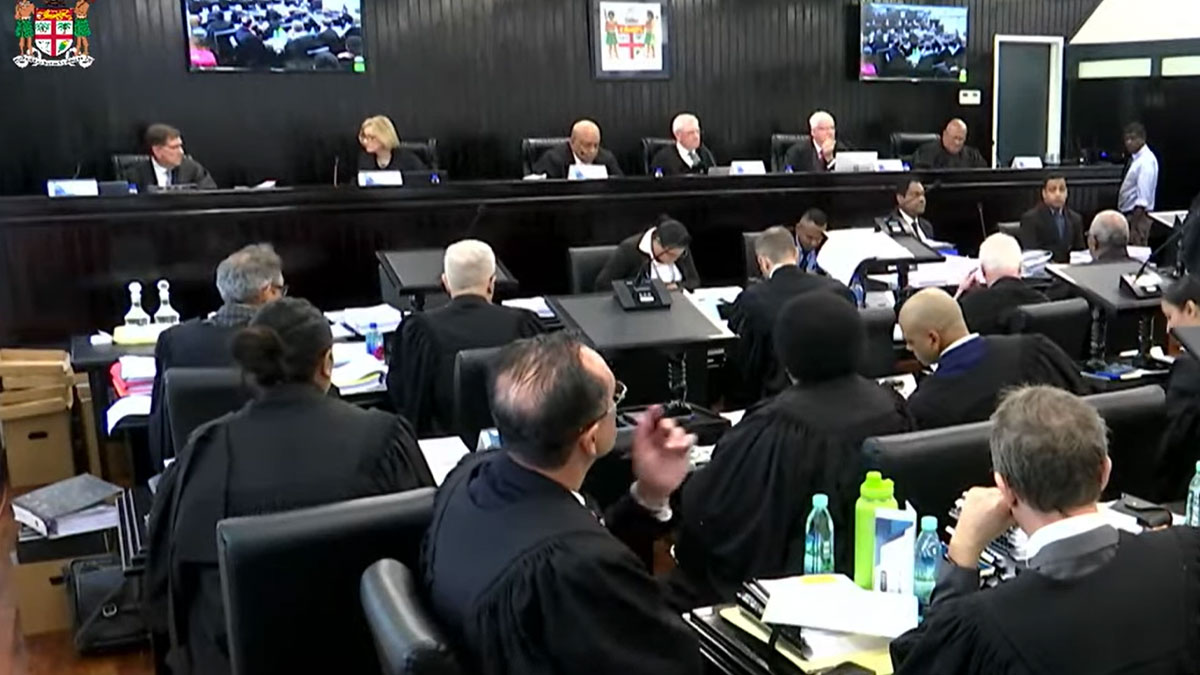
People will find out today whether the 2013 Constitution will remain intact or can be amended with new provisions as the Supreme Court gets ready to give their opinion on the questions by the Coalition Government on the interpretation and application of the amendment provisions of the 2013 Constitution.
The ruling will be delivered at 2.30pm today.
Stay with our website, fijivillage for updates.
The full bench of the Supreme Court that heard the case were Chief Justice Salesi Temo, Justice Terence Arnold, Justice Lowell Goddard, Justice William Young, Justice Robert French, and Justice Isikeli Mataitoga.
The State, National Federation Party, Leader of the Opposition, Fiji Labour Party, Fiji Human Rights and Anti Discrimination Commission and the Fiji Law Society submitted that the 2013 Constitution is valid.
The People's Alliance Party, SODELPA, Ioane Naivalarua's Bloc in Parliament and the Unity Fiji Party made submissions that the 1997 Constitution is still valid.
The questions asked by Prime Minister Sitiveni Rabuka in the reference filed in the constitutional case before the Supreme Court include whether the 1997 Constitution is still valid and applicable.
Other questions include whether the provisions regarding the amendment to the 2013 Constitution and the transitional period section of the Constitution are binding on the people of Fiji, the Parliament of Fiji, and the Supreme Court, with the effect that none of those provisions can ever be amended, regardless of the will of Parliament or of the people voting in a referendum.
Chapter 11 of the 2013 Constitution states that no amendment to the Constitution may ever repeal any provision on the immunity from prosecution for those involved in the 1987 and 2006 coups, and Chapter 12 deals with the transitional period.
Chapter 11 also requires 75 percent of the Members of Parliament and 75 percent of all registered voters in a national referendum to vote for changes in any other section of the Constitution.
Rabuka also asks whether the provisions can be amended following enactment of a Bill in Parliament to do so, in terms thought fit by Parliament.
The Prime Minister further asks the Supreme Court if the approval of any amendment proposed is effective only if approved by the people of Fiji at a referendum.
He also asks if there is any special majority, and if so, in what proportion, necessary for an enactment or approval by referendum.
The Coalition Government welcomes the opinion delivered today by the Supreme Court of Fiji on the constitutional amendment questions relating to the 2013 Constitution, which now means that constitutional amendment will require the support of two thirds of parliament and a simple majority of voters in a national referendum. The Supreme Court has given its opinion that the amendment process requiring approval from 75 percent of members of parliament, and 75 percent of registered voters is unworkable. The Government acknowledges with gratitude the Court’s diligence and the contributions of all parties who took part in this important process. This opinion provides clarity on matters of constitutional law and governance. It will now go before Cabinet for further deliberation, after which the Prime Minister Sitiveni Rabuka as the Head of Government, will announce the way forward. Rabuka says the Coalition Government's approach has always been to seek clarity from the Courts rather than impose unilateral change. He furthers says that this outcome reflects their commitment to the rule of law, and to inclusive, democratic decision making. The Prime Minister says a clear and democratic pathway is established, ensuring stability, continuity and transparency in constitutional reform. He adds that people’s voice matters in shaping Fiji's future, and together we will move forward with clarity and confidence. The Supreme Court has advised that the 2013 Fijian Constitution can be amended by the support of two thirds of Members of Parliament and a majority of those registered voters who vote for the change in a referendum after the parliamentary vote. Chapter 11 of the Constitution currently requires 75 percent of the Members of Parliament and 75 percent of all registered voters in a national referendum to vote for changes in any other section of the Constitution. In their opinion, Chief Justice Salesi Temo says that for stability, the provision for amendment does not extend to the immunity section of the Constitution which means the immunity from prosecution for those who carried out the coups of 1987 and 2006 will stay and cannot be changed. Chief Justice Temo also states that the Supreme Court has given it’s opinion that the 1997 Constitution is not valid as we have had 3 general elections under the 2013 Constitution. The full bench of the Supreme Court that heard the case were Chief Justice Salesi Temo, Justice Terence Arnold, Justice Lowell Goddard, Justice William Young, Justice Robert French, and Justice Isikeli Mataitoga. Prime Minister, Sitiveni Rabuka was present during the Supreme Court decision. Acting Minister for Justice, Filimoni Vosarogo and Solicitor General, Ropate Green appeared for the State. Prime Minister Sitiveni Rabuka has expressed his satisfaction with the Supreme Court’s opinion on the 2013 Constitution. Rabuka described the judgement as balanced. The Supreme Court has advised that the 2013 Fijian Constitution can be amended by the support of two thirds of Members of Parliament and a majority of those registered voters who vote for the change in a referendum after the parliamentary vote. Chapter 11 of the Constitution currently requires 75 percent of the Members of Parliament and 75 percent of all registered voters in a national referendum to vote for changes in any other section of the Constitution. In their opinion, Chief Justice Salesi Temo says that for stability, the provision for amendment does not extend to the immunity section of the Constitution which means the immunity from prosecution for those who carried out the coups of 1987 and 2006 will stay and cannot be changed. Chief Justice Temo also states that the Supreme Court has given it’s opinion that the 1997 Constitution is not valid as we have had 3 general elections under the 2013 Constitution. 29/08/2025 Deputy Prime Minister and Minister for Finance Professor Biman Prasad says although they have yet to take legal advice on the full legal implications of the Supreme Court case, they believe the outcome is a just one as it returns to Fiji’s people genuine democratic control over their own supreme law. While responding to the Supreme Court's opinion on the amendment provisions of the 2013 Constitution, Professor Prasad says now we can move to the next phase - to begin a full national dialogue into the constitution we all want, with a fully representative Constitutional Review Commission where all our people are heard and their views respected and taken into account. He says this is a day for our citizens to celebrate and to begin the process of rebuilding our law and governance, finally consigning to history the legacy of dictatorship and disrespect of Voreqe Bainimarama and Aiyaz Sayed-Khaiyum. The Great Council of Chiefs acknowledges the Supreme Court’s advisory ruling issued today, which affirms the continued legal validity of the 2013 Constitution, while also recognising its "democratic deficit", acknowledging that it was “imposed on the people and not chosen by them.” GGC Chairman Ratu Viliame Seruvakula says they note the Court’s reliance on the principles of common law in affirming the Constitution’s continued application—highlighting that it has served as the operating framework for governance, legislation, and national elections since its enactment. Ratu Viliame says the Supreme Court also reaffirmed that certain provisions—particularly Sections 159 and 160 concerning the amendment process—are constitutionally entrenched and cannot be changed through ordinary parliamentary or referendum procedures. He says while the ruling upholds the 2013 Constitution’s legal continuity, they continue to question its cultural legitimacy. He emphasizes that this document lacks the customary dialogue and community endorsement integral to Fijian constitutional development—a process our traditions hold sacred. The GCC Chairman says entrenchment without flexibility undermines democratic capacity. He says the “unamendable” nature of certain provisions hampers their capacity to adapt and renew their constitutional framework in line with evolving societal needs. Ratu Viliame says sustained resilience requires not rigidity, but a structure that balances protection with the wisdom to reform. He adds that they respect the Court’s conclusion under the rule of law, and at the same time, the GCC stands for the voice of the iTaukei vanua and the broader Fijian sense of identity. He says a constitution that endures must arise not just from legal machinery, but from lived values and communal consensus. Ratu Viliame urges the nation’s leaders to consider pathways for inclusive and participatory constitutional review. He says such a process must involve our chiefs, grassroots communities, civil society, the business community and industry professionals, women, the elderly, and youth, people living with disability, and others—ensuring that any future constitutional reforms are both legally sound, and culturally anchored and importantly, elevates and meaningfully addresses the needs of the most vulnerable in our society. He also says today’s ruling reinforces that the 2013 Constitution remains Fiji’s supreme law, as interpreted under common law, and maintains entrenched provisions that preclude amendment under current procedures. The GCC Chairman says, yet it also exposes an urgent democratic fissure—one that calls upon us all to chart a more inclusive, enduring, and culturally resonant constitutional future. The Great Council of Chiefs reaffirms its commitment to supporting Fijians in honouring our shared heritage while advancing democratic values grounded in customary authority and collective will. SODELPA lawyer Jolame Uludole says they are disappointed with the Supreme Court’s opinion. Uludole says the 1997 Constitution is still a legal document that has been held by the Fiji Court of Appeal. They will now have to follow the path set out for constitution amendment which is to get two thirds support in parliament and a majority of those registered voters who vote in a referendum. We have found the middle ground that the people were looking for. This was stated by Fiji Labour Party Leader Mahendra Chaudhry after the Supreme Court advised that the 2013 Fijian Constitution can be amended by the support of two thirds of Members of Parliament and a majority of those registered voters who vote for the change in a referendum after the parliamentary vote. Chapter 11 of the Constitution currently requires 75 percent of the Members of Parliament and 75 percent of all registered voters in a national referendum to vote for changes in any other section of the Constitution. In their opinion, Chief Justice Salesi Temo says that for stability, the provision for amendment does not extend to the immunity section of the Constitution which means the immunity from prosecution for those who carried out the coups of 1987 and 2006 will stay and cannot be changed. Chief Justice Temo also states that the Supreme Court has given it’s opinion that the 1997 Constitution is not valid as we have had 3 general elections under the 2013 Constitution. Unity Fiji Leader, Savenaca Narube says they are happy that at least some decisions have been made today regarding aspects of the 2013 Constitution, making it easier for people’s voices to be heard on amendments. Narube adds that Unity Fiji had plans to challenge the 2013 Constitution in court. The Supreme Court has advised that the 2013 Fijian Constitution can be amended by the support of two thirds of Members of Parliament and a majority of those registered voters who vote for the change in a referendum after the parliamentary vote. Chapter 11 of the Constitution currently requires 75 percent of the Members of Parliament and 75 percent of all registered voters in a national referendum to vote for changes in any other section of the Constitution. In their opinion, Chief Justice Salesi Temo says that for stability, the provision for amendment does not extend to the immunity section of the Constitution which means the immunity from prosecution for those who carried out the coups of 1987 and 2006 will stay and cannot be changed. Chief Justice Temo also states that the Supreme Court has given it’s opinion that the 1997 Constitution is not valid as we have had 3 general elections under the 2013 Constitution. People’s Alliance Party lawyer Simione Valenitabua says it is a win-win situation for everyone. Valenitabua highlighted this to the media after the Supreme Court advised that the 2013 Fijian Constitution can be amended by the support of two thirds of Members of Parliament and a majority of registered voters that vote for that change in a referendum after the parliamentary vote. He says the positive takeaway from it is the retention of the 2013 Constitution, and also the reduction of the majority from three quarters to now two thirds in parliament and also the referendum simple majority which is achievable. Valenitabua says they respect that in its jurisdiction, the Supreme Court exercises the first and last instance so there is no appeal further. He says they have to work with whatever the opinion of the Supreme Court is to the Cabinet, and the weight is on Cabinet to move the machineries in order to look at how best to seek an amendment to the 2013 Constitution.Govt happy constitution amendment will require support of 2/3 of parliament and a simple majority of voters in a referendumBy Mansi Chand, Vijay Narayan 29/08/2025
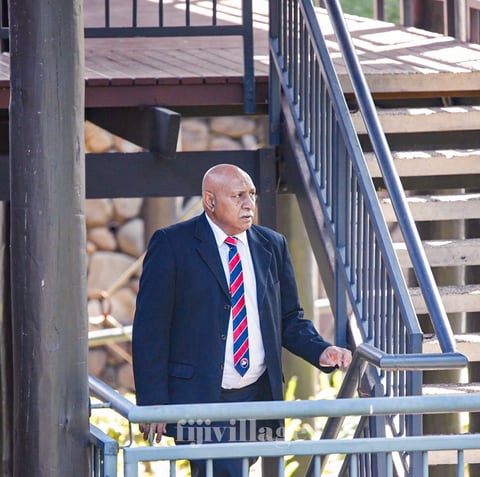
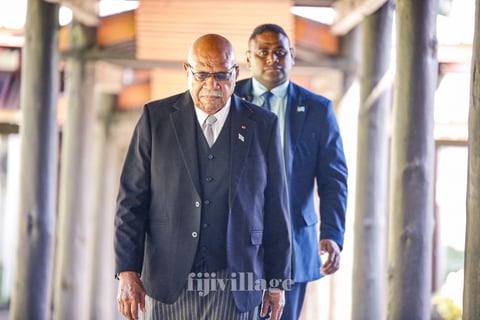
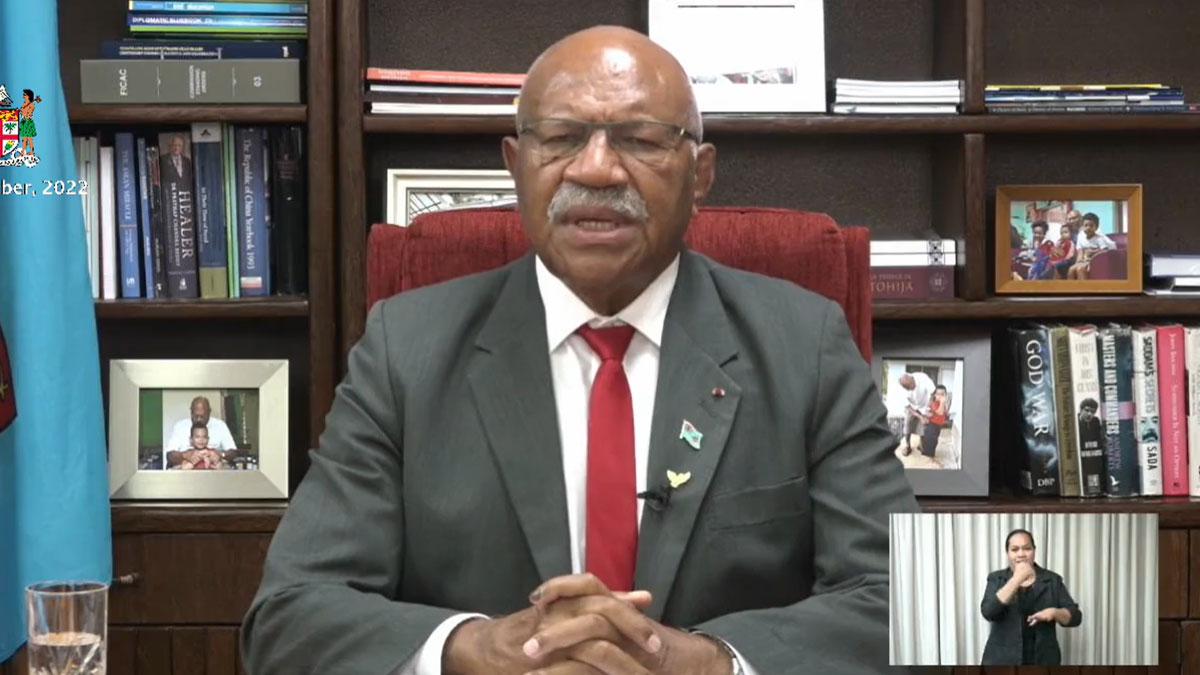 Prime Minister Sitiveni Rabuka
 Supreme Court advises 2013 Constitution can be amended by support of two thirds of MPs and majority of those registered voters who vote in referendum
Immunity section will not be touched, 1997 Constitution is not valid
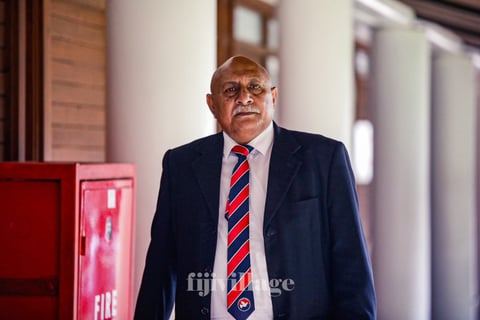
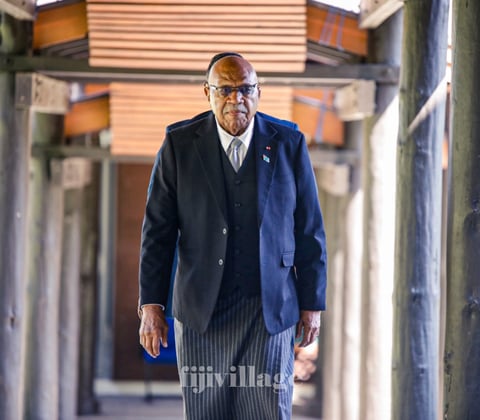
By Vijay Narayan 29/08/2025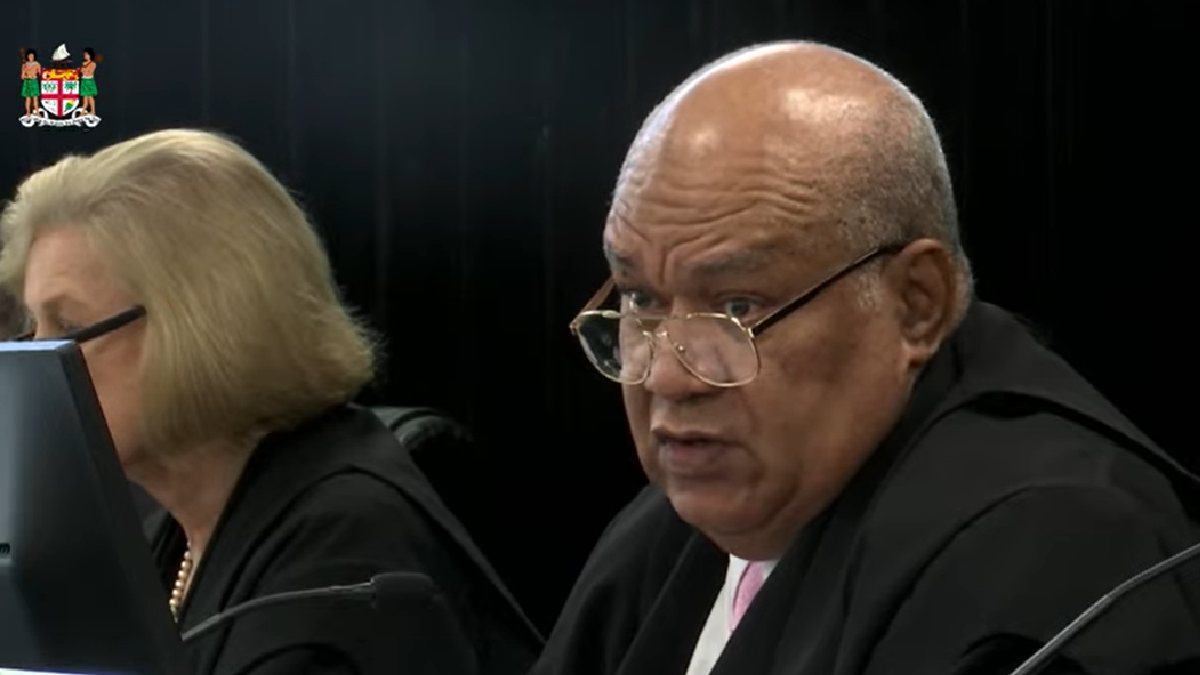 Chief Justice Salesi Temo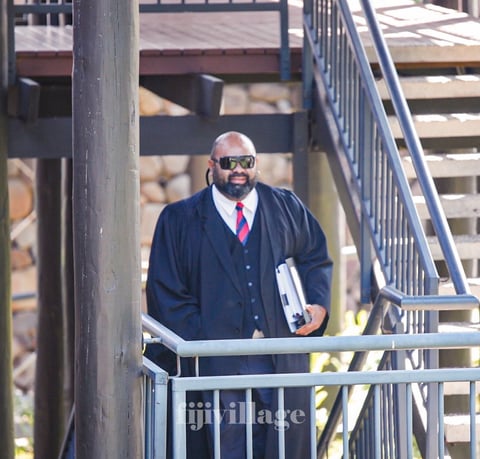
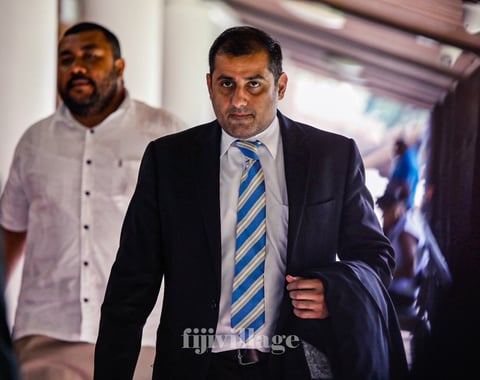
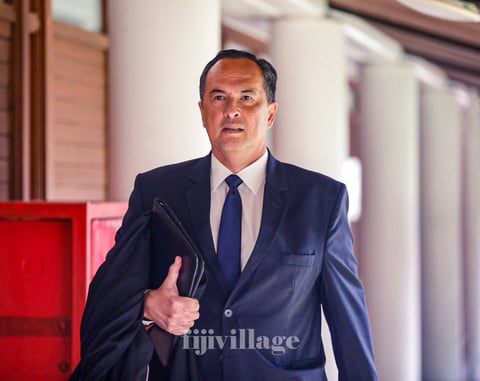
PM Rabuka happy with the Supreme Court opinion on 2013 ConstitutionBy Mansi Chand 29/08/2025

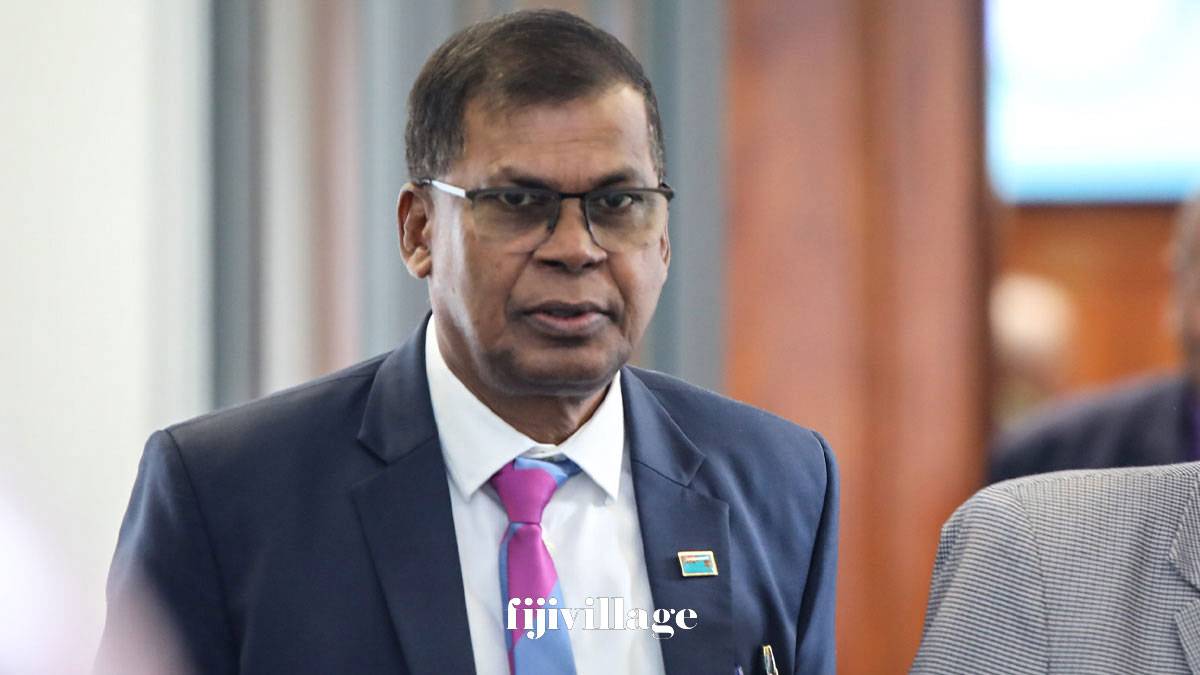
Supreme Court outcome restores genuine democratic control of the Constitution to Fiji’s people - Prof Prasad
GCC acknowledges Supreme Court ruling but questions its cultural legitimacy
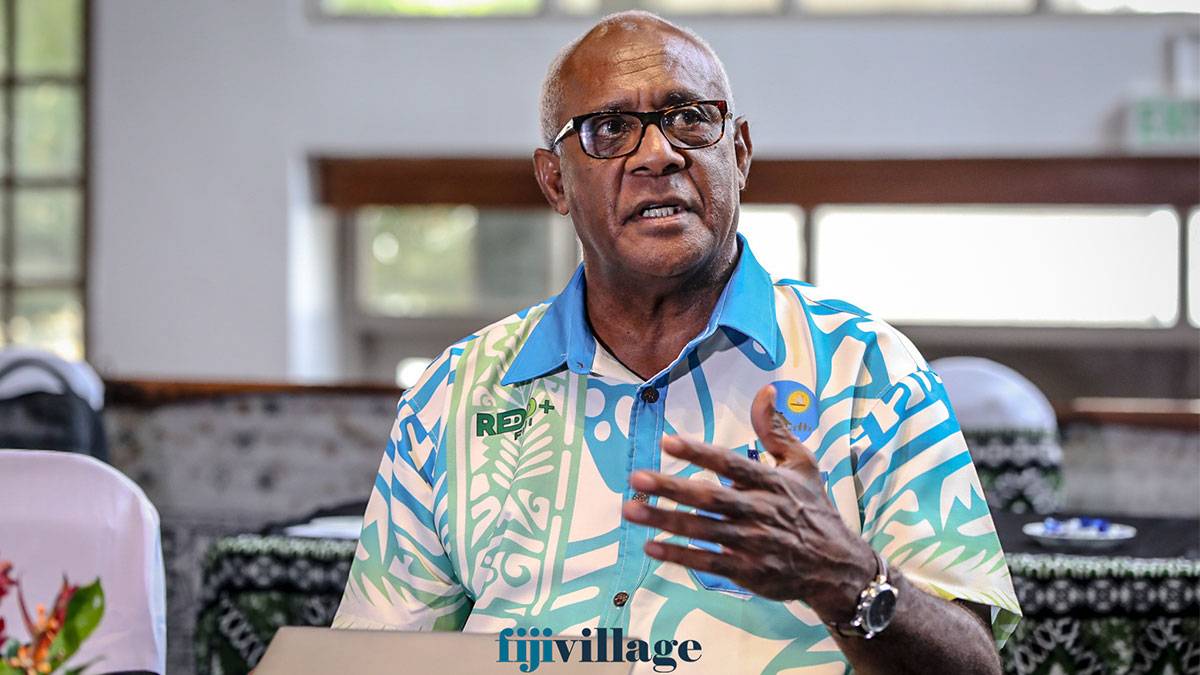
SODELPA disappointed with Supreme Court’s opinion
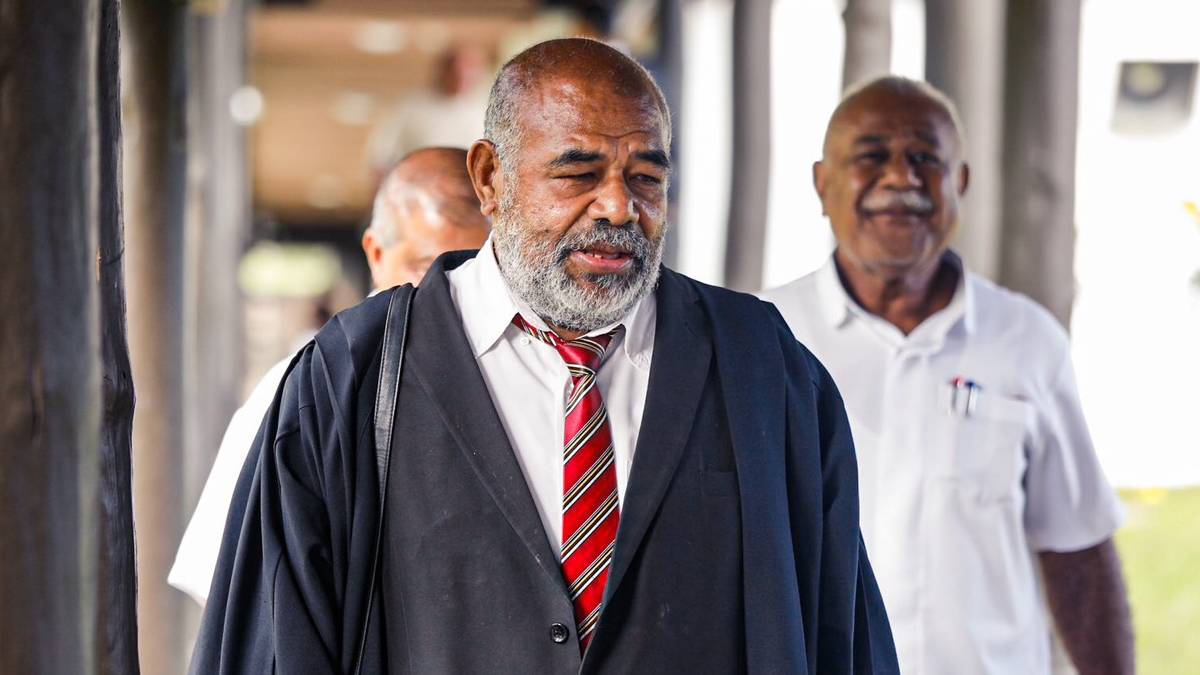
FLP welcomes clarity on Constitution amendment processBy Vijay Narayan, Temalesi Vono 29/08/2025
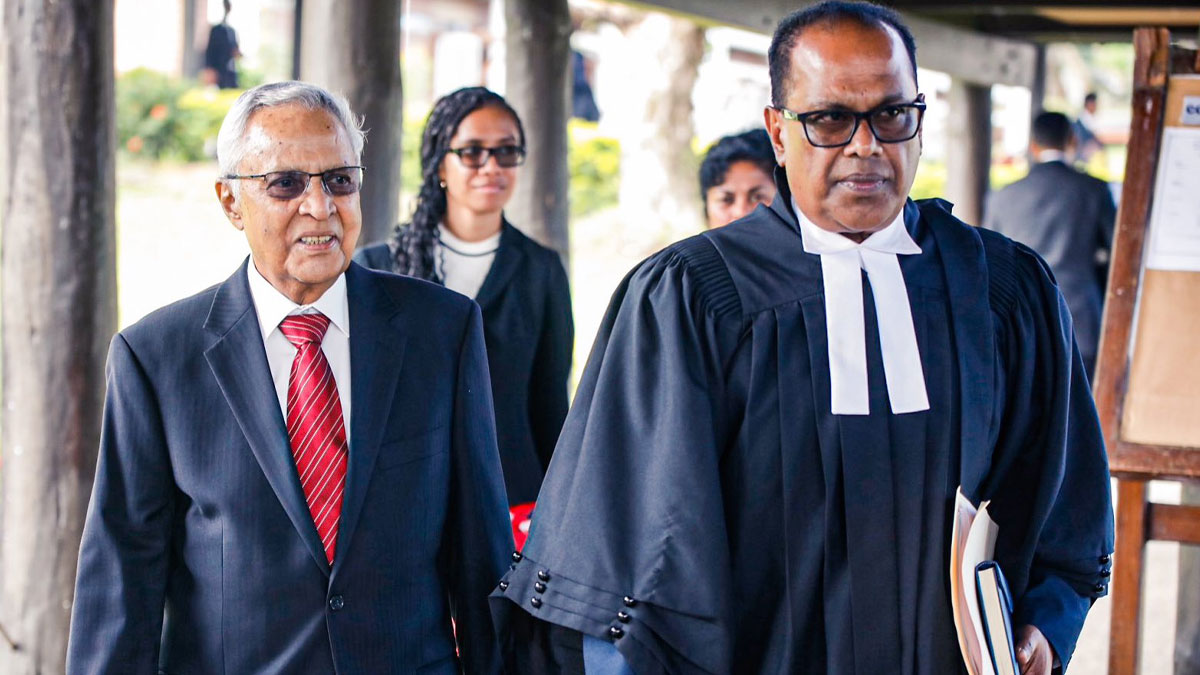
Unity Fiji Leader say they are happy with some decisions made on the 2013 ConstitutionBy Mansi Chand, Vijay Narayan, Rashika Kumar 29/08/2025
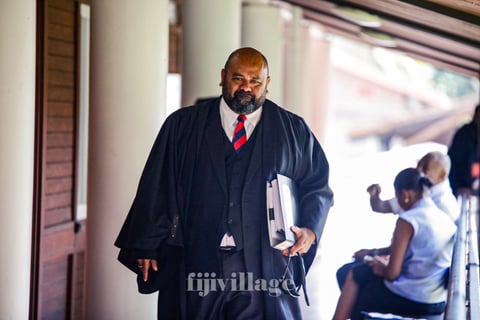
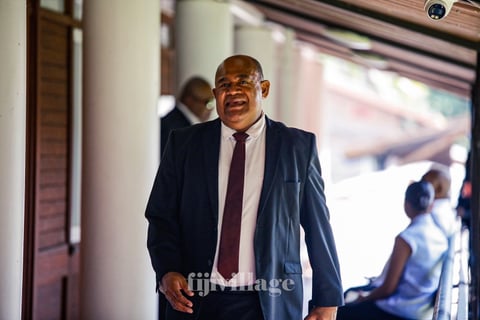
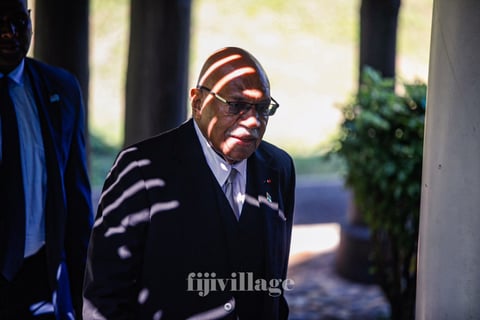
 Unity Fiji Leader Savenaca Narube
 Win-win situation for everyone - ValenitabuaBy Alipate Narawa, Rashika Kumar 29/08/2025
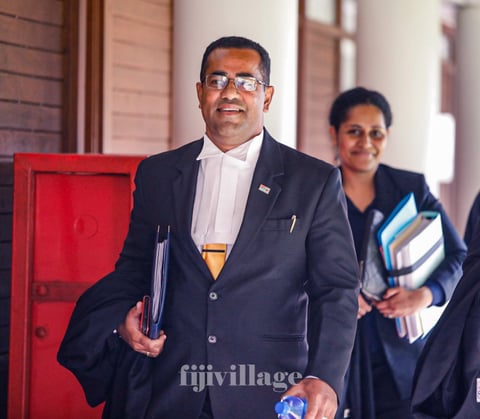
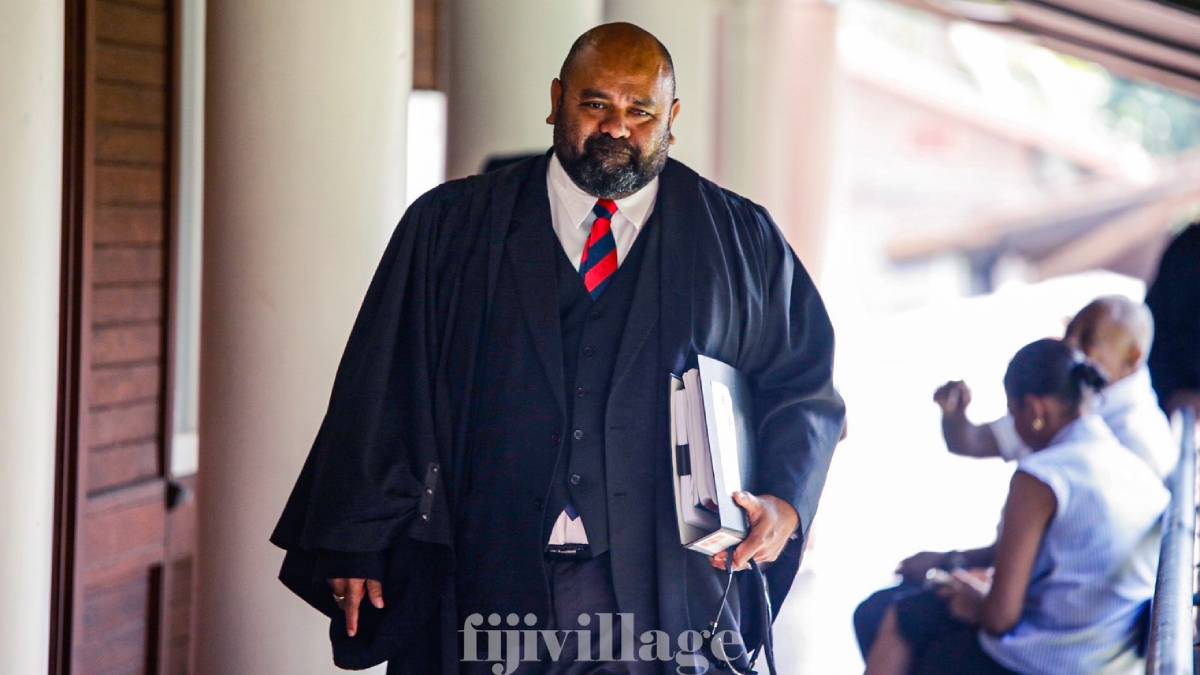 People’s Alliance Party lawyer Simione Valenitabua

Stay tuned for the latest news on our radio stations