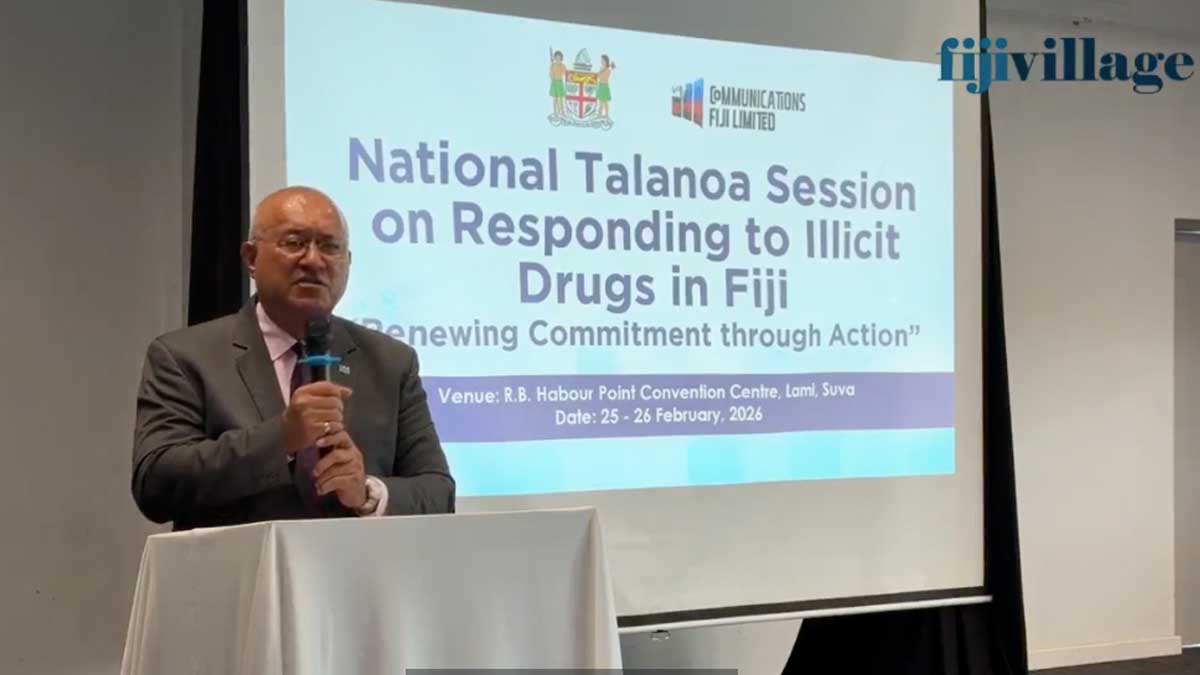
The illicit drug situation in Fiji has been described as a national emergency, with 2,400 drug-related cases recorded in 2025.
Minister for Policing and Communications, Ioane Naivalurua highlighted this during the National Talanoa Session on Responding to Illicit Drugs in Fiji at the R.B. Convention Centre in Lami this morning.
Naivalurua says most offenders are between the ages of 18 and 35, and behind every statistic is a disrupted home.
He says major drug interceptions have confirmed Fiji’s exposure to transnational trafficking groups and the growing link to methamphetamine use.
The Minister stresses that the situation is not only a policing issue but also a public health concern.
He says the National Counter-Narcotics Strategy 2023–2028 provides a framework built on demand reduction, supply reduction, harm reduction and legislative review.
Naivalurua says five key principles must guide the way forward: honesty, practicality, accountability, protection of the next generation, and balance.
He urged that discussions be frank, disciplined and lead to concrete action.
Insert: Fiji hasn’t lost the drug war 25th Feb
He adds that the treatment and rehabilitation for those impacted by drugs must also improve.
Meanwhile, a minute of silence was observed for late police officer Peni Racagi whose body was found on Sunday morning in Lami. Elements of foul play have been found following the post mortem.
The National Talanoa Session serves as a vital platform for turning shared insights into actionable strategies, addressing the interconnected challenges of drug trafficking, addiction and HIV through targeted interventions.
You can view the live coverage on our fijivillage Facebook page and YouTube channel.
The Transnational Crime Summit will be held in May this year.
Reverend Kolivuso calls for independent Counter Narcotics BureauBy Mansi Chand 27/02/2026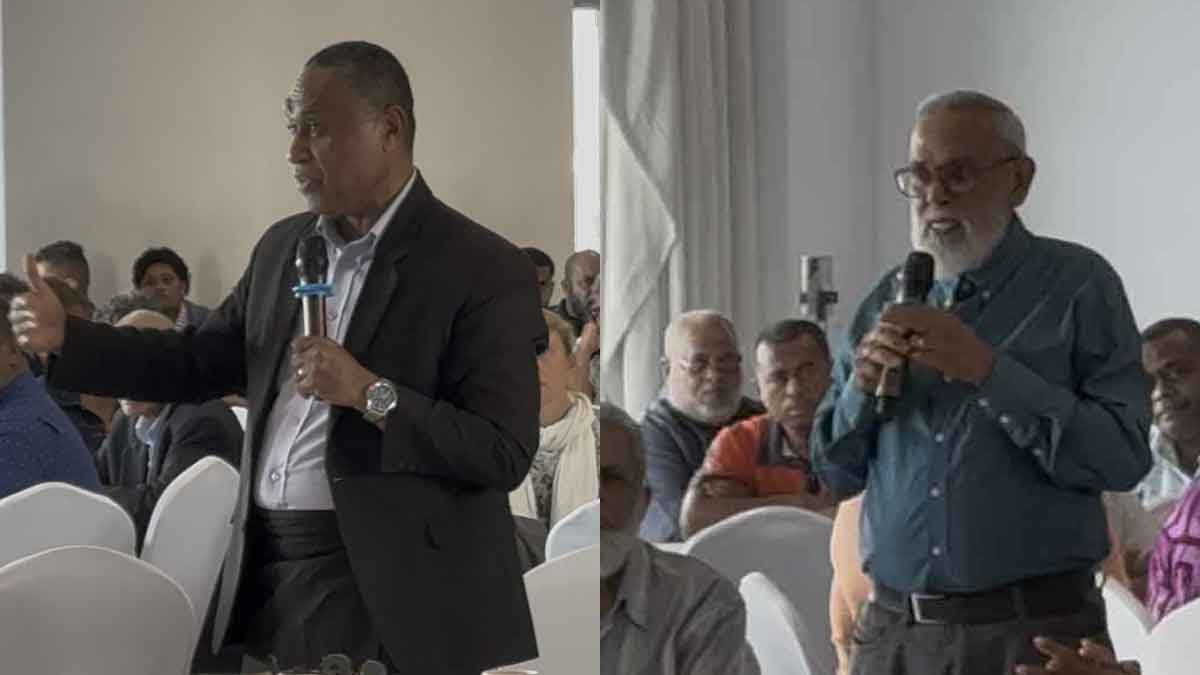 Reverend Manasa Kolivuso and Kamlesh AryaReverend Manasa Kolivuso says given the crisis Fiji is facing, there is a need for a completely independent Counter Narcotics Bureau, independent from the Fiji Police Force, the Republic of Fiji Military Forces and any other law enforcement agency.
Reverend Kolivuso supports the establishment of a Counter Narcotics Bureau as a separate entity altogether.
This comes as fijivillage News Director Vijay Narayan, questioned whether there is a need for a separate Counter Narcotics Bureau during the National Talanoa Session on Responding to Illicit Drugs in Fiji held at the R.B. Convention Centre in Lami.
Insert: Reverend on drug raid 25th Feb
However, Arya Pratinidhi Sabha of Fiji member, Kamlesh Arya says an independent Bureau will serve no purpose.
Arya says the Bureau should instead have representation from all stakeholders working in this area, including health officials, police and community groups.
He says when decisions are made, they should be communicated and implemented across all relevant agencies.
He further suggests there could be an independent chairperson.
Meanwhile, another participant questioned the need for the Bureau and asked whether setting it up would be a waste of money.
She says such decisions require careful and deep consideration.
She says leadership deficit issue also needs to be addressed when people are choosen to work for the Bureau.
You can also view the live coverage on our fijivillage facebook page and YouTube channel.
Ethical leadership and transparency critical in fight against drugs – SereviBy Pita Toganivalu 26/02/2026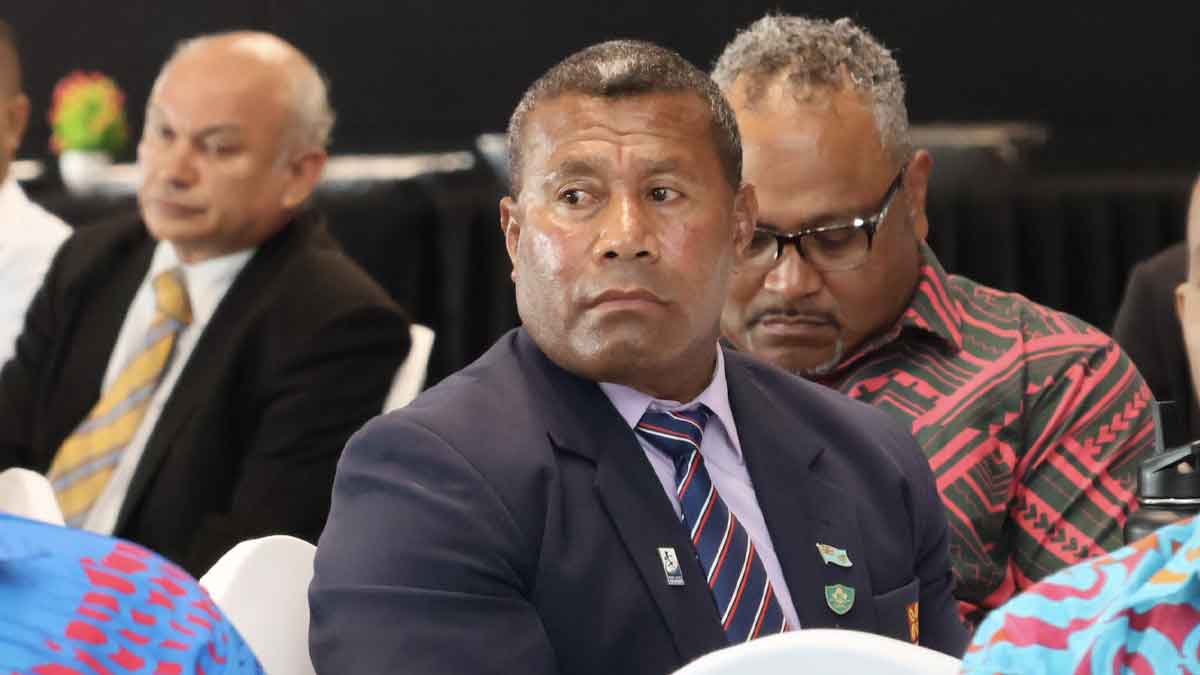 Photo: Fiji GovernmentEthical leadership and transparency at every level of society are critical if Fiji is to combat the growing threat of illicit drugs.Speaking at the National Talanoa Session on Responding to Illicit Drugs in Fiji Renewing Commitment Through Action in Lami, rugby legend Waisale Serevi warned that when leadership integrity collapses, criminal supply chains expand.He says every level of leadership matters.
Insert: defensive line collapse 25th Feb 26
Serevi says supply reduction is not only about policing and border security, but also about moral courage, anti-corruption commitment and community vigilance.
He stresses that transparent and accountable leadership must be demonstrated by national policymakers, provincial leaders, village chiefs, pastors, school principals, coaches and parents.
Serevi says if leaders fail to act decisively, criminal networks will fill the gap.
He describes illicit drugs as a form of hybrid warfare, saying narcotics can systematically erode the core pillars of a sovereign state from within.
He says drugs steal clarity of mind, strength of body, stability of families and integrity of leadership.
Serevi says when the damage occurs at scale, it becomes a national crisis rather than an individual problem.
He warns that Fiji’s greatest resource is not gold, fisheries or tourism, but its people.
According to Serevi, when drugs infiltrate communities, youth lose educational focus, families fracture, crime increases and health systems come under pressure.
He says human capital declines, and with it the nation’s competitive edge — economically, morally and spiritually.
Serevi says even if narcotics are driven by profit, their large-scale distribution has strategic consequences, including youth incapacitation, economic destabilisation and social fragmentation.
He cautioned that weakened societies become vulnerable societies.
Serevi outlined three key responses — demand reduction, supply reduction and harm reduction.
On demand reduction, he highlighted the role of rugby academies, churches and schools in providing structured, value-based environments for young people.
He says at the Serevi International Rugby Academy, the focus goes beyond passing and tackling to teaching discipline, respect, self-control and accountability.
Serevi says drugs often fill a vacuum of identity and belonging, and strong institutions such as sport, faith communities and schools can provide young people with purpose.
On harm reduction, he emphasised rehabilitation, counselling and reintegration for those already affected.
Referencing the Gospel of John, he says condemnation should not be the final word for those who have fallen, but compassion must be balanced with accountability.
Serevi says this is not only a government issue, but a vanua issue, a church issue, a family issue, a school issue and a sport issue.
Serevi is urging renewed national commitment to protect Fiji’s children and youth, warning that if illicit drugs erode human capital, undermine sovereignty and weaken social cohesion, the country’s response must be equally strategic and coordinated.
Govt turned its back on us - Seek to Save Ministry youth repSeek to Save Ministry supports 20 HIV-positive and former drug addicts
By Temalesi Vono 26/02/2026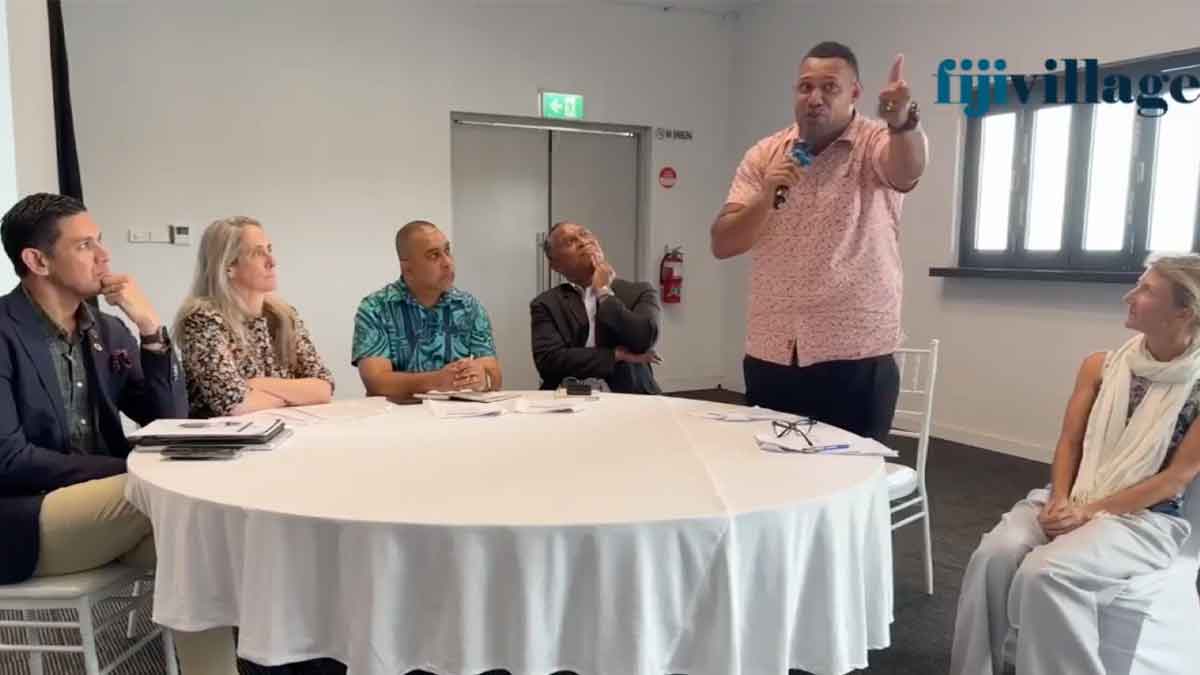 Elia Berabi speaks at the National Talanoa Session on Responding to Illicit Drugs in Fiji: Renewing Commitment Through Action, in Lami
A lot of times we have asked assistance from the government, and many times they have turned their back on us.
This was the blunt message delivered by Elia Berabi, a youth representative for Seek to Save Ministry, during the National Talanoa Session on Responding to Illicit Drugs in Fiji: Renewing Commitment Through Action, in Lami.
Berabi says that despite repeated pleas for support, his ministry continues to operate largely on passion and personal sacrifice.
Berabi says they currently support 20 young people between the ages of 14 and 27, many of whom were once living on the streets of Suva.
He says 70 percent of the youths in his care are HIV positive, while half entered the programme battling drug addiction.
He recounted how the ministry began in 2023, after he and his younger brother were moved by increasing reports of drug abuse among young people.
Disturbed by the number of street children they encountered in Suva, the brothers decided to act.
Despite not being financially stable, he and his brother brought several of the children home to live with him and his family in Colo-i-Suva.
Insert: Berabi - Connect with them
Through consistent conversations, he discovered that many of the youths had left home due to family breakdowns, abuse and neglect.
Berabi says several had parents who had remarried, and described being mistreated by step-parents.
In contrast, they found acceptance and shared companionship on the streets.
He adds that many were introduced to drugs through peers while seeking belonging and emotional support.
Beyond counselling, Berabi says the ministry has established an agricultural project aimed at giving the youths purpose and economic independence.
Starting with five acres of land, the group planted crops worth $15,000.
They have since expanded to 25 additional acres in Colo-i-Suva and now have crops valued at $35,000, with markets reportedly opening overseas.
Berabi has also opened term deposit accounts for the youths, with a target of $35,000 in savings for each child within three years.
The programme operates on a structured daily routine, beginning at 7am with devotion, chores and farm work.
Berabi says the transformation has been remarkable.
However, he admits that the journey has not been easy, that he and his wife house nearly 20 youths in their home, and shoulder much of the financial burden themselves.
Insert: Berabi - A living testimony
Berabi has challenged the leaders and stakeholders at the talanoa session to move beyond dialogue and take practical action.
He says Fiji needs people with passion, who are proactive, and those who truly love this nation.
Urgent need to introduce needle syringe programmes in Fiji - Dr MacdonaldBy Temalesi Vono 27/02/2026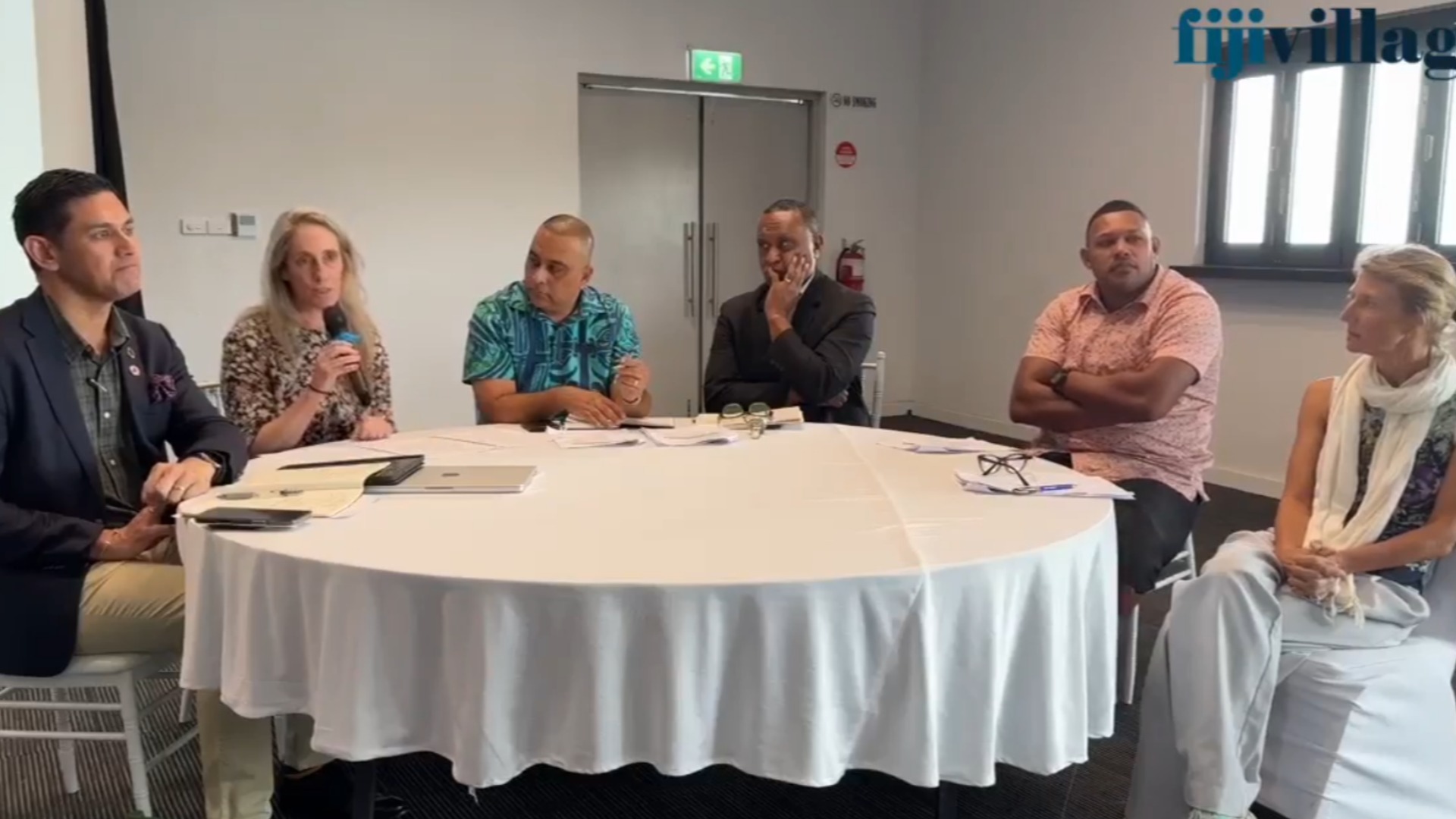 Dr Virginia McDonald (second from left)
There is an urgent need for the introduction of needle syringe programmes in Fiji as part of a broader harm reduction strategy, alongside supply and demand reduction measures due to the increasing number of people getting HIV through the sharing of needles.
This has been highlighted by Doctor Virginia Macdonald of the Kirby Institute from Australia during the National Talanoa Session on Responding to Illicit Drugs in Fiji: Renewing Commitment Through Action, in Lami.
Doctor Macdonald revealed that research conducted last year by the Kirby Institute in partnership with Fiji National University found that nearly all surveyed drug users in Suva were injecting drugs and all had shared needles because sterile equipment was unavailable.She argued that withholding sterile injecting equipment does not stop drug use but instead increases the risk of HIV and hepatitis C transmission, leading to lifelong infections and greater strain on the health system.
She says harm reduction is about accepting the reality that some people are using drugs and focusing on reducing the harm they experience while they are using.
Doctor Macdonald says it is about treating people with dignity and maintaining their health.
She also acknowledges that some may view needle syringe programmes as condoning drug use, but says decades of global evidence show otherwise.
50 percent of people living with HIV in Fiji are people who inject drugs, and only about 30 percent of those living with HIV are aware of their status.
This stark warning was delivered by Doctor Macdonald, who has been serving as a technical adviser supporting Fiji’s HIV Unit at the Ministry of Health over the past year with backing from the Australian Department of Foreign Affairs and Trade, says the country is facing a rapidly escalating HIV outbreak driven largely by unsafe injecting practices.
She highlights that the Minister for Health had declared an HIV outbreak at the beginning of 2025 following a sharp surge in cases.
According to United Nations estimates, approximately 7,000 people are now living with HIV in Fiji, up from around 1,000 in 2020, an increase of about 300 percent over the past two to three years.
Insert: Dr Macdonald - Dangerous situation
She stresses that while drug use is often blamed, it is not the act of using drugs itself that causes HIV infection, but the sharing of contaminated needles and syringes.
She says more than 90 countries have implemented such programmes, which have been recommended by the World Health Organisation for over 20 years, and in Australia, they have operated for nearly four decades.
Insert: Dr Macdonald - Response to emergency
Dr Macdonald adds that these programmes can serve as a critical entry point into the health system for marginalised individuals, linking them to drug treatment and other essential services.
She warns that while supply and demand reduction strategies are important, they can take years to achieve measurable impact.
RFMF warns Fiji could become a semi-narco-state in 3–5 years without stronger political actionBy Rashika Kumar 27/02/2026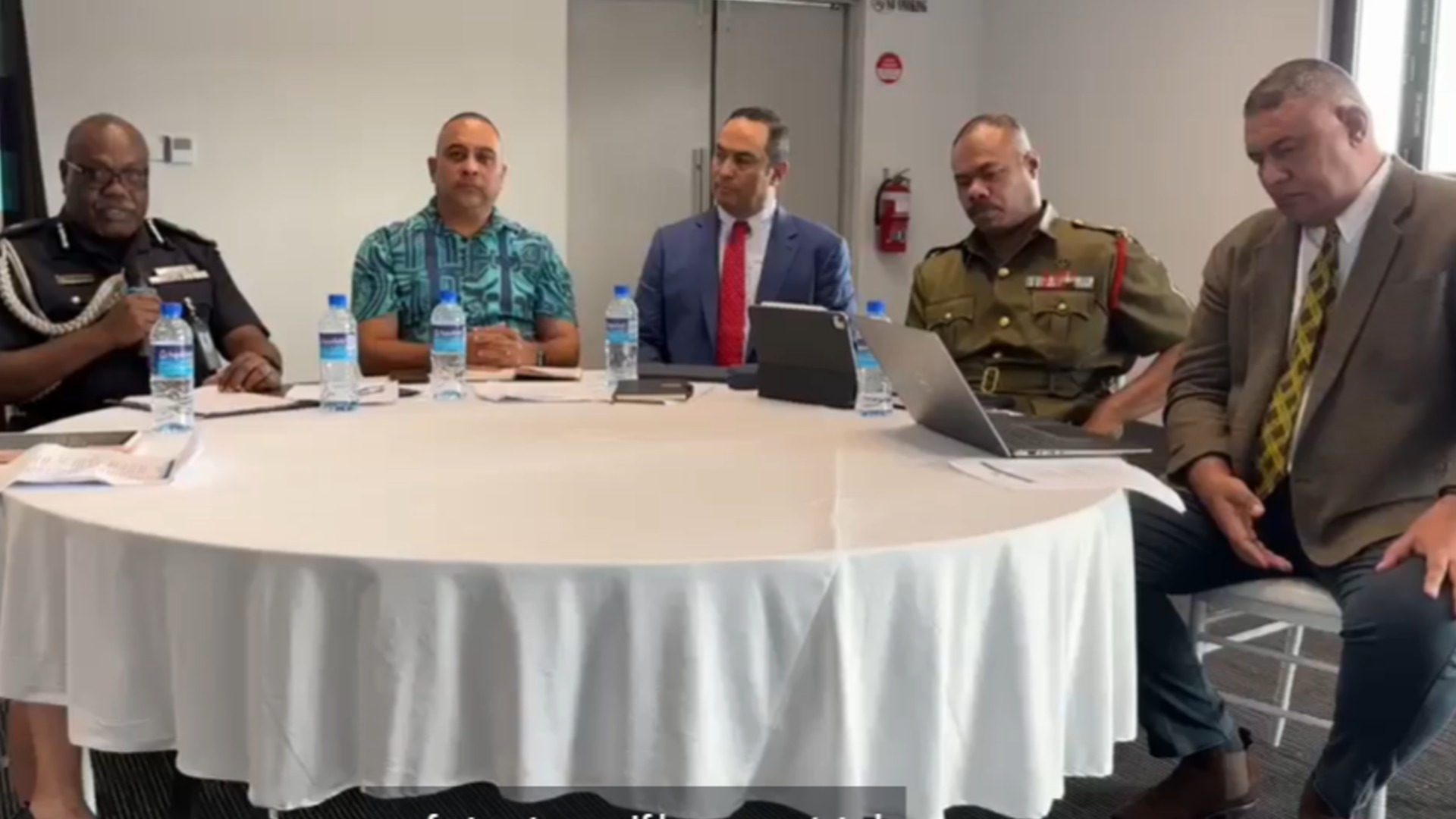 The Republic of Fiji Military Forces is concerned that if there is no political will to have a more aggressive, robust response to the drug problem, Fiji is prone to becoming a semi-narco-state in the next three to five years.
This has been highlighted by RFMF's Director International Defence Cooperation, Lt Colonel Esira Kulavati during the National Talanoa Session on Responding to Illicit Drugs in Fiji: Renewing Commitment Through Action, in Lami.
Lt Colonel Kulavati says he is raising this concern because, at present, most of the institutions that constitute the State, the Republic of Fiji, will be or are likely penetrated and compromised.
He says this is a worrying trend and warns that if nothing is done now, the country could, within the next three to five years, end up becoming a semi-Mexico.
Lt Colonel Kulavati clarified that he is referring to white drugs, not marijuana.
He says the RFMF’s primary concern is not only the harm caused by the drugs themselves, but the trafficking of these substances, where significant money is involved.
He warns that it could impact governance and access to justice, which are among the fundamental pillars of the nation.
Lt Colonel Kulavati says as of last month, the RFMF Commander had a briefing on the drugs problem in Fiji from the Commissioner of Police.
He says police proposed sharing of intelligence, and to have a joint task force to tackle this issue.
The Lt Colonel says the RFMF has conducted a strategic estimate to look at the problem in its totality, including the roots and the drivers, how the adversary would be providing their narratives, the likely lines of efforts that is in their strategy and why our current response, including the Counter Narcotics Bureau is not working.
He says the problem they are trying to address is clearly demarcating the role of defence from that of law enforcement, particularly in relation to threats originating from outside the country.
Lt Colonel Kulavati says troops began mission-specific training two weeks ago to prepare for hybrid threats, which require a different approach from conventional warfare and peacekeeping operations.
He stresses strengthening institutional integrity is critical to preventing traffickers from infiltrating State institutions.
When questioned by fijivillage News Director Vijay Narayan on how dangerous the situation has become, noting concerns that drug trafficking is often linked to weapons, Associate Professor Jose Sousa Santos from the Pacific Regional Security Hub says 95 percent of drug seizures in Tonga last year included weapons, pistols or long arms.
He says the pattern has not been seen in Fiji but it is something definitely to keep an eye on, especially as Fijian law enforcement and joint operations become more successful in its operations against the cartels.
Police Commissioner Rusiate Tudravu says the Fiji Police Force is not armed and if drug operations involve arms, then the military will have to step in.
When questioned on whether to wait for that situation to arise or ensure we are prepared in advance, Tudravu stresses that the police are not armed and political leaders will need to make a decision on this.
Lt Colonel Kulavati says from current intelligence, there may be weapons associated with these traffickers, but not for use against law enforcement or the military.
INSERT: Lt Col on weapons 25 feb
Ministry of Policing's Inspector Jemesa Lave says their studies have found that in a society, if the police are armed, it forces the other side to elevate their security posture because they will be defending themselves against the police.
He says that in Fiji, this will happen and for now, they have not elevated their security, and the reason we know they possess arms is that they are facing the military, not the police.
Reverend Manasa Kolivuso also questioned the Commissioner, asking whether, following the recent death of a police officer in the line of duty under suspected foul play, the officer would have been able to defend himself instead of facing death if he had been legally allowed to be armed.
Tudravu says definitely it would have been done if the police officer was armed.
He says the constable was wearing his essential vest, but as of now, the investigation will point to what equipment that was with him during his death.
The Commissioner further says that in equipping police officers, they are doing their best but many steps are being taken to better equip the Force, including numerous recent purchases.
He says there are also discussions about non-lethal options, such as sprays, among other equipment, with many factors being considered in the process.
INSERT: COMPOL on arms 25 feb
The talanoa session continues in Lami.
Rabuku calls for more funding for Navy and asset recovery to combat drug traffickingBy Mansi Chand 27/02/2026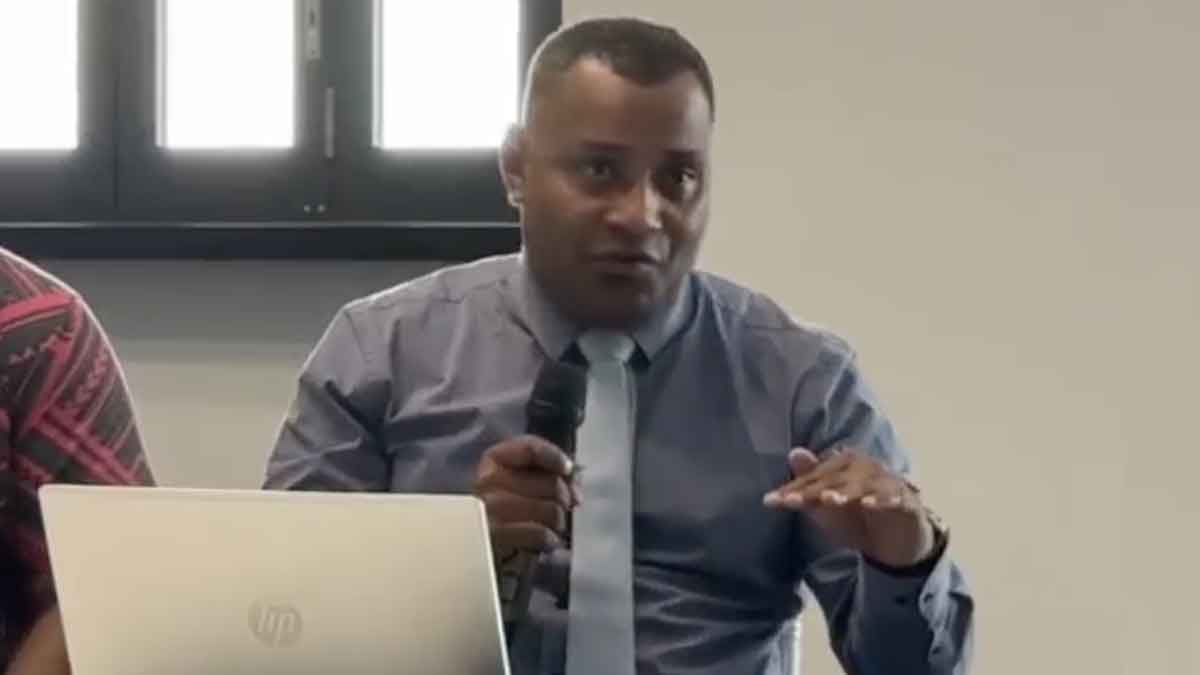 Deputy Director of Public Prosecutions, John Rabuku
Fiji has maritime borders that require increased funding, particularly for the Fiji Navy, as well as stronger narcotics diplomacy with countries such as Australia and New Zealand.
Deputy Director of Public Prosecutions, John Rabuku raised this during the National Talanoa Session on Responding to Illicit Drugs in Fiji; Renewing Commitment Through Action, held at the R.B. Convention Centre in Lami.
He says nobody is doing surveillance 24/7, which allowed two major drug shipments to reach Fiji’s borders in broad daylight.
Rabuku says the Navy's budget is 12 percent of the entire RFMF budget, but we have the most porous borders.
He also says Australia and New Zealand should provide greater financial support, as many of the drugs originate from or pass through their countries.
Insert: Rabuku on political will 25th Feb
The Deputy DPP further stresses the government must allocate more funding to asset recovery as well, noting that significant funds remain unused in certain accounts.
Rabuku says that tonnes of drugs are entering through maritime routes.
He adds that a proper asset recovery system would allow authorities to seize illicit proceeds and redirect the money toward combating the drug crisis in communities and supporting rehabilitation programmes.
Meanwhile, the Minister for Policing Ioane Naivalurua has stressed that we will defeat the drug war.
He called to act now and help in reducing the supply of drugs in our country.
Naivalurua adds that we need to tighten our borders, secure not only the airports, but the open seas.
We have failed our children, rehab centres are needed now - KurulecaKuruleca says we must build rehabilitation centres
By Navitalai Naivalurua 27/02/2026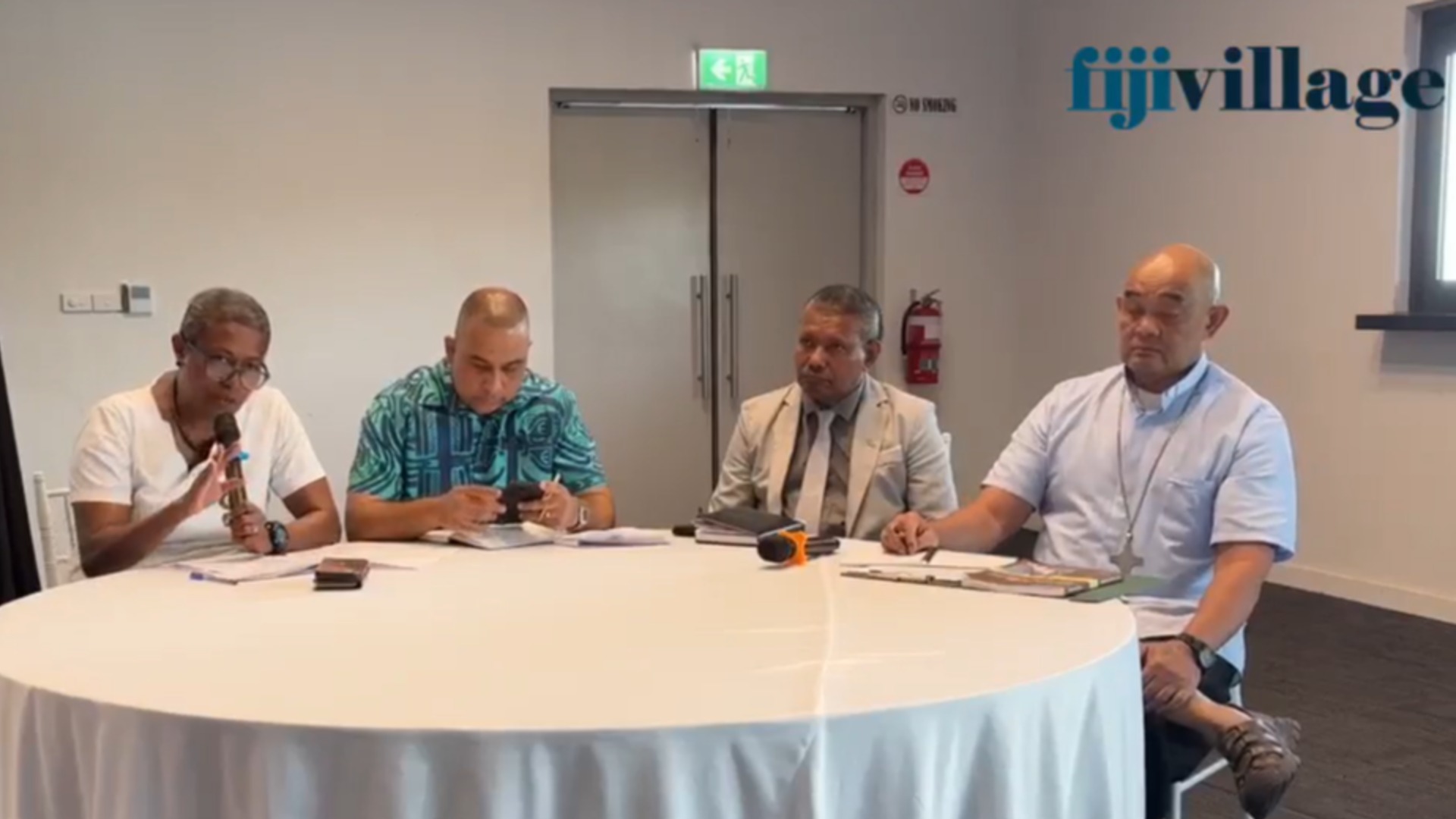 Serious concerns were raised by the Permanent Secretary for Justice and Acting Permanent Secretary for Women, Children and Social Protection, Selina Kuruleca, that at least five to ten children roaming Suva City are injecting themselves with methamphetamine and there is a need for proper rehabilitation centres.
While speaking at the National Talanoa Session on Responding to Illicit Drugs in Fiji: Renewing Commitment Through Action in Lami, Kuruleca strongly believes that when we talk about demand reduction, we need to talk about harm reduction.
She says between May 2024 and May 2025, 2,400 cases of harm were recorded by the Fiji Police, and many involved young people between the ages of 18 and 35 years.
She adds that more than 300 methamphetamine cases and 50 juvenile cases were recorded.
The Permanent Secretary says at the same time, Fiji has recorded an alarming increase in new HIV cases in the first half of 2025, with 1,226 cases recorded, and the numbers continue to rise.
Insert: Kuruleca on fail, 26th Feb 26
Kuruleca says the vulnerability of our young children is at its highest ever and it is the biggest gateway to drug use.
She says we have unsafe homes, lack of supervision, trauma and violence, poverty and unemployment, normalisation of drug use, and the stigma that kills help-seeking behaviour.
Speaking on the issue of having a rehabilitation centre, Kuruleca says this has been one big argument, but there is a lot of land just sitting idle out there.
She asks why we can’t get together and build a rehabilitation home and get service providers that provide science-based treatment, and not hope-based improvisation.
Kuruleca says we must build rehabilitation centres.
The Permanent Secretary also highlighted that legislative reform is needed and our laws need to be modernised for community-based diversion.
Condom use needs to increase, we need the needle syringe programmes now - Dr MitchellBy Temalesi Vono 27/02/2026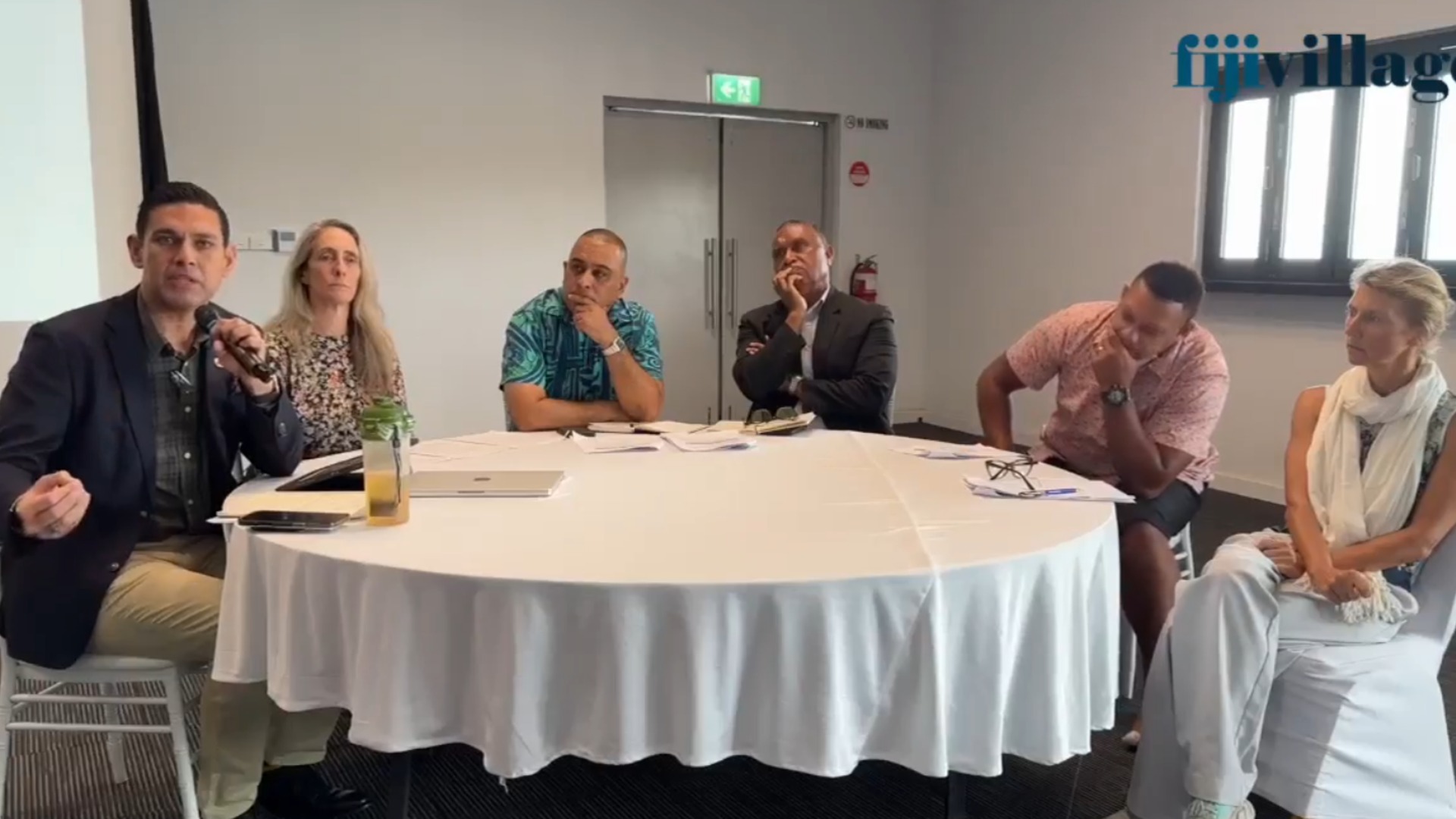 Dr Jason Mitchell speaking at the National Talanoa Session on Responding to Illicit Drugs in Fiji: Renewing Commitment Through Action, in Lami.
21 percent of people living in Fiji do not use condoms when they should, and families are not having this conversation.
This sobering reality was highlighted by Dr Jason Mitchell, Chairman of the Fiji National HIV Outbreak Cluster Response Taskforce, during the National Talanoa Session on Responding to Illicit Drugs in Fiji: Renewing Commitment Through Action, in Lami.
Dr Mitchell warns that sexual transmission remains the most common way people become infected with HIV in Fiji, even as cases linked to injecting drug use continue to surge.
Dr Mitchell stresses that increasing condom use must be a national priority.
He revealed that 48 percent of people currently infected with HIV in Fiji acquired the virus through the sharing of needles and syringes.
However, Dr Mitchell says that the crisis is no longer confined to people who inject drugs, but through sexual contact, including to women who may not use drugs themselves but are infected by partners who do.
He raises concerns about mother-to-child transmission, warning that untreated pregnant women can pass HIV to their babies, as he notes that Fiji is seeing a worrying rise in HIV cases among children.
Insert: Dr Mitchell - HIV babies
He is calling for a comprehensive response that includes increased condom use, needle and syringe programmes, pre-exposure and post-exposure prophylaxis, alongside community and faith-based support.
He says the idea that we can educate ourselves out of this is incorrect, and that we need practical, biological interventions in the hands of our people.
Insert: defensive line collapse 25th Feb 26
Serevi says supply reduction is not only about policing and border security, but also about moral courage, anti-corruption commitment and community vigilance.
He stresses that transparent and accountable leadership must be demonstrated by national policymakers, provincial leaders, village chiefs, pastors, school principals, coaches and parents.
Serevi says if leaders fail to act decisively, criminal networks will fill the gap.
He describes illicit drugs as a form of hybrid warfare, saying narcotics can systematically erode the core pillars of a sovereign state from within.
He says drugs steal clarity of mind, strength of body, stability of families and integrity of leadership.
Serevi says when the damage occurs at scale, it becomes a national crisis rather than an individual problem.
He warns that Fiji’s greatest resource is not gold, fisheries or tourism, but its people.
According to Serevi, when drugs infiltrate communities, youth lose educational focus, families fracture, crime increases and health systems come under pressure.
He says human capital declines, and with it the nation’s competitive edge — economically, morally and spiritually.
Serevi says even if narcotics are driven by profit, their large-scale distribution has strategic consequences, including youth incapacitation, economic destabilisation and social fragmentation.
He cautioned that weakened societies become vulnerable societies.
Serevi outlined three key responses — demand reduction, supply reduction and harm reduction.
On demand reduction, he highlighted the role of rugby academies, churches and schools in providing structured, value-based environments for young people.
He says at the Serevi International Rugby Academy, the focus goes beyond passing and tackling to teaching discipline, respect, self-control and accountability.
Serevi says drugs often fill a vacuum of identity and belonging, and strong institutions such as sport, faith communities and schools can provide young people with purpose.
On harm reduction, he emphasised rehabilitation, counselling and reintegration for those already affected.
Referencing the Gospel of John, he says condemnation should not be the final word for those who have fallen, but compassion must be balanced with accountability.
Serevi says this is not only a government issue, but a vanua issue, a church issue, a family issue, a school issue and a sport issue.
Serevi is urging renewed national commitment to protect Fiji’s children and youth, warning that if illicit drugs erode human capital, undermine sovereignty and weaken social cohesion, the country’s response must be equally strategic and coordinated.
Govt turned its back on us - Seek to Save Ministry youth repSeek to Save Ministry supports 20 HIV-positive and former drug addicts
By Temalesi Vono 26/02/2026Elia Berabi speaks at the National Talanoa Session on Responding to Illicit Drugs in Fiji: Renewing Commitment Through Action, in LamiA lot of times we have asked assistance from the government, and many times they have turned their back on us.
This was the blunt message delivered by Elia Berabi, a youth representative for Seek to Save Ministry, during the National Talanoa Session on Responding to Illicit Drugs in Fiji: Renewing Commitment Through Action, in Lami.
Berabi says that despite repeated pleas for support, his ministry continues to operate largely on passion and personal sacrifice.
Berabi says they currently support 20 young people between the ages of 14 and 27, many of whom were once living on the streets of Suva.
He says 70 percent of the youths in his care are HIV positive, while half entered the programme battling drug addiction.
He recounted how the ministry began in 2023, after he and his younger brother were moved by increasing reports of drug abuse among young people.
Disturbed by the number of street children they encountered in Suva, the brothers decided to act.
Despite not being financially stable, he and his brother brought several of the children home to live with him and his family in Colo-i-Suva.
Insert: Berabi - Connect with them
Through consistent conversations, he discovered that many of the youths had left home due to family breakdowns, abuse and neglect.
Berabi says several had parents who had remarried, and described being mistreated by step-parents.
In contrast, they found acceptance and shared companionship on the streets.
He adds that many were introduced to drugs through peers while seeking belonging and emotional support.
Beyond counselling, Berabi says the ministry has established an agricultural project aimed at giving the youths purpose and economic independence.
Starting with five acres of land, the group planted crops worth $15,000.
They have since expanded to 25 additional acres in Colo-i-Suva and now have crops valued at $35,000, with markets reportedly opening overseas.
Berabi has also opened term deposit accounts for the youths, with a target of $35,000 in savings for each child within three years.
The programme operates on a structured daily routine, beginning at 7am with devotion, chores and farm work.
Berabi says the transformation has been remarkable.
However, he admits that the journey has not been easy, that he and his wife house nearly 20 youths in their home, and shoulder much of the financial burden themselves.
Insert: Berabi - A living testimony
Berabi has challenged the leaders and stakeholders at the talanoa session to move beyond dialogue and take practical action.
He says Fiji needs people with passion, who are proactive, and those who truly love this nation.
Urgent need to introduce needle syringe programmes in Fiji - Dr MacdonaldBy Temalesi Vono 27/02/2026Dr Virginia McDonald (second from left)There is an urgent need for the introduction of needle syringe programmes in Fiji as part of a broader harm reduction strategy, alongside supply and demand reduction measures due to the increasing number of people getting HIV through the sharing of needles.
This has been highlighted by Doctor Virginia Macdonald of the Kirby Institute from Australia during the National Talanoa Session on Responding to Illicit Drugs in Fiji: Renewing Commitment Through Action, in Lami.
Doctor Macdonald revealed that research conducted last year by the Kirby Institute in partnership with Fiji National University found that nearly all surveyed drug users in Suva were injecting drugs and all had shared needles because sterile equipment was unavailable.She argued that withholding sterile injecting equipment does not stop drug use but instead increases the risk of HIV and hepatitis C transmission, leading to lifelong infections and greater strain on the health system.
She says harm reduction is about accepting the reality that some people are using drugs and focusing on reducing the harm they experience while they are using.
Doctor Macdonald says it is about treating people with dignity and maintaining their health.
She also acknowledges that some may view needle syringe programmes as condoning drug use, but says decades of global evidence show otherwise.
50 percent of people living with HIV in Fiji are people who inject drugs, and only about 30 percent of those living with HIV are aware of their status.
This stark warning was delivered by Doctor Macdonald, who has been serving as a technical adviser supporting Fiji’s HIV Unit at the Ministry of Health over the past year with backing from the Australian Department of Foreign Affairs and Trade, says the country is facing a rapidly escalating HIV outbreak driven largely by unsafe injecting practices.
She highlights that the Minister for Health had declared an HIV outbreak at the beginning of 2025 following a sharp surge in cases.
According to United Nations estimates, approximately 7,000 people are now living with HIV in Fiji, up from around 1,000 in 2020, an increase of about 300 percent over the past two to three years.
Insert: Dr Macdonald - Dangerous situation
She stresses that while drug use is often blamed, it is not the act of using drugs itself that causes HIV infection, but the sharing of contaminated needles and syringes.
She says more than 90 countries have implemented such programmes, which have been recommended by the World Health Organisation for over 20 years, and in Australia, they have operated for nearly four decades.
Insert: Dr Macdonald - Response to emergency
Dr Macdonald adds that these programmes can serve as a critical entry point into the health system for marginalised individuals, linking them to drug treatment and other essential services.
She warns that while supply and demand reduction strategies are important, they can take years to achieve measurable impact.
RFMF warns Fiji could become a semi-narco-state in 3–5 years without stronger political actionBy Rashika Kumar 27/02/2026The Republic of Fiji Military Forces is concerned that if there is no political will to have a more aggressive, robust response to the drug problem, Fiji is prone to becoming a semi-narco-state in the next three to five years.
This has been highlighted by RFMF's Director International Defence Cooperation, Lt Colonel Esira Kulavati during the National Talanoa Session on Responding to Illicit Drugs in Fiji: Renewing Commitment Through Action, in Lami.
Lt Colonel Kulavati says he is raising this concern because, at present, most of the institutions that constitute the State, the Republic of Fiji, will be or are likely penetrated and compromised.
He says this is a worrying trend and warns that if nothing is done now, the country could, within the next three to five years, end up becoming a semi-Mexico.
Lt Colonel Kulavati clarified that he is referring to white drugs, not marijuana.
He says the RFMF’s primary concern is not only the harm caused by the drugs themselves, but the trafficking of these substances, where significant money is involved.
He warns that it could impact governance and access to justice, which are among the fundamental pillars of the nation.
Lt Colonel Kulavati says as of last month, the RFMF Commander had a briefing on the drugs problem in Fiji from the Commissioner of Police.
He says police proposed sharing of intelligence, and to have a joint task force to tackle this issue.
The Lt Colonel says the RFMF has conducted a strategic estimate to look at the problem in its totality, including the roots and the drivers, how the adversary would be providing their narratives, the likely lines of efforts that is in their strategy and why our current response, including the Counter Narcotics Bureau is not working.
He says the problem they are trying to address is clearly demarcating the role of defence from that of law enforcement, particularly in relation to threats originating from outside the country.
Lt Colonel Kulavati says troops began mission-specific training two weeks ago to prepare for hybrid threats, which require a different approach from conventional warfare and peacekeeping operations.
He stresses strengthening institutional integrity is critical to preventing traffickers from infiltrating State institutions.
When questioned by fijivillage News Director Vijay Narayan on how dangerous the situation has become, noting concerns that drug trafficking is often linked to weapons, Associate Professor Jose Sousa Santos from the Pacific Regional Security Hub says 95 percent of drug seizures in Tonga last year included weapons, pistols or long arms.
He says the pattern has not been seen in Fiji but it is something definitely to keep an eye on, especially as Fijian law enforcement and joint operations become more successful in its operations against the cartels.
Police Commissioner Rusiate Tudravu says the Fiji Police Force is not armed and if drug operations involve arms, then the military will have to step in.
When questioned on whether to wait for that situation to arise or ensure we are prepared in advance, Tudravu stresses that the police are not armed and political leaders will need to make a decision on this.
Lt Colonel Kulavati says from current intelligence, there may be weapons associated with these traffickers, but not for use against law enforcement or the military.
INSERT: Lt Col on weapons 25 feb
Ministry of Policing's Inspector Jemesa Lave says their studies have found that in a society, if the police are armed, it forces the other side to elevate their security posture because they will be defending themselves against the police.
He says that in Fiji, this will happen and for now, they have not elevated their security, and the reason we know they possess arms is that they are facing the military, not the police.
Reverend Manasa Kolivuso also questioned the Commissioner, asking whether, following the recent death of a police officer in the line of duty under suspected foul play, the officer would have been able to defend himself instead of facing death if he had been legally allowed to be armed.
Tudravu says definitely it would have been done if the police officer was armed.
He says the constable was wearing his essential vest, but as of now, the investigation will point to what equipment that was with him during his death.
The Commissioner further says that in equipping police officers, they are doing their best but many steps are being taken to better equip the Force, including numerous recent purchases.
He says there are also discussions about non-lethal options, such as sprays, among other equipment, with many factors being considered in the process.
INSERT: COMPOL on arms 25 feb
The talanoa session continues in Lami.
Rabuku calls for more funding for Navy and asset recovery to combat drug traffickingBy Mansi Chand 27/02/2026Deputy Director of Public Prosecutions, John RabukuFiji has maritime borders that require increased funding, particularly for the Fiji Navy, as well as stronger narcotics diplomacy with countries such as Australia and New Zealand.
Deputy Director of Public Prosecutions, John Rabuku raised this during the National Talanoa Session on Responding to Illicit Drugs in Fiji; Renewing Commitment Through Action, held at the R.B. Convention Centre in Lami.
He says nobody is doing surveillance 24/7, which allowed two major drug shipments to reach Fiji’s borders in broad daylight.
Rabuku says the Navy's budget is 12 percent of the entire RFMF budget, but we have the most porous borders.
He also says Australia and New Zealand should provide greater financial support, as many of the drugs originate from or pass through their countries.
Insert: Rabuku on political will 25th Feb
The Deputy DPP further stresses the government must allocate more funding to asset recovery as well, noting that significant funds remain unused in certain accounts.
Rabuku says that tonnes of drugs are entering through maritime routes.
He adds that a proper asset recovery system would allow authorities to seize illicit proceeds and redirect the money toward combating the drug crisis in communities and supporting rehabilitation programmes.
Meanwhile, the Minister for Policing Ioane Naivalurua has stressed that we will defeat the drug war.
He called to act now and help in reducing the supply of drugs in our country.
Naivalurua adds that we need to tighten our borders, secure not only the airports, but the open seas.
We have failed our children, rehab centres are needed now - KurulecaKuruleca says we must build rehabilitation centres
By Navitalai Naivalurua 27/02/2026Serious concerns were raised by the Permanent Secretary for Justice and Acting Permanent Secretary for Women, Children and Social Protection, Selina Kuruleca, that at least five to ten children roaming Suva City are injecting themselves with methamphetamine and there is a need for proper rehabilitation centres.
While speaking at the National Talanoa Session on Responding to Illicit Drugs in Fiji: Renewing Commitment Through Action in Lami, Kuruleca strongly believes that when we talk about demand reduction, we need to talk about harm reduction.
She says between May 2024 and May 2025, 2,400 cases of harm were recorded by the Fiji Police, and many involved young people between the ages of 18 and 35 years.
She adds that more than 300 methamphetamine cases and 50 juvenile cases were recorded.
The Permanent Secretary says at the same time, Fiji has recorded an alarming increase in new HIV cases in the first half of 2025, with 1,226 cases recorded, and the numbers continue to rise.
Insert: Kuruleca on fail, 26th Feb 26
Kuruleca says the vulnerability of our young children is at its highest ever and it is the biggest gateway to drug use.
She says we have unsafe homes, lack of supervision, trauma and violence, poverty and unemployment, normalisation of drug use, and the stigma that kills help-seeking behaviour.
Speaking on the issue of having a rehabilitation centre, Kuruleca says this has been one big argument, but there is a lot of land just sitting idle out there.
She asks why we can’t get together and build a rehabilitation home and get service providers that provide science-based treatment, and not hope-based improvisation.
Kuruleca says we must build rehabilitation centres.
The Permanent Secretary also highlighted that legislative reform is needed and our laws need to be modernised for community-based diversion.
Condom use needs to increase, we need the needle syringe programmes now - Dr MitchellBy Temalesi Vono 27/02/2026Dr Jason Mitchell speaking at the National Talanoa Session on Responding to Illicit Drugs in Fiji: Renewing Commitment Through Action, in Lami.21 percent of people living in Fiji do not use condoms when they should, and families are not having this conversation.
This sobering reality was highlighted by Dr Jason Mitchell, Chairman of the Fiji National HIV Outbreak Cluster Response Taskforce, during the National Talanoa Session on Responding to Illicit Drugs in Fiji: Renewing Commitment Through Action, in Lami.
Dr Mitchell warns that sexual transmission remains the most common way people become infected with HIV in Fiji, even as cases linked to injecting drug use continue to surge.
Dr Mitchell stresses that increasing condom use must be a national priority.
He revealed that 48 percent of people currently infected with HIV in Fiji acquired the virus through the sharing of needles and syringes.
However, Dr Mitchell says that the crisis is no longer confined to people who inject drugs, but through sexual contact, including to women who may not use drugs themselves but are infected by partners who do.
He raises concerns about mother-to-child transmission, warning that untreated pregnant women can pass HIV to their babies, as he notes that Fiji is seeing a worrying rise in HIV cases among children.
Insert: Dr Mitchell - HIV babies
He is calling for a comprehensive response that includes increased condom use, needle and syringe programmes, pre-exposure and post-exposure prophylaxis, alongside community and faith-based support.
He says the idea that we can educate ourselves out of this is incorrect, and that we need practical, biological interventions in the hands of our people.
A lot of times we have asked assistance from the government, and many times they have turned their back on us.
This was the blunt message delivered by Elia Berabi, a youth representative for Seek to Save Ministry, during the National Talanoa Session on Responding to Illicit Drugs in Fiji: Renewing Commitment Through Action, in Lami.
Berabi says that despite repeated pleas for support, his ministry continues to operate largely on passion and personal sacrifice.
Berabi says they currently support 20 young people between the ages of 14 and 27, many of whom were once living on the streets of Suva.
He says 70 percent of the youths in his care are HIV positive, while half entered the programme battling drug addiction.
He recounted how the ministry began in 2023, after he and his younger brother were moved by increasing reports of drug abuse among young people.
Disturbed by the number of street children they encountered in Suva, the brothers decided to act.
Despite not being financially stable, he and his brother brought several of the children home to live with him and his family in Colo-i-Suva.
Insert: Berabi - Connect with them
Through consistent conversations, he discovered that many of the youths had left home due to family breakdowns, abuse and neglect.
Berabi says several had parents who had remarried, and described being mistreated by step-parents.
In contrast, they found acceptance and shared companionship on the streets.
He adds that many were introduced to drugs through peers while seeking belonging and emotional support.
Beyond counselling, Berabi says the ministry has established an agricultural project aimed at giving the youths purpose and economic independence.
Starting with five acres of land, the group planted crops worth $15,000.
They have since expanded to 25 additional acres in Colo-i-Suva and now have crops valued at $35,000, with markets reportedly opening overseas.
Berabi has also opened term deposit accounts for the youths, with a target of $35,000 in savings for each child within three years.
The programme operates on a structured daily routine, beginning at 7am with devotion, chores and farm work.
Berabi says the transformation has been remarkable.
However, he admits that the journey has not been easy, that he and his wife house nearly 20 youths in their home, and shoulder much of the financial burden themselves.
Insert: Berabi - A living testimony
Berabi has challenged the leaders and stakeholders at the talanoa session to move beyond dialogue and take practical action.
He says Fiji needs people with passion, who are proactive, and those who truly love this nation.
There is an urgent need for the introduction of needle syringe programmes in Fiji as part of a broader harm reduction strategy, alongside supply and demand reduction measures due to the increasing number of people getting HIV through the sharing of needles.
This has been highlighted by Doctor Virginia Macdonald of the Kirby Institute from Australia during the National Talanoa Session on Responding to Illicit Drugs in Fiji: Renewing Commitment Through Action, in Lami.
Doctor Macdonald revealed that research conducted last year by the Kirby Institute in partnership with Fiji National University found that nearly all surveyed drug users in Suva were injecting drugs and all had shared needles because sterile equipment was unavailable.
She argued that withholding sterile injecting equipment does not stop drug use but instead increases the risk of HIV and hepatitis C transmission, leading to lifelong infections and greater strain on the health system.
She says harm reduction is about accepting the reality that some people are using drugs and focusing on reducing the harm they experience while they are using.
Doctor Macdonald says it is about treating people with dignity and maintaining their health.
She also acknowledges that some may view needle syringe programmes as condoning drug use, but says decades of global evidence show otherwise.
50 percent of people living with HIV in Fiji are people who inject drugs, and only about 30 percent of those living with HIV are aware of their status.
This stark warning was delivered by Doctor Macdonald, who has been serving as a technical adviser supporting Fiji’s HIV Unit at the Ministry of Health over the past year with backing from the Australian Department of Foreign Affairs and Trade, says the country is facing a rapidly escalating HIV outbreak driven largely by unsafe injecting practices.
She highlights that the Minister for Health had declared an HIV outbreak at the beginning of 2025 following a sharp surge in cases.
According to United Nations estimates, approximately 7,000 people are now living with HIV in Fiji, up from around 1,000 in 2020, an increase of about 300 percent over the past two to three years.
Insert: Dr Macdonald - Dangerous situation
She stresses that while drug use is often blamed, it is not the act of using drugs itself that causes HIV infection, but the sharing of contaminated needles and syringes.
She says more than 90 countries have implemented such programmes, which have been recommended by the World Health Organisation for over 20 years, and in Australia, they have operated for nearly four decades.
Insert: Dr Macdonald - Response to emergency
Dr Macdonald adds that these programmes can serve as a critical entry point into the health system for marginalised individuals, linking them to drug treatment and other essential services.
She warns that while supply and demand reduction strategies are important, they can take years to achieve measurable impact.
RFMF warns Fiji could become a semi-narco-state in 3–5 years without stronger political actionBy Rashika Kumar 27/02/2026The Republic of Fiji Military Forces is concerned that if there is no political will to have a more aggressive, robust response to the drug problem, Fiji is prone to becoming a semi-narco-state in the next three to five years.
This has been highlighted by RFMF's Director International Defence Cooperation, Lt Colonel Esira Kulavati during the National Talanoa Session on Responding to Illicit Drugs in Fiji: Renewing Commitment Through Action, in Lami.
Lt Colonel Kulavati says he is raising this concern because, at present, most of the institutions that constitute the State, the Republic of Fiji, will be or are likely penetrated and compromised.
He says this is a worrying trend and warns that if nothing is done now, the country could, within the next three to five years, end up becoming a semi-Mexico.
Lt Colonel Kulavati clarified that he is referring to white drugs, not marijuana.
He says the RFMF’s primary concern is not only the harm caused by the drugs themselves, but the trafficking of these substances, where significant money is involved.
He warns that it could impact governance and access to justice, which are among the fundamental pillars of the nation.
Lt Colonel Kulavati says as of last month, the RFMF Commander had a briefing on the drugs problem in Fiji from the Commissioner of Police.
He says police proposed sharing of intelligence, and to have a joint task force to tackle this issue.
The Lt Colonel says the RFMF has conducted a strategic estimate to look at the problem in its totality, including the roots and the drivers, how the adversary would be providing their narratives, the likely lines of efforts that is in their strategy and why our current response, including the Counter Narcotics Bureau is not working.
He says the problem they are trying to address is clearly demarcating the role of defence from that of law enforcement, particularly in relation to threats originating from outside the country.
Lt Colonel Kulavati says troops began mission-specific training two weeks ago to prepare for hybrid threats, which require a different approach from conventional warfare and peacekeeping operations.
He stresses strengthening institutional integrity is critical to preventing traffickers from infiltrating State institutions.
When questioned by fijivillage News Director Vijay Narayan on how dangerous the situation has become, noting concerns that drug trafficking is often linked to weapons, Associate Professor Jose Sousa Santos from the Pacific Regional Security Hub says 95 percent of drug seizures in Tonga last year included weapons, pistols or long arms.
He says the pattern has not been seen in Fiji but it is something definitely to keep an eye on, especially as Fijian law enforcement and joint operations become more successful in its operations against the cartels.
Police Commissioner Rusiate Tudravu says the Fiji Police Force is not armed and if drug operations involve arms, then the military will have to step in.
When questioned on whether to wait for that situation to arise or ensure we are prepared in advance, Tudravu stresses that the police are not armed and political leaders will need to make a decision on this.
Lt Colonel Kulavati says from current intelligence, there may be weapons associated with these traffickers, but not for use against law enforcement or the military.
INSERT: Lt Col on weapons 25 feb
Ministry of Policing's Inspector Jemesa Lave says their studies have found that in a society, if the police are armed, it forces the other side to elevate their security posture because they will be defending themselves against the police.
He says that in Fiji, this will happen and for now, they have not elevated their security, and the reason we know they possess arms is that they are facing the military, not the police.
Reverend Manasa Kolivuso also questioned the Commissioner, asking whether, following the recent death of a police officer in the line of duty under suspected foul play, the officer would have been able to defend himself instead of facing death if he had been legally allowed to be armed.
Tudravu says definitely it would have been done if the police officer was armed.
He says the constable was wearing his essential vest, but as of now, the investigation will point to what equipment that was with him during his death.
The Commissioner further says that in equipping police officers, they are doing their best but many steps are being taken to better equip the Force, including numerous recent purchases.
He says there are also discussions about non-lethal options, such as sprays, among other equipment, with many factors being considered in the process.
INSERT: COMPOL on arms 25 feb
The talanoa session continues in Lami.
Rabuku calls for more funding for Navy and asset recovery to combat drug traffickingBy Mansi Chand 27/02/2026Deputy Director of Public Prosecutions, John RabukuFiji has maritime borders that require increased funding, particularly for the Fiji Navy, as well as stronger narcotics diplomacy with countries such as Australia and New Zealand.
Deputy Director of Public Prosecutions, John Rabuku raised this during the National Talanoa Session on Responding to Illicit Drugs in Fiji; Renewing Commitment Through Action, held at the R.B. Convention Centre in Lami.
He says nobody is doing surveillance 24/7, which allowed two major drug shipments to reach Fiji’s borders in broad daylight.
Rabuku says the Navy's budget is 12 percent of the entire RFMF budget, but we have the most porous borders.
He also says Australia and New Zealand should provide greater financial support, as many of the drugs originate from or pass through their countries.
Insert: Rabuku on political will 25th Feb
The Deputy DPP further stresses the government must allocate more funding to asset recovery as well, noting that significant funds remain unused in certain accounts.
Rabuku says that tonnes of drugs are entering through maritime routes.
He adds that a proper asset recovery system would allow authorities to seize illicit proceeds and redirect the money toward combating the drug crisis in communities and supporting rehabilitation programmes.
Meanwhile, the Minister for Policing Ioane Naivalurua has stressed that we will defeat the drug war.
He called to act now and help in reducing the supply of drugs in our country.
Naivalurua adds that we need to tighten our borders, secure not only the airports, but the open seas.
We have failed our children, rehab centres are needed now - KurulecaKuruleca says we must build rehabilitation centres
By Navitalai Naivalurua 27/02/2026Serious concerns were raised by the Permanent Secretary for Justice and Acting Permanent Secretary for Women, Children and Social Protection, Selina Kuruleca, that at least five to ten children roaming Suva City are injecting themselves with methamphetamine and there is a need for proper rehabilitation centres.
While speaking at the National Talanoa Session on Responding to Illicit Drugs in Fiji: Renewing Commitment Through Action in Lami, Kuruleca strongly believes that when we talk about demand reduction, we need to talk about harm reduction.
She says between May 2024 and May 2025, 2,400 cases of harm were recorded by the Fiji Police, and many involved young people between the ages of 18 and 35 years.
She adds that more than 300 methamphetamine cases and 50 juvenile cases were recorded.
The Permanent Secretary says at the same time, Fiji has recorded an alarming increase in new HIV cases in the first half of 2025, with 1,226 cases recorded, and the numbers continue to rise.
Insert: Kuruleca on fail, 26th Feb 26
Kuruleca says the vulnerability of our young children is at its highest ever and it is the biggest gateway to drug use.
She says we have unsafe homes, lack of supervision, trauma and violence, poverty and unemployment, normalisation of drug use, and the stigma that kills help-seeking behaviour.
Speaking on the issue of having a rehabilitation centre, Kuruleca says this has been one big argument, but there is a lot of land just sitting idle out there.
She asks why we can’t get together and build a rehabilitation home and get service providers that provide science-based treatment, and not hope-based improvisation.
Kuruleca says we must build rehabilitation centres.
The Permanent Secretary also highlighted that legislative reform is needed and our laws need to be modernised for community-based diversion.
Condom use needs to increase, we need the needle syringe programmes now - Dr MitchellBy Temalesi Vono 27/02/2026Dr Jason Mitchell speaking at the National Talanoa Session on Responding to Illicit Drugs in Fiji: Renewing Commitment Through Action, in Lami.21 percent of people living in Fiji do not use condoms when they should, and families are not having this conversation.
This sobering reality was highlighted by Dr Jason Mitchell, Chairman of the Fiji National HIV Outbreak Cluster Response Taskforce, during the National Talanoa Session on Responding to Illicit Drugs in Fiji: Renewing Commitment Through Action, in Lami.
Dr Mitchell warns that sexual transmission remains the most common way people become infected with HIV in Fiji, even as cases linked to injecting drug use continue to surge.
Dr Mitchell stresses that increasing condom use must be a national priority.
He revealed that 48 percent of people currently infected with HIV in Fiji acquired the virus through the sharing of needles and syringes.
However, Dr Mitchell says that the crisis is no longer confined to people who inject drugs, but through sexual contact, including to women who may not use drugs themselves but are infected by partners who do.
He raises concerns about mother-to-child transmission, warning that untreated pregnant women can pass HIV to their babies, as he notes that Fiji is seeing a worrying rise in HIV cases among children.
Insert: Dr Mitchell - HIV babies
He is calling for a comprehensive response that includes increased condom use, needle and syringe programmes, pre-exposure and post-exposure prophylaxis, alongside community and faith-based support.
He says the idea that we can educate ourselves out of this is incorrect, and that we need practical, biological interventions in the hands of our people.
Fiji has maritime borders that require increased funding, particularly for the Fiji Navy, as well as stronger narcotics diplomacy with countries such as Australia and New Zealand.
Deputy Director of Public Prosecutions, John Rabuku raised this during the National Talanoa Session on Responding to Illicit Drugs in Fiji; Renewing Commitment Through Action, held at the R.B. Convention Centre in Lami.
He says nobody is doing surveillance 24/7, which allowed two major drug shipments to reach Fiji’s borders in broad daylight.
Rabuku says the Navy's budget is 12 percent of the entire RFMF budget, but we have the most porous borders.
He also says Australia and New Zealand should provide greater financial support, as many of the drugs originate from or pass through their countries.
Insert: Rabuku on political will 25th Feb
The Deputy DPP further stresses the government must allocate more funding to asset recovery as well, noting that significant funds remain unused in certain accounts.
Rabuku says that tonnes of drugs are entering through maritime routes.
He adds that a proper asset recovery system would allow authorities to seize illicit proceeds and redirect the money toward combating the drug crisis in communities and supporting rehabilitation programmes.
Meanwhile, the Minister for Policing Ioane Naivalurua has stressed that we will defeat the drug war.
He called to act now and help in reducing the supply of drugs in our country.
Naivalurua adds that we need to tighten our borders, secure not only the airports, but the open seas.
We have failed our children, rehab centres are needed now - KurulecaKuruleca says we must build rehabilitation centres
By Navitalai Naivalurua 27/02/2026Serious concerns were raised by the Permanent Secretary for Justice and Acting Permanent Secretary for Women, Children and Social Protection, Selina Kuruleca, that at least five to ten children roaming Suva City are injecting themselves with methamphetamine and there is a need for proper rehabilitation centres.
While speaking at the National Talanoa Session on Responding to Illicit Drugs in Fiji: Renewing Commitment Through Action in Lami, Kuruleca strongly believes that when we talk about demand reduction, we need to talk about harm reduction.
She says between May 2024 and May 2025, 2,400 cases of harm were recorded by the Fiji Police, and many involved young people between the ages of 18 and 35 years.
She adds that more than 300 methamphetamine cases and 50 juvenile cases were recorded.
The Permanent Secretary says at the same time, Fiji has recorded an alarming increase in new HIV cases in the first half of 2025, with 1,226 cases recorded, and the numbers continue to rise.
Insert: Kuruleca on fail, 26th Feb 26
Kuruleca says the vulnerability of our young children is at its highest ever and it is the biggest gateway to drug use.
She says we have unsafe homes, lack of supervision, trauma and violence, poverty and unemployment, normalisation of drug use, and the stigma that kills help-seeking behaviour.
Speaking on the issue of having a rehabilitation centre, Kuruleca says this has been one big argument, but there is a lot of land just sitting idle out there.
She asks why we can’t get together and build a rehabilitation home and get service providers that provide science-based treatment, and not hope-based improvisation.
Kuruleca says we must build rehabilitation centres.
The Permanent Secretary also highlighted that legislative reform is needed and our laws need to be modernised for community-based diversion.
Condom use needs to increase, we need the needle syringe programmes now - Dr MitchellBy Temalesi Vono 27/02/2026Dr Jason Mitchell speaking at the National Talanoa Session on Responding to Illicit Drugs in Fiji: Renewing Commitment Through Action, in Lami.21 percent of people living in Fiji do not use condoms when they should, and families are not having this conversation.
This sobering reality was highlighted by Dr Jason Mitchell, Chairman of the Fiji National HIV Outbreak Cluster Response Taskforce, during the National Talanoa Session on Responding to Illicit Drugs in Fiji: Renewing Commitment Through Action, in Lami.
Dr Mitchell warns that sexual transmission remains the most common way people become infected with HIV in Fiji, even as cases linked to injecting drug use continue to surge.
Dr Mitchell stresses that increasing condom use must be a national priority.
He revealed that 48 percent of people currently infected with HIV in Fiji acquired the virus through the sharing of needles and syringes.
However, Dr Mitchell says that the crisis is no longer confined to people who inject drugs, but through sexual contact, including to women who may not use drugs themselves but are infected by partners who do.
He raises concerns about mother-to-child transmission, warning that untreated pregnant women can pass HIV to their babies, as he notes that Fiji is seeing a worrying rise in HIV cases among children.
Insert: Dr Mitchell - HIV babies
He is calling for a comprehensive response that includes increased condom use, needle and syringe programmes, pre-exposure and post-exposure prophylaxis, alongside community and faith-based support.
He says the idea that we can educate ourselves out of this is incorrect, and that we need practical, biological interventions in the hands of our people.
21 percent of people living in Fiji do not use condoms when they should, and families are not having this conversation.
This sobering reality was highlighted by Dr Jason Mitchell, Chairman of the Fiji National HIV Outbreak Cluster Response Taskforce, during the National Talanoa Session on Responding to Illicit Drugs in Fiji: Renewing Commitment Through Action, in Lami.
Dr Mitchell warns that sexual transmission remains the most common way people become infected with HIV in Fiji, even as cases linked to injecting drug use continue to surge.
Dr Mitchell stresses that increasing condom use must be a national priority.
He revealed that 48 percent of people currently infected with HIV in Fiji acquired the virus through the sharing of needles and syringes.
However, Dr Mitchell says that the crisis is no longer confined to people who inject drugs, but through sexual contact, including to women who may not use drugs themselves but are infected by partners who do.
He raises concerns about mother-to-child transmission, warning that untreated pregnant women can pass HIV to their babies, as he notes that Fiji is seeing a worrying rise in HIV cases among children.
Insert: Dr Mitchell - HIV babies
He is calling for a comprehensive response that includes increased condom use, needle and syringe programmes, pre-exposure and post-exposure prophylaxis, alongside community and faith-based support.
He says the idea that we can educate ourselves out of this is incorrect, and that we need practical, biological interventions in the hands of our people.