Fiji is taking a cautious and science-driven approach to deep sea mining as international rules governing the sector continue to be developed.
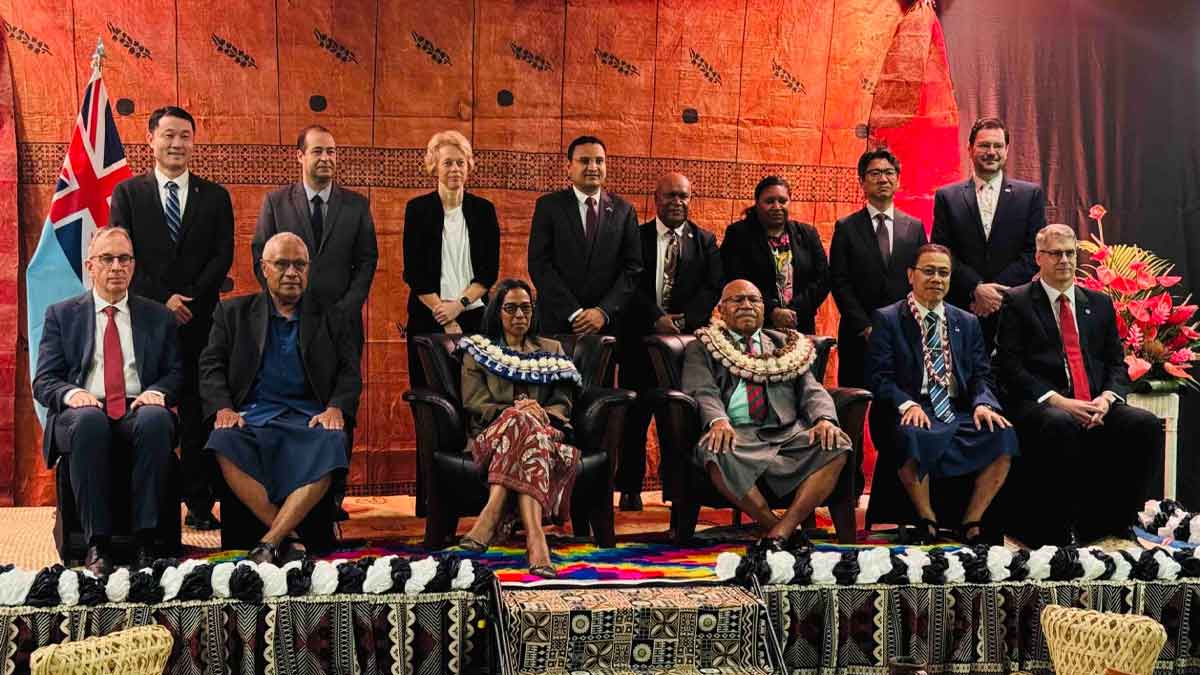
This was highlighted by the Minister for Lands and Mineral Resources, Filimoni Vosarogo at the traditional welcoming ceremony for the Secretary-General of the International Seabed Authority, Leticia Carvalho, held at the Grand Pacific Hotel in Suva ahead of the Pacific Small Island Developing States Regional Workshop on the Deep Seabed Sustainable Blue Growth Initiative.
Vosarogo says the country has always maintained a precautionary stance on seabed mining, stressing that decisions must be guided by stronger scientific evidence before any extraction activity is considered.
He says Fiji already has domestic legislation in place through the International Seabed and Minerals Management framework, but it is not yet operational because the international regulatory system is still being finalized under the United Nations Convention on the Law of the Sea and the International Seabed Authority.
He says the country does not want its national framework to move ahead of global rules, adding that operationalisation will only occur once the international mining code and regulations are fully established.
The Minister says there is growing global interest in seabed resources and that progress is being made within the International Seabed Authority on outstanding regulatory issues.
He highlighted Fiji’s longstanding role in international ocean governance, saying the country was among the first to sign UNCLOS and has often represented wider Pacific interests in global negotiations.
He says Fiji’s close relationship with the International Seabed Authority reflects strong institutional trust and cooperation.
Secretary-General Leticia Carvalho praised Fiji and other Pacific nations for their longstanding contribution to shaping international ocean governance.
Carvalho says Pacific Island countries have played a key role in strengthening dialogue, cooperation and institutional development within the Authority.
She highlighted the Pacific’s unique position in global ocean governance and referred to the 2050 Strategy for the Blue Pacific Continent as a guiding vision grounded in stewardship, sustainability, science, security and regional solidarity.
She says the Pacific’s commitment to being a “Blue Pacific” rooted in peace and responsible stewardship is especially relevant in today’s uncertain global environment.
Carvalho also thanked the Fijian Government for hosting the regional workshop, saying it comes at an important time and will help strengthen legal, technical and institutional capacities across Pacific states.
She expressed hope that discussions would be practical and constructive, and said Pacific leadership remains essential to ensuring ocean governance is carried out responsibly and in line with international law and the common heritage of humankind.
She also thanked Fiji for its traditional welcome, saying it reflected the Pacific values of respect, kinship and community, and transformed the visit into a more meaningful engagement beyond formal diplomacy.