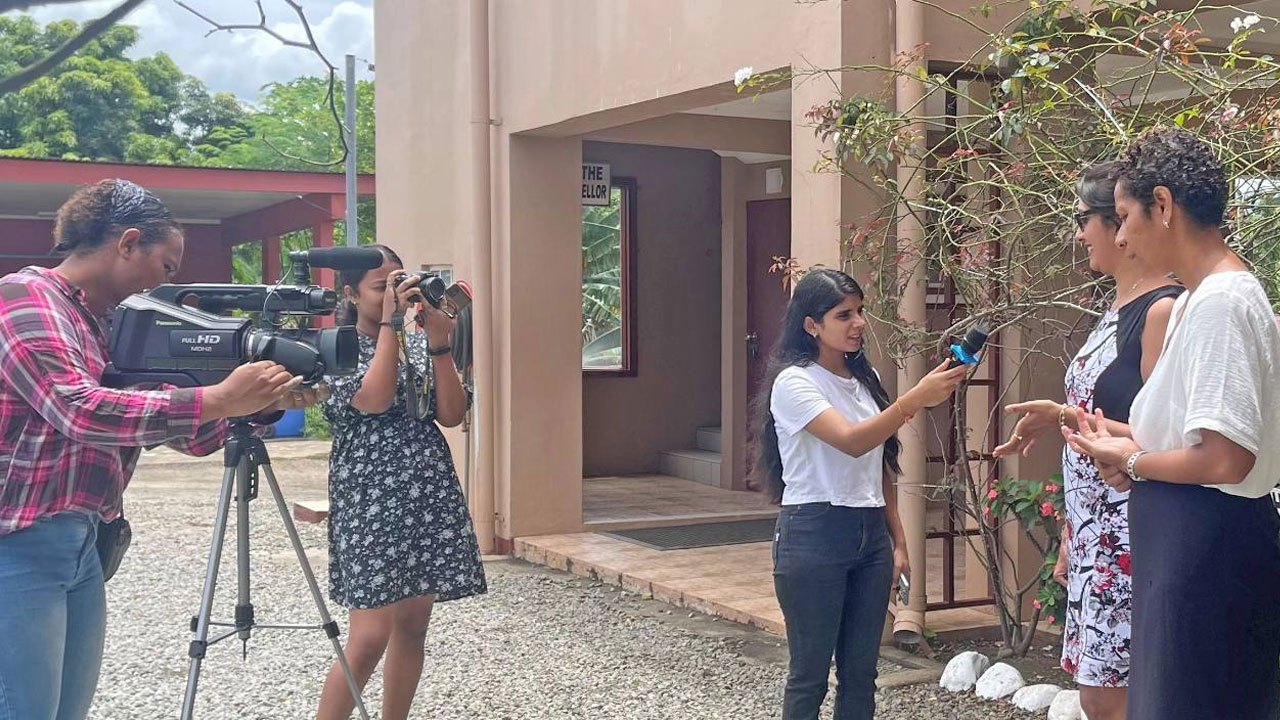
University of Fiji Vice-Chancellor Professor Shaista Shameem says artificial intelligence is a mixed blessing for journalism, as it makes the production and dissemination of information faster and more efficient; however, it also leaves the media landscape wide open for fake news and propaganda to take hold in the public mind.
While addressing the university community on World Media Freedom Day 2025, the Vice Chancellor said the University’s innovative Journalism and Media program covered the topics of AI and digital rapid generation and transfer of current affairs in its courses so that its students would be aware of the risks of relying on AI-generated news.
The global theme for World Media Freedom Day 2025 is “Reporting in the Brave New World – The Impact of Artificial Intelligence on Press Freedom and the Media.
She says the media plays a vital role in holding those in authority, including governments, accountable for the protection of citizens.
Professor Shameem says however, in Fiji, the use of artificial intelligence for social media communication has presented serious challenges, including unchecked spread of hate speech, cyberbullying, and online harassment.
She says that strengthening legislative frameworks governing digital conduct, such as through the work of the Online Safety Commission, was important, but education in schools was even more critical to ensuring that freedom of expression was not abused.
The Vice-Chancellor says while free and independent media is essential for facilitating informed public discourse and safeguarding the freedoms enshrined in both the Universal Declaration of Human Rights and Fiji’s 2013 Constitution, the limitations on those freedoms in international law were significant to note.
She adds it is now more important than ever to ensure that news is reported freely and without inherent bias, which may inflict harm on minority groups.
Professor Shameem says ethical standards in journalism must show consistent application, and media owners and editors bear the responsibility for fair, accurate, and balanced reporting.
She says that she had started her working life as a journalist with the Fiji Times, and she knew from first-hand experience how reporters faced all sorts of obstacles both within and outside the newsroom while trying to do their job.
She adds in conflict zones and authoritarian regimes, journalists endure intimidation, detention, and violence and often pay the ultimate price with their lives.
She says it was important to commemorate Media Freedom Day as a solemn tribute to those who had lost their lives while trying to cover the news so that the public would be aware of events from the comfort of their living rooms.
She also highlighted that in a proud moment for national media development, the University of Fiji graduated its first cohort of Journalism students in April 2025.
She says through a balanced curriculum combining theory with practical experience, the University has contributed to strengthening journalism standards in the country.
Professor Shameem says the establishment of Vox Internet Radio Station, an in-house training facility, and the journalism students’ newspaper, UniFiji Watch, further equips students with essential reporting, sub-editing and designing techniques.
While ending her media freedom message, Professor Shameem quoted United Nations Secretary-General António Guterres, saying press freedom is the backbone of accountability, justice, equality and human rights.
She says the University of Fiji reaffirms its commitment to media freedom and responsible journalism and celebrates the ongoing resilience and role of the media in shaping a just and democratic society.

Stay tuned for the latest news on our radio stations