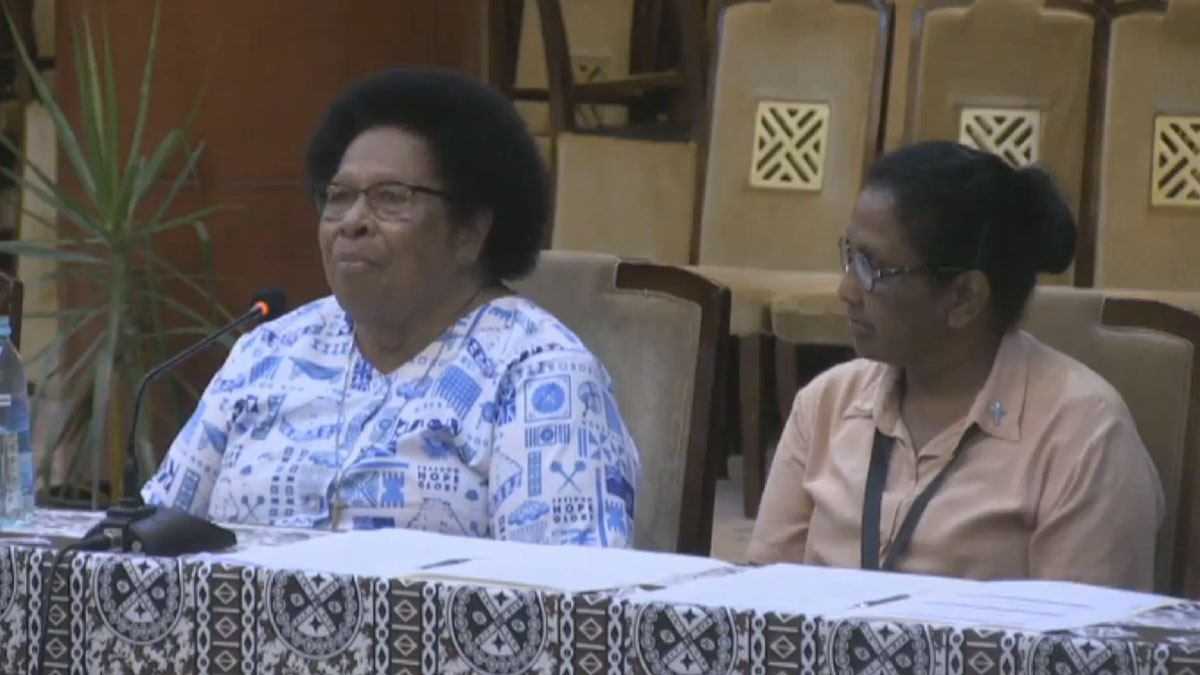
After years of carrying an emotional weight of fear, intimidation, and uncertainty and witnessing armed soldiers on the streets, roadblocks, bans, and the militarisation of daily life during the 1987 coup, Marist Sister Teresia Tinanisolo says she has reconciled with 1987 coup leader, Sitiveni Rabuka.
While speaking to the Truth and Reconciliation Commission, 87-year-old Sister Teresia says she was a teacher at St. Bede's College in Savusavu when the first coup took place.
She says after being told about the coup on the radio, they started to see the results of the military takeover in the town of Savusavu and this frightened her because they had never seen the military out in the open with guns and barbed wires on the streets in Fiji.
Sister Teresia remembers at St. Bede's, she was in charge of 62 boarding girls and because of the Sunday ban, they were not allowed to do any activities such as shop opening, buying, selling and playing.
The Marist Sister says one day she decided this was enough as it was unhealthy for the girls to have nothing to do all Sunday other than going to church and studying all day.
She says she allowed them to play on the hilltop but unbeknownst to her, one of the boys from across the hill reported them and the next thing she heard while resting in her room were thundering footsteps running from the hilltop to the seaside to the boarding dormitory.
Sister Teresia says she saw the girls running in panic and afterwards, a soldier arrived at her doorstep, and she told him that he had frightened the girls with a gun in his hand and ordered them off the playground.
She says they told him that was out of order and not to do it.
She recalls what frightened her during the coup the most was what happened later when she came to Suva during the school holidays.
She says she was driving to the airport to meet her sister but was stopped in Raiwaqa as the entire width of the road was filled with military marching with guns, heading towards Nabua camp.
Sister Teresia says she still remembers the sight of a 19-year-old man brought into hospital dead because of the slow process of getting an ambulance to him and bringing him to hospital.
She says she coped at that time by joining a small prayer group in Suva made up of Christian women but she soon realised the group did not reflect the full diversity of Fiji and encouraged them to include Hindus and Muslims.
Sister Teresia says this led to the creation of Interfaith Fiji, which became a major source of strength for her.
She says they met twice a month, prayed together, visited each other’s places of worship, and supported one another, especially Indo Fijians who were deeply affected at the time.
The Sister says the fear that she might be taken to the military camp and made to run up and down for speaking out stayed with her, as she had been warned this could happen, just as it had to a priest who later died.
She also recalled a Columbian priest, who was her friend, being expelled from the country and writing about the incident in the newspaper.
Sister Teresia says before returning to New Zealand, he spoke to her from the airport to thank her and urging her to continue to be the voice of the people of Fiji.
When asked by the Commissioners how the events of 1987 shape her view of Fiji, race relations and the military, Sister Teresia says she dislikes the military uniform and guns because it was a sign of killing.
She says she experienced fear with her people, particularly with Indo-Fijians, who were traumatized and she wanted to speak for them.
The Sister says being a Fijian, no one was going to take her citizenship away from her and that gave her the courage to continue to speak and write.
The Marist Sister says being a missionary overseas pushed aside her memories of Fiji and the coups until she returned home this year.
She shared with her sister that one morning, from three o’clock until six, she experienced vivid images of her life story.
She says it was not a dream, but a series of scenes playing like a movie, revealing everything she had lived through.
She realised then that she was still deeply traumatised by the events of the coup and that is what led her to come forward and speak today.
Sister Teresia says she has been through a lot and healing took place with the support of an interfaith praying group at the time but she feels that it has completely happened today.
When asked what healing and reconciliation look like for her, she says many people still carry the wounds of the coups.
She hopes the work of the Commission continues and that the whole nation will eventually have the opportunity to reconcile, to seek and offer forgiveness, both for the perpetrators and for those who have suffered the consequences of their actions.
Sister Teresia hopes the Commission invites the people responsible for the coups.
She says she is sure Rabuka will be very willing to confess, and ask for forgiveness for what he did.
The Sister believes more people like Rabuka need to come out and say what they have done and allow them the opportunity to ask for forgiveness.

Stay tuned for the latest news on our radio stations