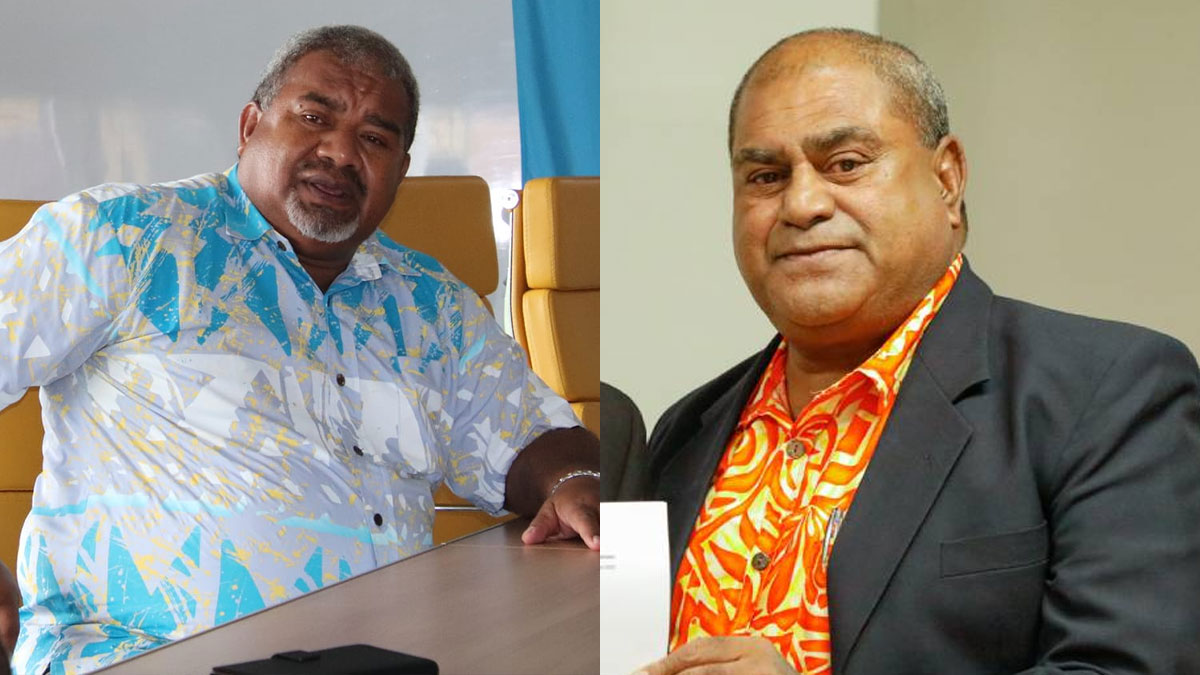
The Fiji Law Society says it appears that both Prime Minister, Sitiveni Rabuka and the President, Ratu Naiqama Lalabalavu have been poorly advised on their powers in dealing with issues after the Commission of Inquiry report in relation to the appointment of Barbara Malimali as FICAC Commissioner.
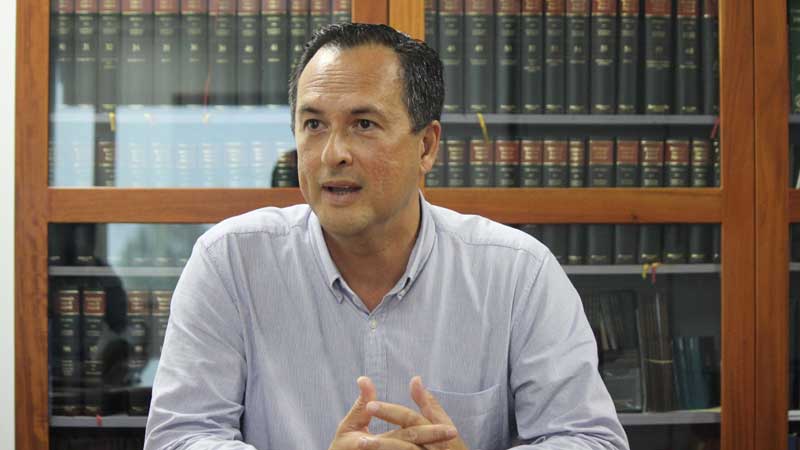
Law Society President, Wylie Clarke says it is inevitable that these decisions will be legally challenged.
He says this will only create further uncertainty and controversy over the affairs of FICAC and its leadership.
The Society respectfully urges the President to recall his decisions on the affected FICAC officials and to obtain independent and impartial legal advice on how to proceed.
They also make the same request of the Prime Minister, who has been poorly advised on the recommendations he has made to the President.
The Fiji Law Society says it is deeply concerned about recent actions taken by the President concerning the Commissioner and Acting Deputy Commissioner of FICAC.
According to a statement issued by the Prime Minister on 29th May 2025, the President appears to have decided to suspend Malimali, dismiss the Acting Deputy Commissioner (and appoint him Magistrate), and appoint a new Acting Deputy Commissioner on the advice of the Prime Minister.
Clarke says if that is so, these actions are not constitutional or lawful.
He stresses that the Prime Minister has no constitutional role in the appointment or discipline of the Commissioner and Acting Deputy Commissioner of FICAC.
Clarke says that is the role of the Judicial Services Commission.
As a result, the Society does not understand how the Prime Minister believes he can advise the President to suspend Malimali, dismiss the Acting Deputy Commissioner and appoint a new Acting Deputy Commissioner.
Clarke says there is a specific reason why these FICAC appointments are left to the JSC and not to Government Ministers.
He says it is to ensure the “separation of powers”, a critical constitutional concept and fundamental principle of the Rule of Law.
Clarke says specifically in the case of the FICAC Commissioner’s job, it is to avoid political interference in the affairs of FICAC.
The Law Society President says the Government statement says that the President acted in accordance with sections 81 and 82 of the Constitution.
However he says section 82 is very clear.
It says the President acts only on the advice of Cabinet or a Minister or of some other body or authority prescribed by the Constitution for a particular purpose as the body or authority on whose advice the President acts in that case.
In this case the “prescribed authority” is the Judicial Services Commission, it is not the Prime Minister.
Clarke further clarifies that it follows that in the absence of any advice or recommendation from the JSC to the President in relation to Malimali, the decision to suspend Malimali is unlawful.
He says it is equally unlawful for the President to appoint an acting FICAC Commissioner and to dismiss the Deputy Commissioner of FICAC and re-appoint him to the Magistracy without the recommendations of the JSC.
Clarke further says the Prime Minister’s statement says that the President is implementing recommendations of the Commission of Inquiry into Malimali’s appointment but no one has had the opportunity to read the COI report or to comment on its findings or recommendations and whether or not those findings and recommendations are correct.
The Law Society President says the findings of the COI report can be challenged in court, so it is only fair that those who are affected by the COI report – including Malimali and the now dismissed Attorney General, Graham Leung – have the opportunity to see what has been said about them in the COI report and to challenge its conclusions if they wish.
Clarke says in the meantime, the President and the Prime Minister must respect the Constitution by which they are bound.
He stresses the executive’s intrusion into the functions and roles of the JSC must not be permitted because it sets a precedent that threatens the independence of the judiciary and other constitutional commissions.
Clarke says whatever problems they are trying to solve in the actions they have taken, they are only creating further problems by acting outside the law.
Clarke says the FICAC saga has preoccupied and distracted the Government for many months.
The Society had earnestly hoped that the COI report would bring that to an end.
Clarke says unfortunately, it appears that the actions taken in response to the COI report are only going to further extend the distraction and controversy.
He says this is not a good outcome for the stability and good governance that Fiji needs as the necessary foundation for addressing the many critical social and economic issues we face as a nation.
We have sent questions to Prime Minister Rabuka on who is giving legal advice to him and the President, and whether he will relook at the issues at hand based on the Law Society saying that both he and the President are acting outside the Constitution.
He is yet to comment.
Click here for more stories on the Barbara Malimali suspension and dismissal of AG Graham Leung

Stay tuned for the latest news on our radio stations