Parliament has unanimously agreed to refer the Education Bill 2025 to the Parliamentary Standing Committee on Justice, Law and Human Rights, following a wide-ranging debate in which MPs from both sides of the House praised the intent of the legislation but raised several issues for further scrutiny.
The committee is expected to report back next year.
The Bill seeks to modernise Fiji’s education laws for the first time since 1966 and gives effect to the constitutional right to education.
It establishes new national bodies for curriculum, assessment, school advisory functions and teacher registration, while also setting out clear provisions for early childhood, primary, secondary, technical and vocational education, and special and inclusive education.
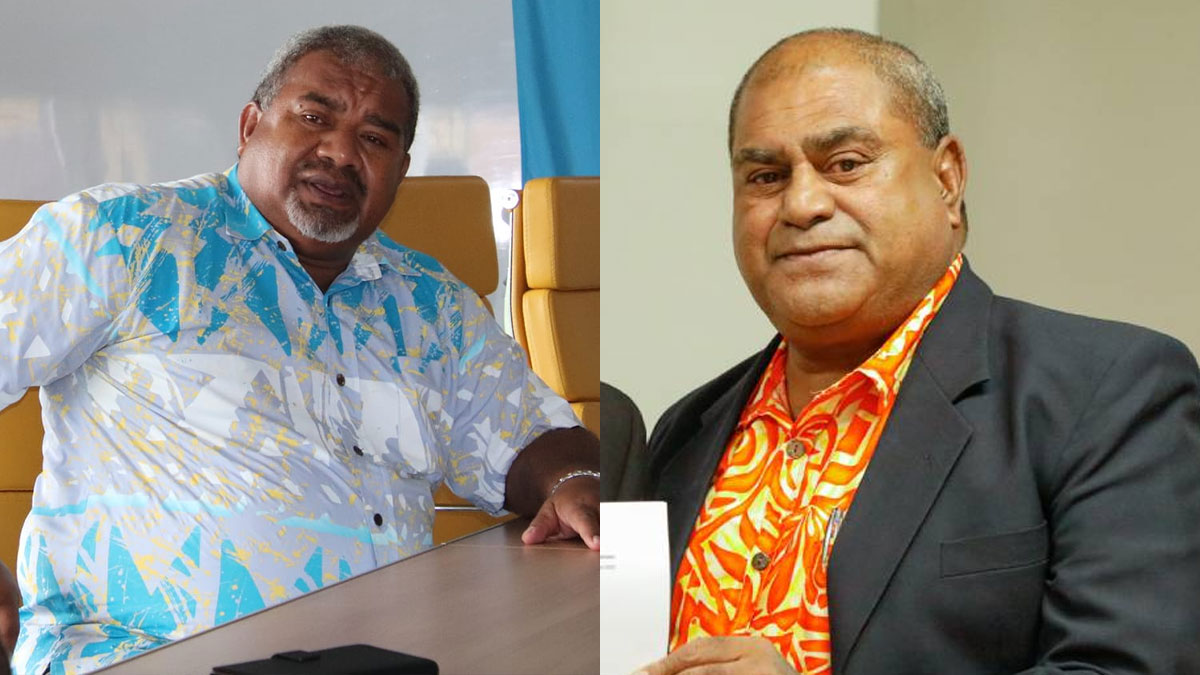
Opposition MP Hem Chand opened the debate by acknowledging the need for a modern legal framework but warned that the Bill must “withstand robust scrutiny” if it is to serve Fiji’s future.
Chand called for clearer definitions for special schools, stronger recognition of inclusive education as a fundamental right, and better representation for early childhood educators, teachers, school managers and parents on advisory bodies.
He also highlighted gaps relating to tertiary institutions, technical training, teacher-training providers, foreign student fees and the absence of the Tertiary Scholarships and Loans Service (TSLS) from the Bill.
Opposition MP Vijay Nath also emphasised the central role the community and faith-based school managements have played in sustaining the education system for decades, particularly in rural and maritime areas.
He warned that attempts to centralise authority could sideline communities who “are the heart and bones” of education.
Opposition MP Jone Usamate welcomed the Bill’s intent and says the principles of inclusion and alignment with global developments were strong features.
He also raised concerns about levies imposed by schools and how they align with free education, as well as the need for better recognition of prior learning and competencies, especially for returning ex-servicemen who have skills but lack formal qualifications.
He commended the Bill’s requirement for mandatory review every five years, saying it “builds in continuous improvement”.
Meanwhile, Leader of the Opposition Inia Seruiratu stressed that Fiji’s skills shortage must be addressed through curriculum reforms that reflect modern needs.
Seruiratu echoed calls for stronger systems recognising prior learning and competencies, which he said would support many Fijians capable of performing skilled work but excluded from opportunities due to formal qualification requirements.
He also raised concerns about home-schooling under certain religious or cult-like beliefs and urged the committee to carefully examine how these cases would be regulated.
Minister for Information Lynda Tabuya strongly supported the Bill, describing it as a “bold, forward-looking” piece of legislation that places the rights and well-being of children at its centre.
She clarified that the Bill strengthens the partnership between parents, schools and the State, safeguarding parental rights while ensuring compulsory education is upheld.
Tabuya highlighted significant child-protection reforms, including the explicit prohibition of corporal punishment in all schools, mandatory access to counselling, and the overarching requirement that the best interests of the child guide all decisions.
With no member opposing the motion, the Bill was formally referred to the Standing Committee.
The legislation proposes sweeping changes, including the establishment of the Education Advisory Council, the National Curriculum and Assessment Authority, the Fiji Teachers Registration Authority, and the continuation of the Higher Education Commission.
The Committee will then examine the Bill in detail through public consultations and stakeholder submissions before presenting its report next year.

Stay tuned for the latest news on our radio stations