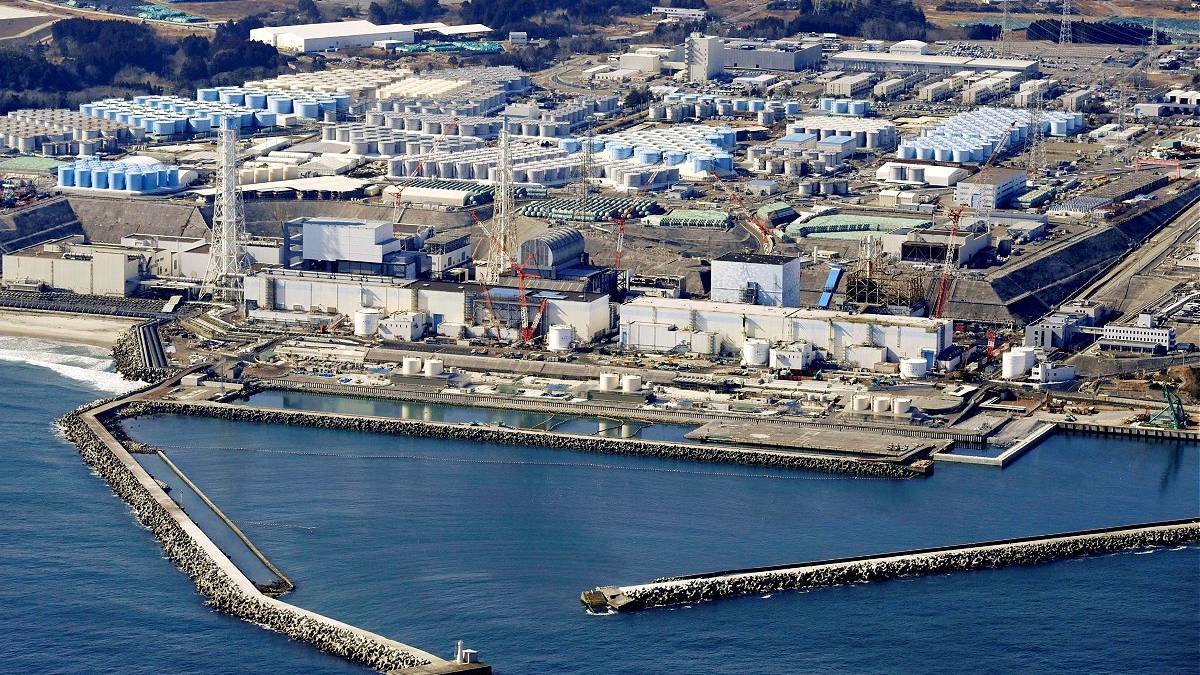
The Fijian Government and the Pacific Islands Forum Secretariat are not saying anything in relation to the comments made by the UN Human Rights Council that the release of treated wastewater from the damaged Fukushima nuclear power plant into the Pacific Ocean may pose major environmental and human rights risks to people in Japan and beyond.
Nine days ago, we reached out to Fisheries Minister, Alitia Bainivalu who is in Nice, France for the UN Oceans Conference for comments however she referred all questions to Prime Minister, Sitiveni Rabuka.
When we approached the Prime Minister, he referred all questions to Bainivalu.
We have been requesting comments from Bainivalu but she is yet to comment.
fijivillage News has also sent questions to Minister for Environment, Mosese Bainivalu.
He has not responded as well.
Since there are concerns raised about the wastewater and the fact that we rely on the sea for our food, we have asked the Fijian and Forum officials on what is their stand, what is their current position on the Fukushima wastewater releases, what should be done and what does the Pacific Islands Forum which previously appointed an Independent Expert Panel to assess this situation have to say on this situation. The UN Human Rights Council had released the statement after writing a letter to the Japanese Government in March.
Several human rights rapporteurs are raising concern at the radioactive material contained in the wastewater from Fukushima, the increasing amount of wastewater to be released and that other less harmful alternatives were not considered.
Dr Marcus Orellana, a special rapporteur on human rights has told the ABC that the letters are a tool for bringing concerns to the Japanese Government.
He says the Japanese Government says that the waters have been treated to the point that they satisfy regulatory limits, but some of the information received from rapporteurs is that those regulatory limits are inadequate.
An urgent call is being made by the Coordinator of the Pacific Network on Globalisation, Joey Tau for the Japanese Government to take action after the United Nations Human Rights Council issued the formal communication to the Government of Japan regarding serious concerns raised by Pacific communities about the discharge of nuclear-contaminated wastewater from the Fukushima Daiichi Nuclear Power Plant into the Pacific Ocean from 2023.
This follows a complaint submitted in August 2023 by Ocean Vision Legal on behalf of the Pacific Network on Globalisation (PANG), endorsed by over 50 civil society organisations from the Pacific and beyond.
The complaint highlighted the long-term environmental, health, and human rights risks posed by Japan’s planned discharge of over 1.3 million metric tonnes of radioactive wastewater into the Pacific Ocean over the next 30 years.
The discharge began in 2023 with twelve releases to date. The UN communication signals that the release into the ocean may pose ”major environmental and human rights risks”, including risks to the rights to life, health, food, and clean drinking water.
It highlights increased risks of radiation exposure and related health impacts, particularly for children and vulnerable populations, and raises issues around inadequate radiation impact assessments and limited healthcare access.
The Special Rapporteurs also underscore the lack of transparency, limited public participation, and absence of meaningful consultation, all of which are essential to free and democratic societies.
The UN Human Rights Council draws attention to allegations that Japan failed to properly assess the health impacts of the wastewater release in accordance with the best available scientific evidence.
Professor Robert Richmond from the University of Hawaiʻi, and former panelist of the Pacific Islands Forum Commissioned Expert Panel, describes Japan’s decision to release the treated, radioactively contaminated water as disappointing.
He says it is well known that radionuclides can be taken-up, accumulated and biomagnified by marine life, negatively affecting marine ecosystems and people who consume contaminated seafood.
Professor Richmond says better and safer alternatives exist, including using the accumulating contaminated water for concrete for needed on-site structures.
The UN Human Rights Council further draws special attention to long standing international obligations and laws, such as the prohibition of transboundary environmental harm, the importance of conducting environmental impact assessments and applying the precautionary principle, as well as the relevant provisions of the United Nations Convention for the Law of the Sea.
PANG says the destructive legacy of nuclear contamination through nuclear testing is still strongly felt across the region.
This legacy is marked by severe health impacts across generations and the ongoing failure to properly clean up test sites, which continue to contaminate the islands and waterways that Pacific peoples depend on.

Stay tuned for the latest news on our radio stations