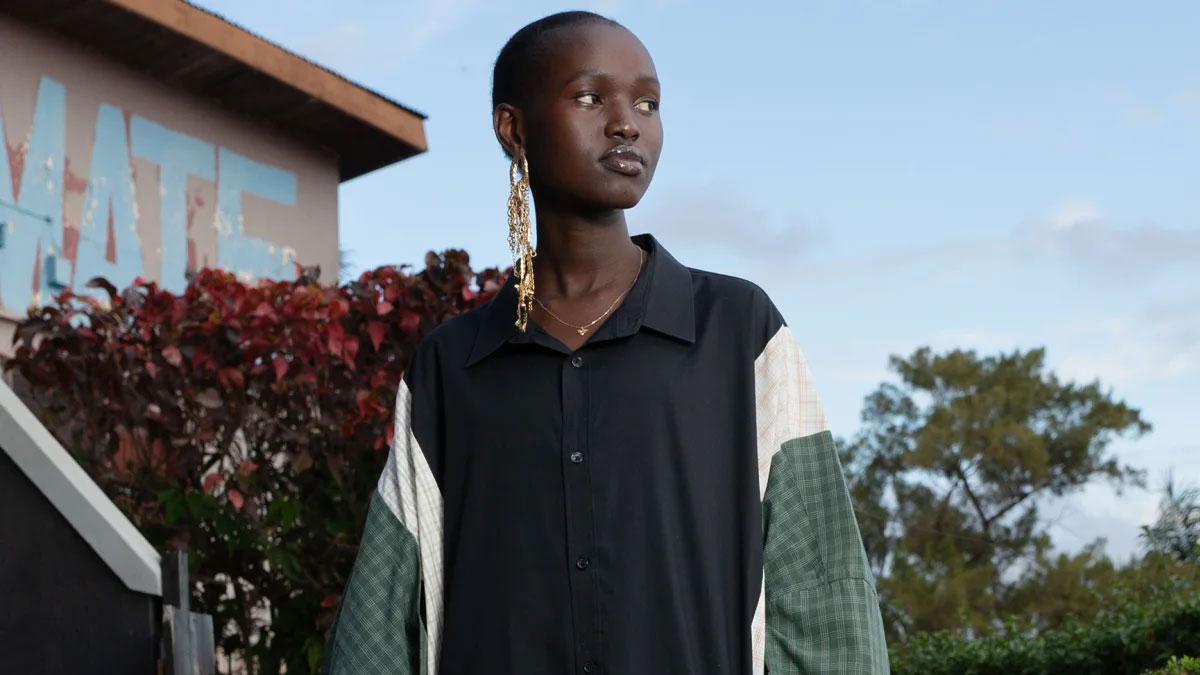
In 2018, fashion designer Bobby Kolade moved from Berlin back to Uganda’s capital Kampala with the ambition of creating a home-grown fashion brand using Ugandan cotton.
Things didn’t work out quite the way he imagined. Though the raw material is one of the country’s key export crops, Uganda’s textile industry has struggled since the 1970s. The country had just two textile mills that could process cotton fabrics.
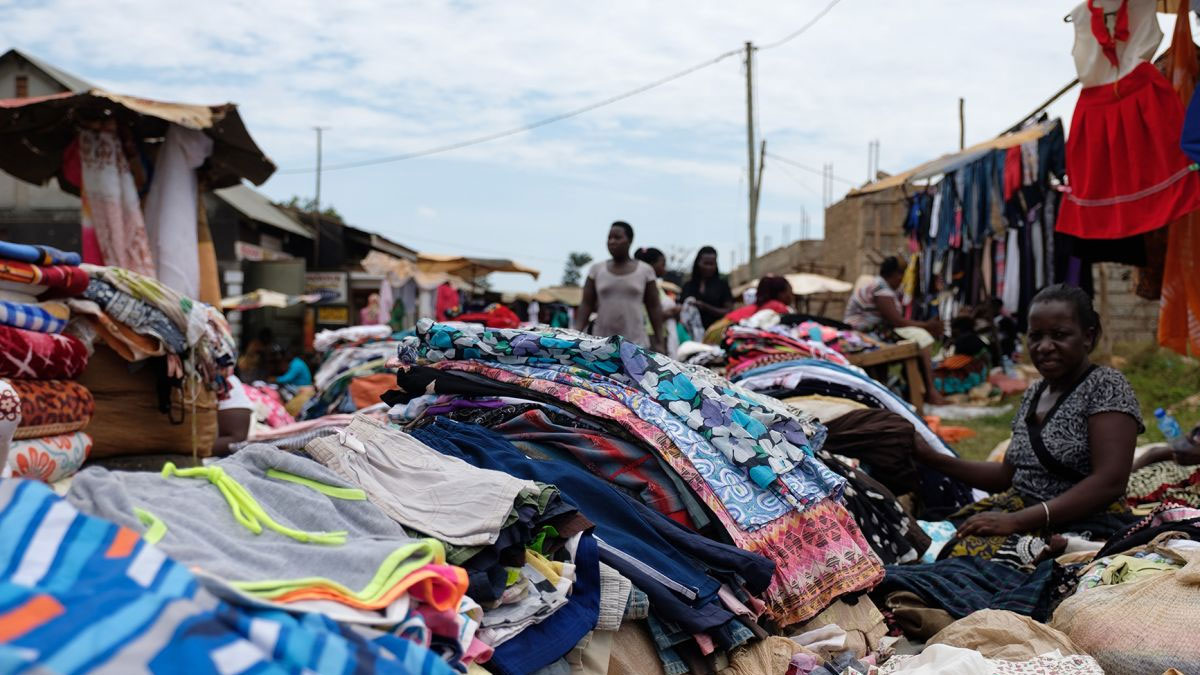
So Kolade turned to something that was available in abundance: second-hand clothes. In his Kampala studio, old clothes are washed, picked apart and transformed into paneled dresses and patchworked sweats for his Buzigahill brand. Under his tongue-in-cheek “Return to Sender” concept, those designs are then sold back to the countries that originally discarded them.
It’s a subversive move designed to highlight and reclaim a local clothing industry that has suffered from a flood of second-hand clothes and cheap imported textiles from countries like Turkey and China.
But Kolade’s efforts to build a new kind of fashion ecosystem operates on the fringes of a broader and increasingly politically fraught global debate over what happens to fashion’s growing waste footprint, and who ends up paying for it.
Late last month, Uganda’s President Yoweri Museveni announced a plan to ban used clothing imports to the East African country in a speech, saying the trade stifles the development of the local textile industry.
“I have declared war on second-hand clothes to promote African wear,” the President said during the opening of 16 factories at an industrial park late last month, according to Ugandan newspaper Daily Monitor.
Every year, millions of hand-me-down T-shirts, jeans and dresses make their way from donation bins in the US and Europe to East Africa. It’s a trade that supports tens of thousands of jobs in both exporting and importing countries, where second-hand markets host an ecosystem of retailers, cleaners, tailors, upcyclers and other related jobs.
But the flow of goods — mostly from countries in the Global North to those in the Global South — has also been politically contentious for decades, largely on the grounds that it threatens domestic industries. The Philippines has prohibited imports of used clothing since 1966, while more countries, from Indonesia to Rwanda, have followed suit in the last decade.
This isn’t the first time Uganda has made moves to control the controversial trade. In 2016, the East African Community, a regional economic grouping of seven partner states that includes Kenya, Tanzania, Rwanda and Uganda, agreed to complete a prohibition on used clothing imports by 2019. But amid pressure from the US, which threatened to pull countries’ access to preferential trade terms, Rwanda was the only country to follow through.
Meet the second-hand personal shoppers thrifting so you don’t have to “There is genuine concern about the implications second-hand clothing has on the industrial sector and jobs and value addition in the region, especially in the textile industry,” said Corti Paul Lakuma, a research fellow and head of the macroeconomics department at Ugandan think tank The Economic Policy Research Centre during a phone interview.
Increasingly the waste created by these imports is also an issue — if not always part of the political conversation. Fast fashion’s explosive growth over the last 20 years has created a surging supply of unwanted old clothes that environmental groups like Greenpeace say has become unmanageable.
Source: CNN Style
Story by: Sarah Kent, CNN
Original story: https://edition.cnn.com/style/ugandas-war-on-second-hand-clothes-bof/index.html

Stay tuned for the latest news on our radio stations