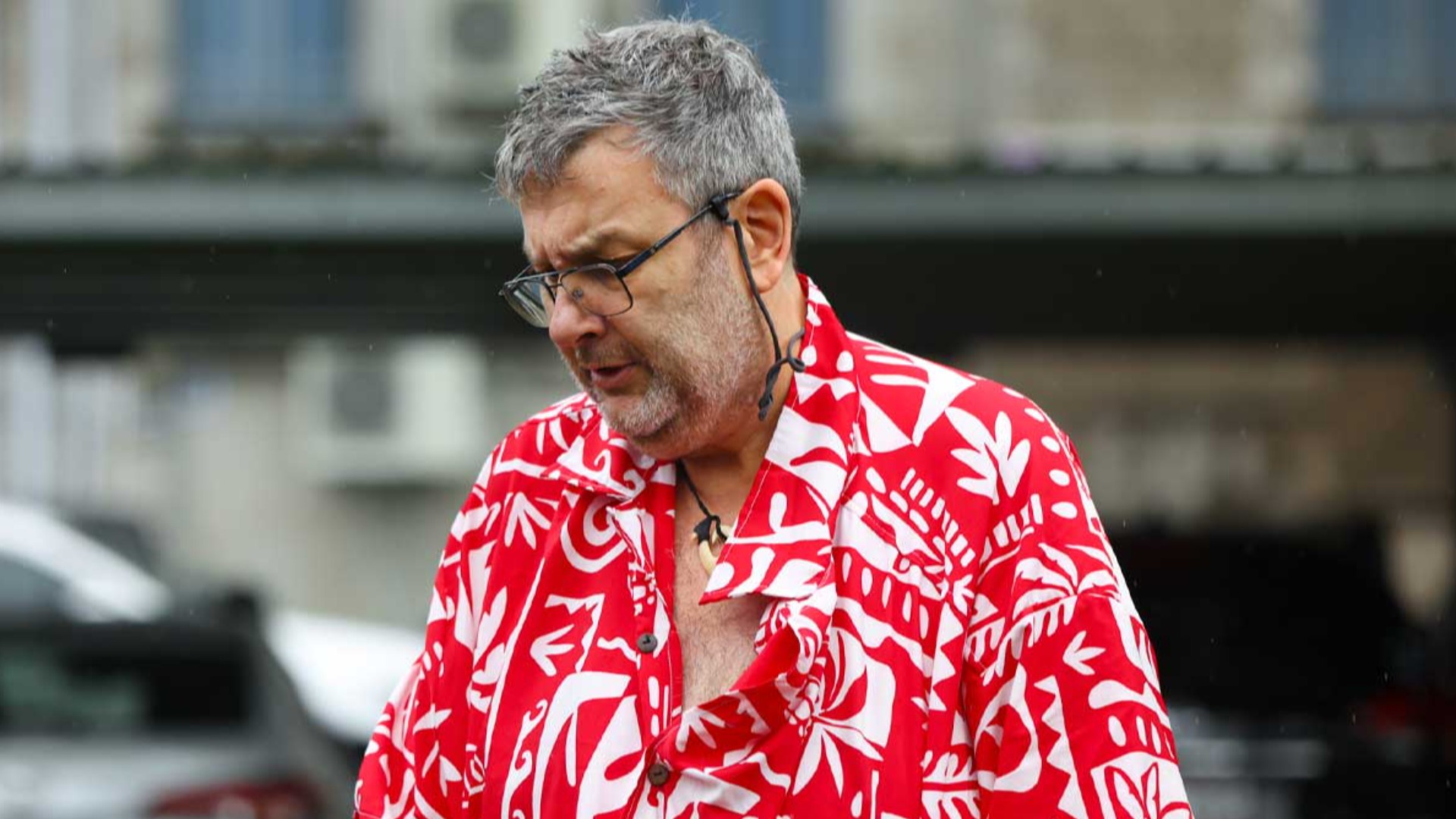
Acting FICAC Commissioner Lavi Rokoika has revealed that they have identified two FICAC officers who allegedly divulged information that Fijian and British national Charlie Charters posted on his social media in relation to FICAC, including Rokoika's conduct, her relationship with Sports Council CEO Gilbert Vakalalabure, her husband and lawyer Tevita Vakalalabure being in FICAC's office, and the appointment of her niece at FICAC.
This comes as Charters' lawyer, Seforan Fatiaki, told the court during the hearing of their application to halt the FICAC proceedings against Charters in the Magistrates Court, which concluded this evening.
Fatiaki says there is no evidence produced by FICAC showing that Charters received information from current or former FICAC officers or a third party.
Charters is charged with two counts of aiding and abetting after allegedly helping a FICAC officer unlawfully publish confidential FICAC information.
Rokoika told the court that they will be amending the charges but have not been able to do so until now because they have been busy with this hearing and other cases.
She says they will make an application to amend the charges by Monday, before the matter is called in the Magistrates Court next week.
When questioned by High Court Judge Justice Pita Bulamainaivalu on whether Charters should know who the officers are, Rokoika again stressed that FICAC will be amending the charges, to which Justice Bulamainaivalu responded that if that is the case, it is an embarrassment and could be prejudicial.
Justice Bulamainaivalu also stated that the court would be concerned about the late submission of further evidence as the trial in the Magistrates Court is scheduled for September.
Justice Bulamainaivalu has given the assurance that he will only focus on the evidence before him, not what is expected to be filed in court.
While making his submission, Fatiaki said the charge particulars against Charters are defective because FICAC has not identified who Charters aided and abetted or whether he did it.
He also told the court that on 21st February this year, Charters was at Nadi International Airport on his way to Sydney when he was stopped and told by FICAC officer Jone Cama that he was there to seek Charters' assistance only and that he would be let go after providing information.
Fatiaki said Charters had stated that he would not provide the information and was then told by Cama that he would be arrested and his electronic devices would be seized.
He says initially, Charters was not cautioned or informed of his rights at the airport, including his right to remain silent and his right to legal counsel, which protect his constitutional right against self-incrimination.
However, Fatiaki says he was cautioned after his arrest.
When questioned by Justice Bulamainaivalu whether that was not a fundamental requirement, Fatiaki stressed that the charge was for an improper purpose and that this amounted to procedural impropriety to some extent.
The counsel says FICAC tried to use its powers to coerce Charters into self-incrimination.
He also highlighted that it is clear the predominant reason for arresting Charters was to extract information.
However, Fatiaki says Charters' argument is that he is a citizen journalist whose source is protected under Section 17 of the Constitution and that he received privileged information.
He says receiving information is not a crime.
Fatiaki further says there is a conflict of interest because Charters was writing about FICAC, and the decision to arrest him, execute a search warrant and charge him is tainted by that conflict.
He says substituting the prosecutor cannot reverse the decision to arrest and charge him.
He explained that when FICAC became aware of the post, it could have handed the investigation to Police, with an assessment to be carried out by the Office of the Director of Public Prosecutions if needed.
While responding to Fatiaki, Rokoika told the court that she could not recall whether Charters was cautioned by FICAC officers but stressed that these are trained officers who know the procedures.
Upon further questioning by Justice Bulamainaivalu, Rokoika said the issue of cautioning Charters was not addressed in FICAC officer Jone Cama's affidavit because it was not raised in Charters' affidavit.
However, Justice Bulamainaivalu said an affidavit is a statement of facts and not a response to matters of law.
Rokoika also said that whether Charters was cautioned or not was a matter to be decided during the trial as an issue of admissibility of evidence.
When questioned by Justice Bulamainaivalu on what evidence would be submitted to court, as the search warrant stated that the search was for a former FICAC officer or a third party and Charters is neither, Rokoika stated that this is a matter for trial.
Justice Bulamainaivalu also questioned Rokoika on whether it is fair to continue charging Charters when they had not been able to identify the principal offender or the people who divulged the information.
Rokoika responded that the investigation has continued because disclosures have been filed in court, including evidence from six witnesses and the posts by Charters and the investigation is also continuing.
When further pressed by Justice Bulamainaivalu on Fatiaki's assertion that there is zero evidence for the offence of aiding and abetting, Rokoika revealed that they have identified two FICAC officers who allegedly divulged the information.
While responding to Fatiaki's argument that there was a conflict of interest, Rokoika said she disagreed and stressed that the issue had already been addressed in a ruling by Siainiu Fa'alogo Bull, who stated that the prosecutor is not the arbiter of facts, but the judge.
Justice Bulamainaivalu will deliver his ruling on 24th July.
Meanwhile, the trial is scheduled to begin on 1st September.
