Nearly 70 percent of Fiji’s poor live in rural areas, up to 82 percent of drug-related crimes are committed by young iTaukei men, and more than 90 percent of HIV cases recorded in 2024 were among the iTaukei.
Citing these figures, the Great Council of Chiefs has called for sweeping reforms to Fiji’s Education Bill, warning that failure to address structural inequalities in the education system could have serious long-term social and economic consequences.
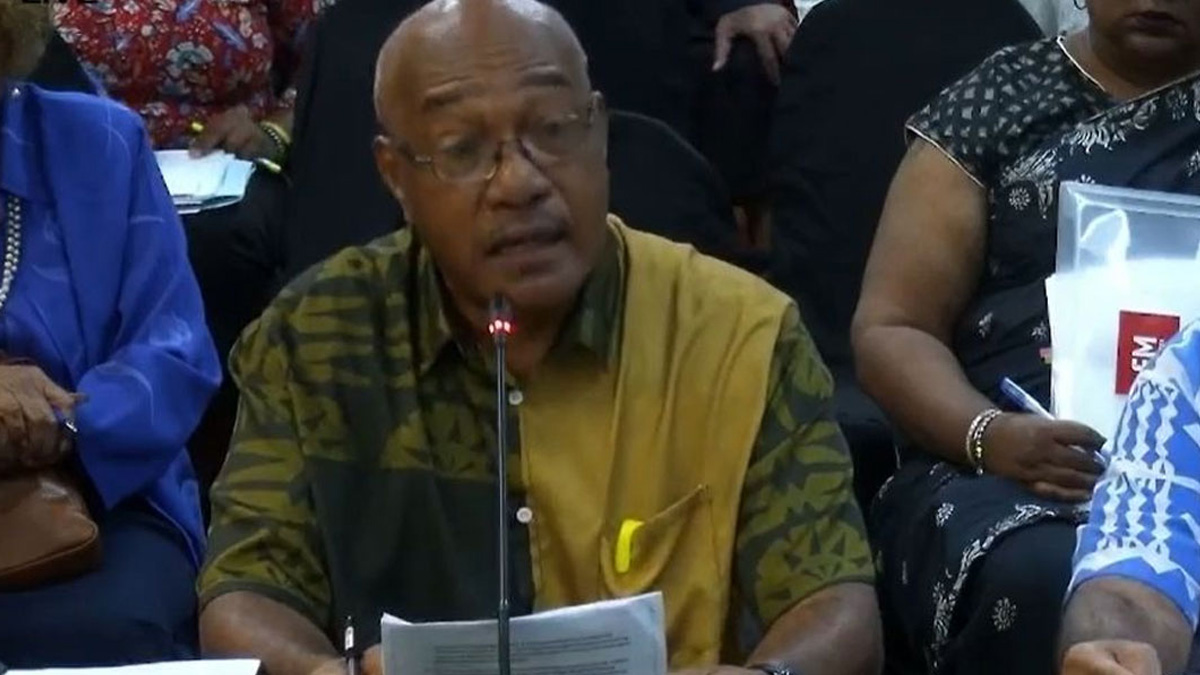
Appearing before the Parliamentary Standing Committee on Justice, Law and Human Rights, Chair of the GCC Education Committee Iosefo Volau emphasised that community and faith-based schools form the backbone of the country’s education system, accounting for 98 percent of all schools nationwide.
Volau says this reality makes strong local leadership and community involvement essential to shaping effective education policy, particularly in rural and predominantly iTaukei areas.
He recommends that the Education Bill include a clear purpose statement, modelled on New Zealand’s Education and Training Act 2020, to ensure reforms are aligned with Fiji’s evolving educational needs and long-term national goals.
Volau says the purpose statement should explicitly recognise the role of chiefs as custodians of the Vanua, encompassing land, culture and people, while promoting equity and targeted support for marginalised communities.
Insert: Include the GCC Jan 22
Without such reforms, Volau warns that existing disparities would persist and potentially worsen, limiting STEM education outcomes, restricting access to high-value job markets and reinforcing cycles of disadvantage across generations.
Data Volau presented in the GCC’s submission shows that 68 percent of people living in poverty reside in rural areas, while iTaukei students continue to record significant underperformance in science, technology, engineering and mathematics subjects.
To ensure rural and iTaukei perspectives are meaningfully included in national decision-making, Volau says the GCC Education Committee had recommended formal representation of the GCC on the Education Advisory Council, the National Curriculum and Assessment Authority and other key structures within the Ministry of Education.
He says the proposed changes would strengthen accountability, cultural relevance and inclusivity within Fiji’s education system, while helping to address the deeper social issues affecting vulnerable communities.

Stay tuned for the latest news on our radio stations