
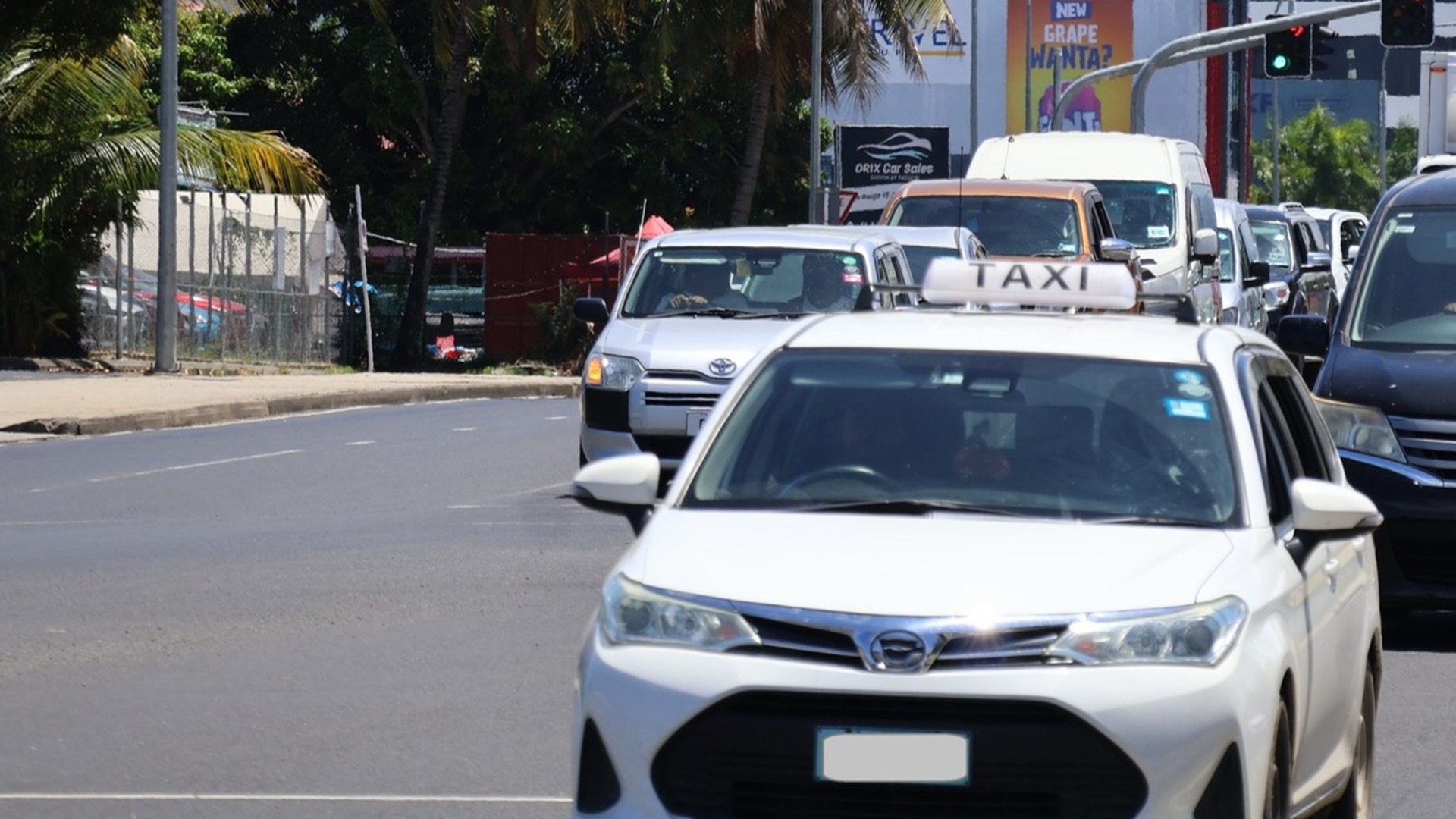
Former Fiji Taxi Association Assistant General Secretary Mohammad Shameem says the rise in fuel prices is going to significantly affect taxi operators, drivers, and the people and economy of the country.
Speaking to fijivillage News, Shameem stresed that rising fuel prices are a very significant factor affecting Fiji as a small nation, warning that the current global geopolitical situation is going to impact taxi operators.
He says the number one factor is the high consumption of fuel for the runs that taxi operators are going to undertake, while the condition of the roads is very poor and operators have not received any fare increase from the Fijian Competition and Consumer Commission.
He says there has been no settlement over the past eight to nine months regarding fare increases, which is now seriously affecting operators and drivers who are struggling.
Shameem says it was shocking to see an overnight increase of 49 cents per litre for unleaded fuel, especially after there were indications prices would remain stable.
He says it is very difficult for operators at this point in time and Government, the Ministry for Trade and FCCC should look into the matter as soon as possible.
He adds that if a significant fare increase is introduced now, it will also affect the public at large.
INSERT: Shameem on fuel crisis impact 1st Apr
Shameem says the increase in diesel prices will also affect deliveries, shipments and the cost of goods, meaning consumers will ultimately suffer as prices rise, adding that low-income earners will be heavily impacted.
HINDI INSERT: Shameem on price increase 1st Apr
He is calling on the Government to reduce or remove duty on fuel, saying this will make it easier for both the public and transport operators.
He is also calling for temporary free bus services similar to that done in Australia, saying Government should cover the cost to allow people to travel to work and school, easing the burden during the current fuel crisis.
We have sought comments from the Prime Minister and Minister for Finance.
The Fiji Commerce and Employers Federation is calling on the Government to clearly communicate its plans and messaging, in relation to the fuel crisis, and FCEF CEO, Edward Bernard says an overnight increase of up to 35 percent for diesel and 20 percent for petrol, impacts heavily on business planning, and will have a direct impact on goods and services.
Bernard says the assurance that we have adequate fuel for 90 days and that there will be no price hike and then the overnight announcement of price increases of four products is not generating confidence within the private sector.
He says in times of crisis, it is imperative that there are clear and precise plans and messaging reaching businesses and the public.
Bernard stresses that business continuity depends on advanced planning and robust contingency plans against disruptions.
FCEF President and General Manager Pacific Islands at Essity Australasia (Fiji) Ltd, Eldon Eastgate says while most businesses have a business continuity plan, understanding our government's plan of action and have this clearly communicated is imperative.
Eastgate says it is imperative a clear plan and consistent messaging is communicated and at the right time.
He says the private sector acknowledges Government constraints, and recognises that this is a global crisis - which will translate to an increase in the cost of doing business.
However, he says the Government must ensure that our alignment to ensuring the ease of doing business is maintained, and this requires clear and precise planning, and messaging.
FCEF is grateful for the appointment of a Fuel Controller, a Fuel Advisory Committee and a Cabinet Sub-Committee on Fuel a few weeks ago.
FCEF says the business community and public are looking forward to hearing about any national plans that will support business sustainability so that customers can be adequately served and workers can continue to be employed.
FCEF has also written to the Fuel Controller indicating the importance of ensuring that the private sector’s contributions is included in the drafting of the regulations to support contingency measures, including the ability to prioritize fuel allocation.
FCEF strongly advises all businesses to activate their Business Continuity Plans.
We have sought comments from the Prime Minister and Minister for Finance.

Govt working on targeted support after fuel price increaseBy Vijay Narayan 01/04/2026



People in the Lau Group are being urged to use fuel wisely as rising costs and ongoing supply shortages begin to impact daily life across the islands.
Speaking to fijivillage News, Roko Tui Lau Joji Kalounivalu says people have already been feeling the strain in recent weeks due to limited fuel supplies, even before the latest increase in fuel prices.
Kalounivalu says there has been a shortage of 400-litre fuel drums, with many villages unable to secure sufficient supply despite placing orders.
He notes that fuel prices in the islands are higher than in urban centres such as Suva, as additional freight costs are added once fuel is transported from the mainland.
This, he says, is expected to drive up the cost of goods and services, placing further pressure on households.
Kalounivalu says the impact is significant for island communities that rely heavily on fuel for transportation, electricity generation and everyday activities.
He says concerns are growing over essential services, including how children travel to school, with many depending on fibre glass boats that require fuel.
He adds that the issue will be discussed at upcoming Bose ni Tikina meetings, where communities will decide on ways to manage the situation.
There are also concerns that further increases could affect shipping services bringing people and essential supplies from the mainland.
Kalounivalu warns that such a development would place communities in a difficult position.
He is advising residents to plan their daily activities carefully, prioritise essential tasks and reduce fuel use where possible.

Stay tuned for the latest news on our radio stations