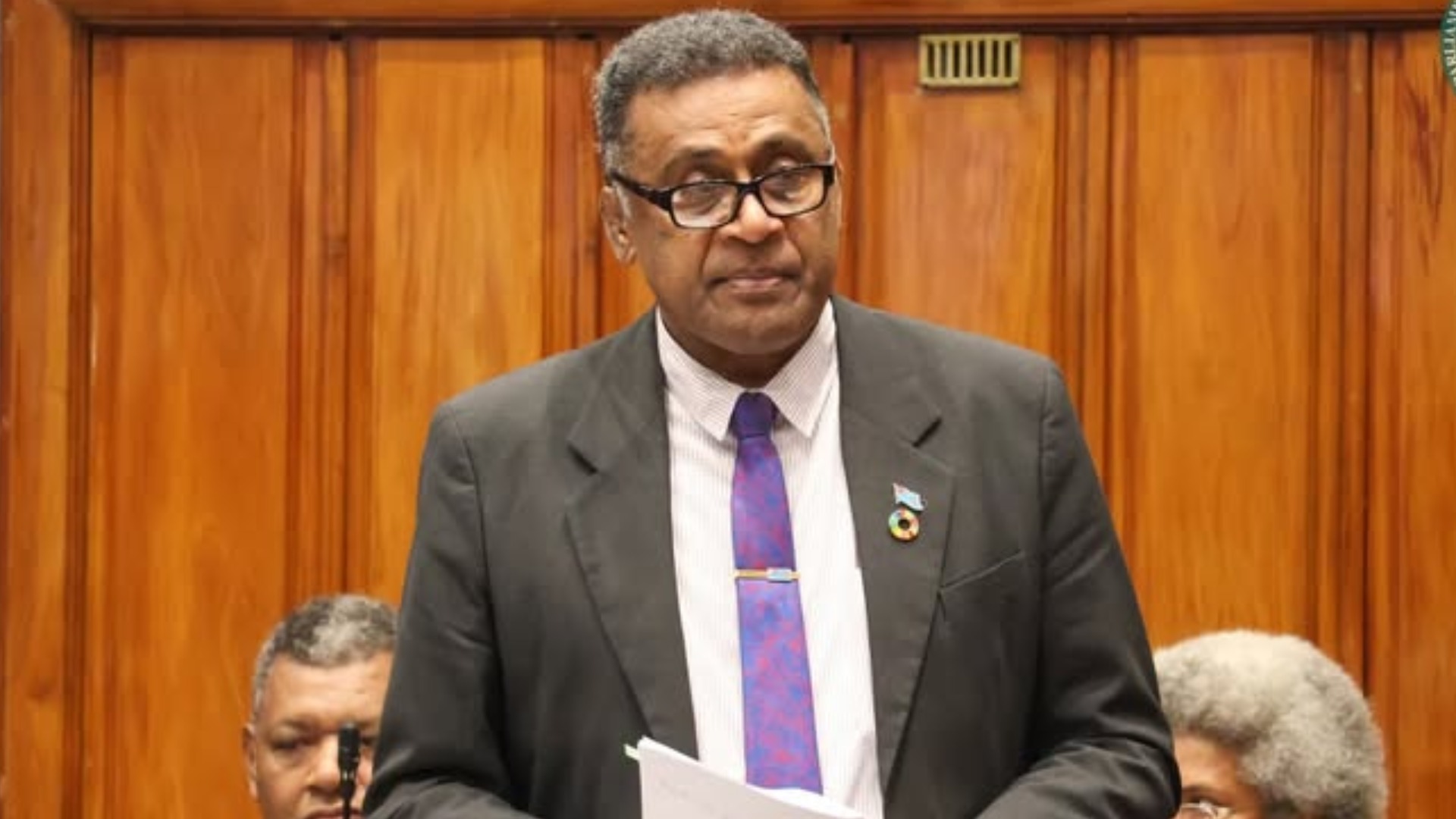
As the Ministry of Finance monitors potential economic and fiscal implications of the current global crisis on Fiji, Minister for Finance, Esrom Immanuel says the 2026–2027 medium-term fiscal strategy aims to reduce the deficit and debt while prioritising capital investment, improving spending efficiency and targeting subsidies to maintain economic stability.
While responding to the President’s address in Parliament, Immanuel says Fiji imports around $1 billion of fuel annually for domestic use and with every ten percent increase in price, we will lose around $100 million more in foreign reserves.
He says the recent fuel price surge can easily increase our fuel bill by an additional $400 million to $500 million if prices do not stabilize.
The Minister says similarly, in times of crisis, the US dollar, which is considered a safe haven currency, usually strengthens, placing additional pressure on many emerging and small economies like Fiji.
He says approximately $3.6 billion, or 33 percent of our debt is external debt, of which over 80 percent is in US currency.
Immanuel says it remains premature to draw definite conclusions as much will depend on how geopolitical tensions evolve and how inflation trends unfold and how major central banks and governments deliberate their policy in the months ahead.
He also says that Fiji’s initial growth projections of 3.3 percent for 2026 and 2027 are now subject to notable downside risks, driven by the escalating global uncertainties and emerging pressures on our tourism sector.
The Minister says government's debt-to-GDP ratio has improved significantly from 91.8 percent in 2022 to around 78.9 percent in 2025, reflecting earlier consolidation and a stronger-than-expected recovery.
He says while past revenue overperformance and modest underspending created temporary fiscal space, these gains are insufficient to offset mounting pressures in the months ahead.
Immanuel says the government will continue to shift decisively towards restoring fiscal discipline, improving expenditure efficiency and accelerating private sector-led growth as strengthening reform momentum is not optional but it is essential and rebuilding fiscal buffers, safeguarding debt sustainability and restoring confidence require urgent recalibration of our fiscal consolidation strategy.
The Minister says with limited scope for new taxes, the Government’s consolidation effort will focus on expenditure rationalization, better targeting of subsidies and strict prioritization of high-impact, growth-enhancing investments.
He says strengthened fiscal controls and improved spending will be critical to preserving macroeconomic stability and protecting Fiji's long-term resilience.
Immanuel further says that the Government firmly believes that the private sector must be the engine of growth, and they are also aware of the real constraints that our businesses are facing.
He says they are serious about private sector-led growth and that challenges must be addressed decisively through regulatory clarity, improved service delivery, infrastructure upgrade and a stable, predictable policy environment that gives businesses the confidence to invest and expand.
Immanuel confirms that they have progressed on the government’s ease of doing business processes and hopes to launch the same next month.
He further says Fiji’s complete removal from the European Union's blacklist will deliver significant national benefits, including enhanced trade and investment flows, particularly with EU-linked counterparts, reduced compliance costs and withholding tax rates for Fijian businesses operating internationally.
Immanuel highlights that it will also provide confidence amongst correspondent banks, development finance institutions, international investors and strengthen eligibility for bilateral and multilateral financial assistance, as well as technical cooperation.
He also says Fiji will receive about $500 million through the Pacific Health Islands Transformation Project to modernise the health system, including a radiotherapy centre in Suva, a 50-bed modular block at CWM Hospital, upgrades to 17 facilities, and a planned 100-bed cardiology hospital supported by India.
Immanuel adds budget preparations for 2026–2027 are underway with nationwide consultations and submissions invited.

Stay tuned for the latest news on our radio stations