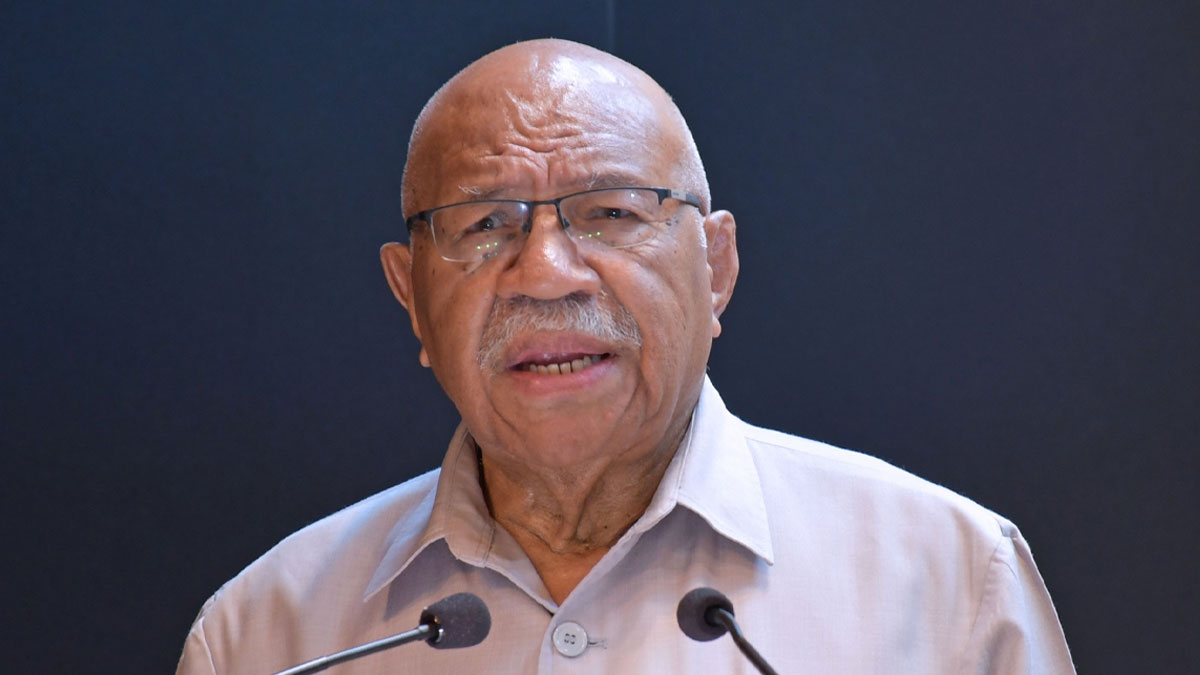
Following the announcement in the increase in electricity tariff rates from January 1st, Prime Minister Sitiveni Rabuka has stressed that while Government is the majority shareholder in Energy Fiji Limited, it does not direct or interfere in regulatory pricing decisions.
He says electricity tariffs in Fiji are determined by the Fijian Competition and Consumer Commission according to law, following a comprehensive technical and financial assessment of the electricity sector.
Rabuka says the decision announced today reflects the independent exercise of FCCC's statutory mandate, as well as the operational requirements of EFL to ensure the continued reliability, safety, and sustainability of electricity supply.
He says respect for regulatory independence is essential to maintaining investor confidence, financial stability, and the long term viability of the energy sector.
The Prime Minister noted that Fiji continues to have among the lowest electricity tariffs in the Pacific, reflecting long term investment in hydropower and sustained efforts to balance affordability with system reliability.
However, he says maintaining these comparatively low rates requires ongoing investment in electricity infrastructure.
Rabuka says as Fiji’s economy continues to grow, demand for electricity is increasing across households, businesses, tourism, industry, and digital services, so significant investment is required to expand and modernise generation, transmission, and distribution infrastructure, particularly to support the transition to renewable and climate-resilient energy systems.
The Prime Minister also says the government currently provides an electricity subsidy of 16.34 cents per kilowatt-hour to households with an annual income of $30,000 and below, and under the announced tariff structure, approximately 52 percent of electricity consumers who use less than 100 kilowatt-hours per month will not experience an increase.
He acknowledged that tariff adjustments are challenging for consumers and confirmed that consumer protection measures remain in place.
Rabuka adds that a financially sustainable electricity system remains critical to national development, energy security, and Fiji’s transition to cleaner, more resilient energy sources.