The Land Transport Authority reaffirms its commitment to ensuring that all operations are guided by principles of good governance, transparency, and ethical service delivery.
They say continuous reforms are being implemented to promote a culture of integrity, improve operational efficiency, and restore public confidence in the transport regulatory system.
While acknowledging the comments raised by Member of Parliament Rinesh Sharma during the parliamentary session on 4th November 2025 regarding the need for enhanced anti-corruption measures and transparency within the LTA, CEO Irimaia Rokosawa says the LTA is currently undertaking initiatives to address the matters highlighted by Sharma.
He says they have a No-Bribery Policy, where the Authority upholds a zero-tolerance policy on corruption and unethical conduct.
Rokosawa says this policy reinforces the Government’s broader commitment to integrity and accountability within all public institutions.
He adds any officer found engaging in corrupt practices will face disciplinary action in accordance with the Authority’s Human Resource Policy and relevant public service regulations.
The CEO further adds that the Authority will continue to strengthen internal controls, compliance systems, and staff awareness programs to ensure that such standards are upheld across all operations.
Rokosawa highlighted that the LTA conducts annual vehicle inspections for all public service vehicles (PSVs), including omnibuses, to issue the Certificate of Fitness (COF).
He says this inspection process is comprehensive and stringent, carried out by their qualified and certified Vehicle Examiners across all LTA stations in Fiji.
He also says that for older buses, inspections are conducted biannually to ensure more frequent monitoring.
He adds these inspections assess critical safety components such as braking systems, tyres, lights, and structural integrity, and only buses that meet the required technical and safety standards are issued with a valid Certificate of Fitness.
However, the CEO says factors such as road conditions, vehicle age, and maintenance practices can affect a bus’s condition between inspection cycles.
He says to address this, the Authority has implemented the Quality Assurance Maintenance System (QAMS), and under this, every bus company is subject to a comprehensive audit at least once a year.
Rokosawa says based on company performance and compliance, follow-up audits may be carried out within three months, six months, or one year.
He adds that during QAMS audits, LTA officers assess not only the company’s maintenance facilities, documentation, and service records, but also conduct on-site fleet inspections to verify that operators have an adequate number of roadworthy buses to meet their permit obligations.
He further adds that any bus found with defects is issued Defect Orders and is re-inspected to confirm compliance before returning to service.
Rokosawa says from 1st January 2025 to 31st October 2025, the LTA has conducted a total of 47 QAMS inspections throughout Fiji, where a total of 818 buses were inspected.
He says of these, 24 companies and 334 buses were inspected in the Western Region, 20 companies and 371 buses were inspected in the Central/Eastern Region, and 3 companies and 113 buses were inspected in the Northern Division.
He further says there are currently 53 operators and 1,218 buses registered with the Authority.
The CEO adds that from 2024, the Authority has further strengthened this framework by introducing a bi-annual Fleet Audit exercise, which complements the annual roadworthiness inspections and QAMS audits.
He says these targeted fleet audits enable the LTA to focus on compliance trends and ensure continuous monitoring of bus conditions throughout the year.
Rokosawa says from 1st January 2025 to 31st October 2025, the LTA has conducted a total of 18 fleet audit inspections throughout Fiji, where a total of 478 buses were inspected.
He says of these, 8 companies and 234 buses were inspected in the Western Region, 7 companies and 130 buses were inspected in the Central/Eastern Region, and 3 companies and 114 buses were inspected in the Northern Division.
He adds the Authority will continue conducting its QAMS and fleet audit inspections in line with its annual work plan.
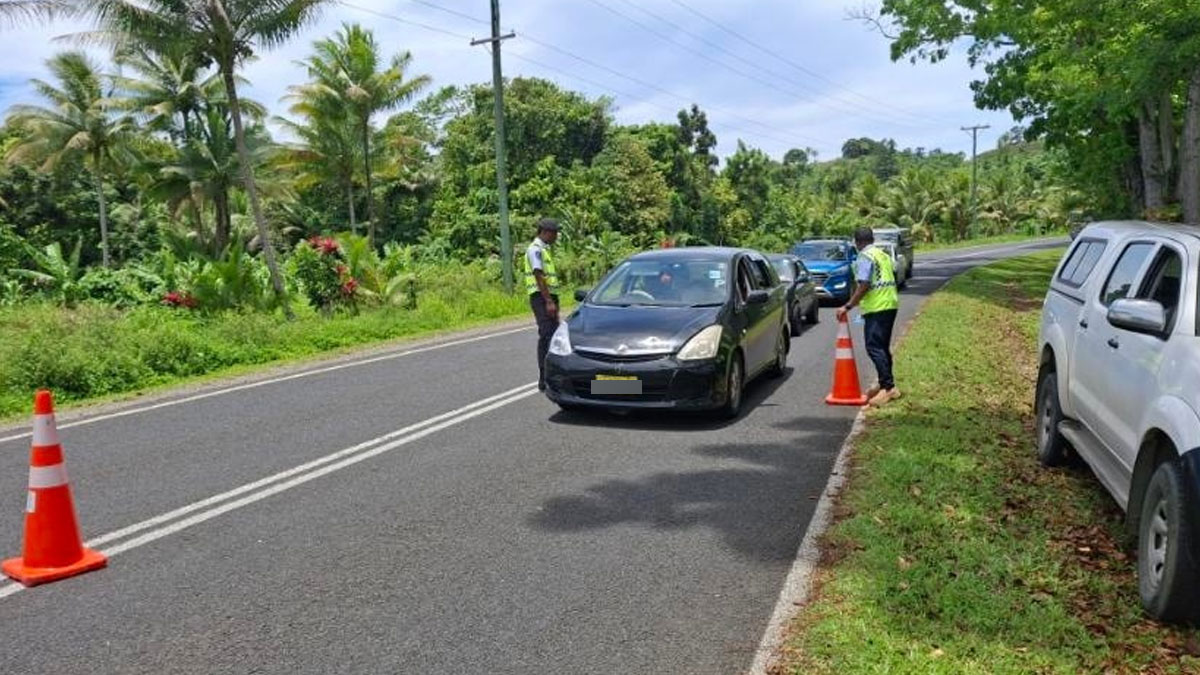
Additionally, Rokosawa says LTA officers, alongside stakeholder partner Fiji Police Force, conduct roadside enforcement checks where buses are inspected for visible or safety-related defects.
He says defect orders are issued immediately for any non-compliance identified during these checks.
The CEO says the Authority will continue to monitor operators’ progress to ensure full compliance with the issued orders.
He says through these combined initiatives, from 1st January 2025 to 31st October 2025, a total of 512 defect orders have been issued to buses by the LTA, out of which 389 have been successfully uplifted after undergoing repairs.
He also says that it is important to note that during the same period, there were 2,133 instances of buses being issued with speeding fines through LTA’s speed camera operations, and 25 instances of bus drivers being issued TINs for careless driving, highlighting driver attitude as an area of concern.
The CEO adds that the LTA has also continued with the process of showcause hearings, where PSV operators who consistently fail to meet fleet standards are required to present before the LTA Board to justify their non-compliance and outline corrective actions.
He says for the period 1st January to 27th October 2025, a total of 559 showcause proceedings were conducted.
He further says of these, 15 involved Public Service Vehicle (PSV) driver licence holders, resulting in 11 suspensions, 4 licence cancellations, and warnings issued to the remaining drivers.
He adds that the Authority continues to work closely with bus operators through this multi-layered system, combining scheduled inspections, compliance audits, and roadside enforcement, to ensure that Fiji’s public transport fleet remains safe, reliable, and compliant with national standards.
The CEO says the implementation of body cameras for enforcement and inspection officers is an initiative that is essential to strengthening accountability while safeguarding both the public and LTA officers in the performance of their duties.
He says the Authority has so far procured five body cameras, and these are currently being piloted in the Central Division.
He also says in addition to enforcement and compliance, the Authority is actively engaged in public awareness and education programs focusing on vehicle safety, roadworthiness, and passenger safety.
Rokosawa says from 1st January to 31st October 2025, the LTA has so far conducted 847 school education and awareness activities impacting 184,081 students, 83 public outreach programs impacting 67,436 people, 867 office outreach activities impacting 19,750 office workers, 228 driver roadside awareness programs impacting 18,661 drivers, 191 passenger roadside awareness programs impacting 50,965 passengers, 165 pedestrian roadside awareness programs impacting 9,445 pedestrians, 412 community outreach awareness programs impacting 214,869 people, and 284 Defensive Driving Course awareness programs impacting 9,563 participants.
He adds that a total of 2,241 awareness activities were carried out with an impact of 431,998 people, including media advocacy and awareness on traditional and non-traditional news media platforms.
He further adds that these initiatives will continue throughout the year.
The CEO says these initiatives aim to strengthen the culture of safety among operators, drivers, and the traveling public, ensuring a safer and more reliable public transport system for all Fijians.
Rokosawa says currently, Fiji has 15,913 valid PSV permit holders and 360,483 registered driver licence holders in the country as of 31st October 2025.

Stay tuned for the latest news on our radio stations