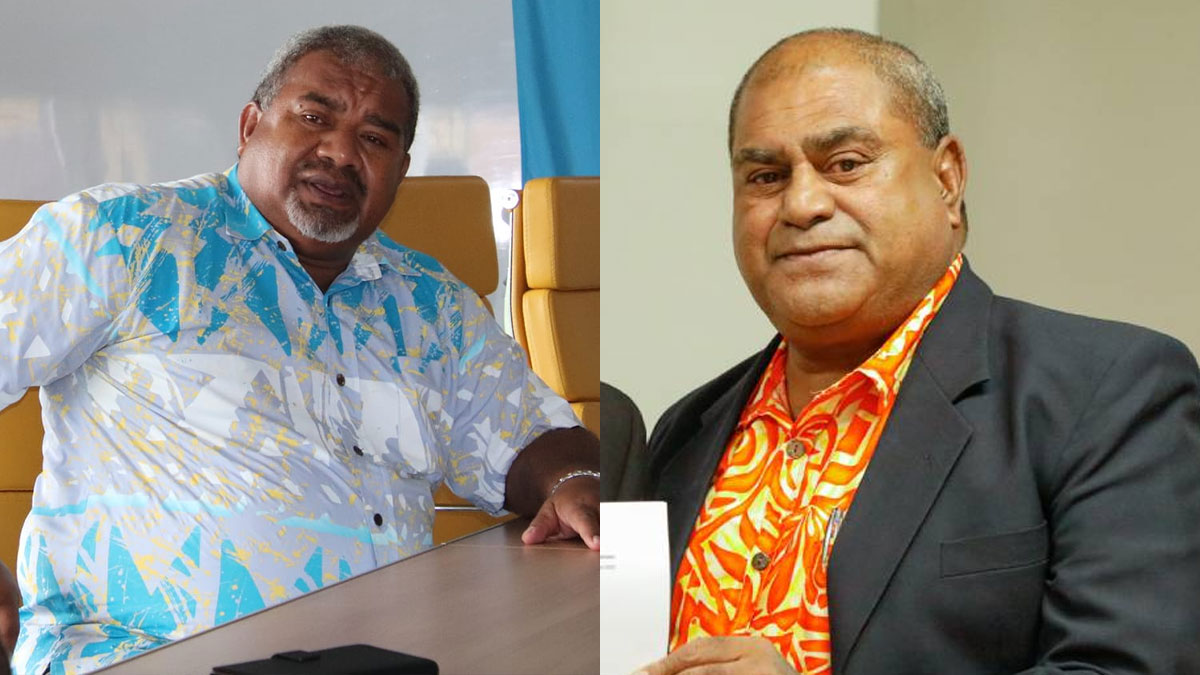
I'm here to confess what happened in 1987 was wrong.
That was part of Prime Minister, Sitiveni Rabuka's statement before the Truth and Reconciliation Commission.
Rabuka said he has a duty to apologise, and those who he has wronged have the right to accept or reject the apology and says he can ask for forgiveness, and for him it is very useful to appear before the Commission, and for the people to hear him.
Rabuka says it is up to the people to heal and people to decide on whether they accept or continue to carry the offence done against them.
The Prime Minister spoke about his village which is still known as a coup village and there is an underlying guilt that they feel about this as a village.
Rabuka spoke about his daughters who lost friends after the 1987 coups that he had led.
His wife who was teaching in Lelean at the time says she had a difficult time with the management at the school because of what he had done.
The Prime Minister also says 2 of his sisters were teachers and they also lost their friends.
He says he was also excluded from many things after the coups.
When asked on what has been the coping mechanism for the family, Rabuka said he thinks it is about getting on with life as a family.
He spoke about returning from his last tour of duty and throwing his son down after he put a toy gun to his head.
Rabuka also spoke about the immediate impact of the coups was the exodus of talented people.
He says Fiji carried the scars of not filling some of the positions.
One of the corrective actions, he says he took at the time was sending our iTaukei people to go and study in areas of law and finance.
He also spoke about a young Rabuka growing up in Vanua Levu, then going to Queen Victoria School, and then joining the military.
Rabuka also spoke about almost resigning from the army in 1977 after the elections, and throwing away his resignation letter when the then Governor General, Ratu George Cakobau announced that Ratu Sir Kamisese Mara will form a minority government.
He said he expected the same by the Governor General, Ratu Penaia Ganilau after the 1987 elections however it did not happen.
Rabuka says he has been quoted as saying there was no other way when he carried out the military coup on May 14th 1987, adding it was a pre-emptive action to prevent any worse situation from happening.
Rabuka says the 1987 incident came to a boiling point where the iTaukei also felt at the time that there was no other way and for those who were personally and directly involved, he had no control over them however he knew he had the responsibility.

Stay tuned for the latest news on our radio stations