The government has done its part by reducing duties and VAT and now businesses must do theirs by ensuring a corresponding decrease in prices that reflects these reductions from 1st August this year.
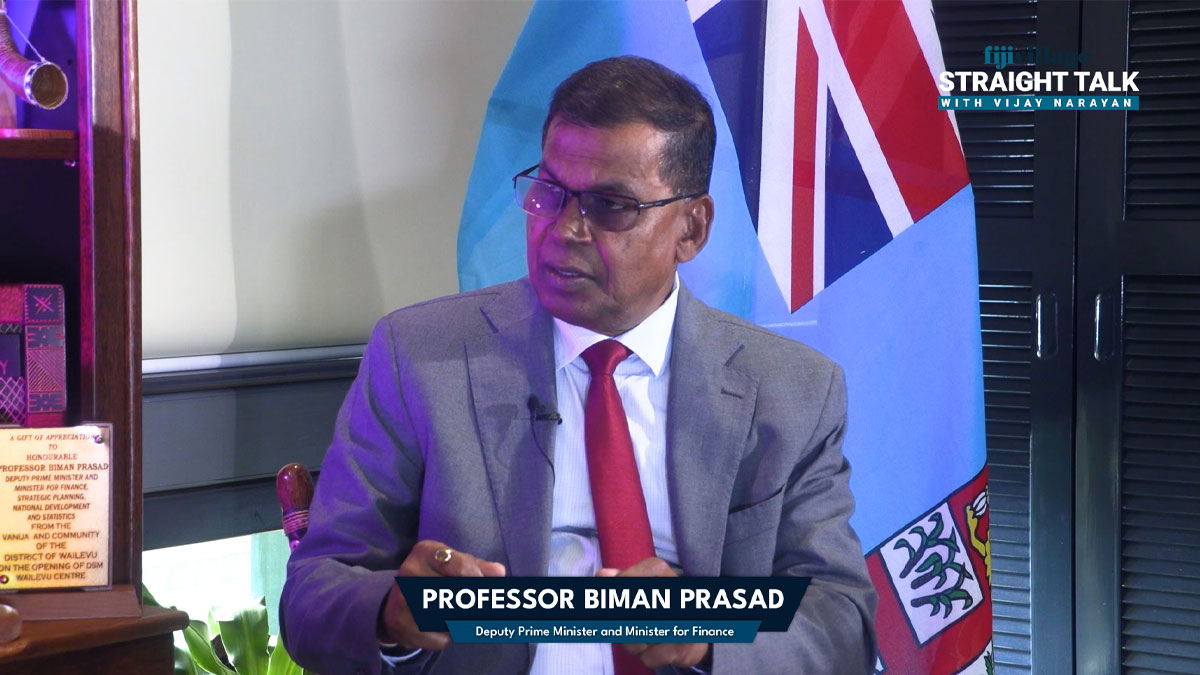
Deputy Prime Minister and Minister for Finance, Professor Biman Prasad stressed this during fijivillage Straight Talk with Vijay Narayan, because he says passing the benefits to consumers remains a key concern.
Professor Prasad says it is unethical for businesses to pocket the savings from reduced duties and VAT for themselves and they have tried to use persuasion in the last two budgets.
He says they continue to find that some businesses are not passing on the benefits, and as a result, others follow as well.
The Deputy Prime Minister says they have set up a task force comprising the FCCC, FRCS, Consumer Council of Fiji and the Ministry of Finance to address this issue.
He says if they find businesses are deliberately not following the policy then there could be punitive measures as well.
Professor Prasad says they have done several things in the 2025/2026 National Budget to address cost of living such as reducing VAT from 15 to 12.5 percent, keeping the 22 items zero rated VAT, not reducing the income tax threshold and reduced duties on basic food items like fresh fish, salmon, canned fish, chicken portions, giblets, liver, etc.
Professor Prasad also revealed that outdated quarantine laws have been identified as a barrier to cheaper imports because many of these regulations, in place for decades, no longer reflect modern production and trade practices.
He says the Biosecurity Authority of Fiji has been directed to review these restrictions, especially for products like ghee from India, which could be imported more cheaply.
The Deputy Prime Minister further says that the government has conducted research showing that direct imports of certain items would reduce prices and offer consumers more choices.
He adds that the inflation, which was over 5 percent in previous years, has dropped to about 1.3 percent in 2024 and even lower—around 0.1 percent at the start of this year.
Prasad says the latest budget measures, including tax and duty reductions, increased price monitoring, and revised import policies, form a strong and effective package.
He adds that while external factors like rising oil prices and global conflicts could pose challenges, the government’s approach would help cushion any potential impact.
The Deputy Prime Minister is confident that, barring any major shocks such as a global economic slowdown, conflict in the Middle East, or an increase in oil prices, the government’s package will remain effective and the measures will help cushion the impact.
Click here for Budget 2025-2026 stories, documents and details

Stay tuned for the latest news on our radio stations