A special audit in 2023 revealed that the Fiji Roads Authority approved cost variations and project escalations totaling $405 million — around 10 percent of the national budget — with many approvals made through flying minutes and without proper oversight.
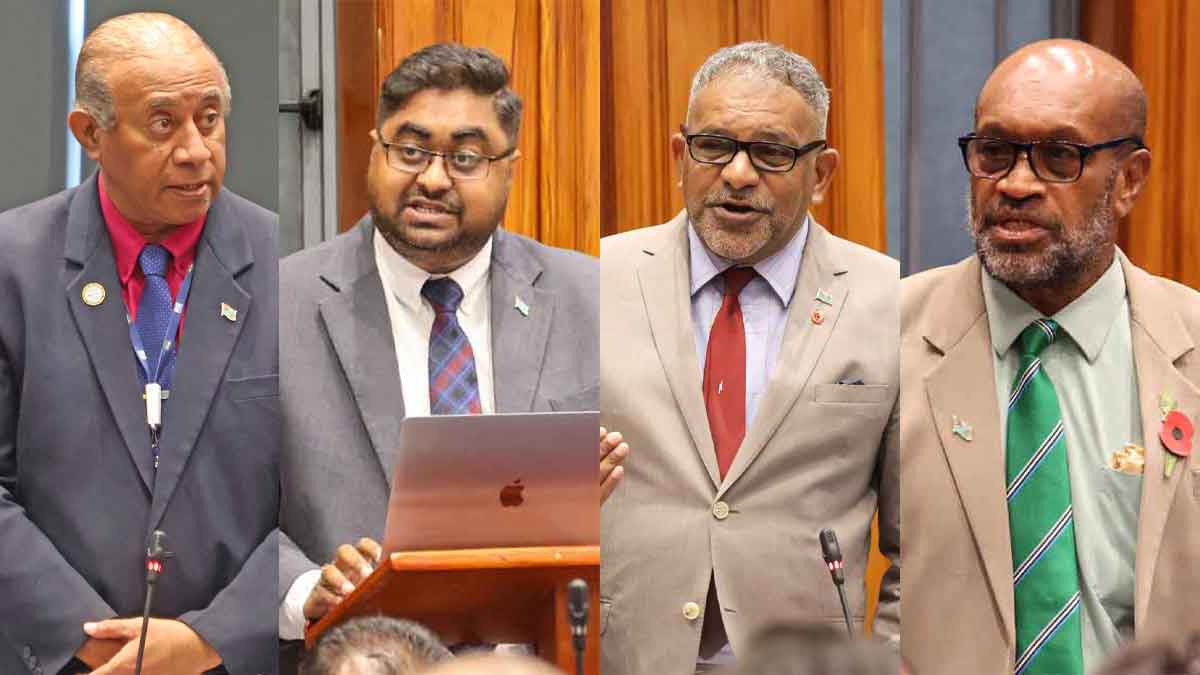
Minister for Public Works and Transport, Ro Filipe Tuisawau, made these comments while responding to concerns raised by Opposition MPs Ketan Lal and Faiyaz Koya, who say thousands of Fijians continue to face daily challenges on deteriorating and unsafe roads.
Lal and Koya cite potholes, uneven surfaces, and poorly constructed humps that damage vehicles, delay travel, and put lives at risk.
Lal criticizes the FRA for being overburdened and understaffed since it took back key functions from engineering firm MWH in 2016.
He points out critical shortages of engineers, technical officers, and project managers — leading to roads built without proper drainage, potholes that quickly re-emerge after repairs, and bridges that take years to complete.
Lal also raises concerns over the proliferation of oversized and inconsistent road humps nationwide, calling for a uniform national standard for their height, width, placement, and signage.
He highlights the lack of coordination between the FRA and municipal councils, which he says has left communities with flooded drains, broken footpaths, and inadequate street lighting.
Lal urges the government to conduct a performance audit of the FRA, invest in long-term infrastructure planning, and prioritize rural and maritime roads.
He also calls for greater investment in training local engineers to reduce reliance on costly foreign consultants.
The MWH agreement was discontinued in 2016 during the FijiFirst Government era.
MP Faiyaz Koya echoes Lal’s concerns and commends the Parliamentary Standing Committee for its detailed report.
He pushes for stronger monitoring of local contractors and highlights ongoing issues with bitumen supply, which could further undermine road quality.
Koya cites the condition of the Nadi Airport–Denarau Road — a vital tourism route — as a clear example of roads requiring consistent maintenance, adequate lighting, and visible road markings.
Both MPs stress that Fiji’s roads are a lifeline for the economy and daily life, urging better workmanship, stronger oversight, and improved coordination between agencies.
They call on the government and FRA to ensure Fiji’s roads are built to last — safe, durable, and able to support the nation’s growth.
Ro Filipe strongly rejects the criticisms, saying significant progress has been made under the current administration.
He highlights serious governance and financial management failures that date back to 2021, before the current FRA board was appointed.
The findings were presented in the FRA’s performance report.
According to Ro Filipe, the audit identified key issues including a lack of feasibility studies, project scope changes without retendering, and payment of cost escalation claims without independent verification.
He says retention funds owed to contractors were also used to cover cash shortfalls, and no provisions were made for emergency works.
Ro Filipe adds that when the new FRA board took over, the authority faced a severe cash flow crisis, as FRA had spent its entire capital budget within six months.
This prompted the government to secure a $50 million overdraft in early 2023 to keep the FRA operational.
Despite these challenges, Ro Filipe says the government has overseen substantial improvements, with around 90 percent of road development outcomes now considered positive.
He adds that reforms include stronger project planning and contract management, a more robust supply chain for aggregates and bitumen, enhanced contractor training and monitoring, improved payment systems, and better coordination with EFL, TFL, and other ministries.
The Minister also says the FRA is expected to issue new tenders and contracts by June 2026.
Opposition MP Jone Usamate defends the previous government’s record, highlighting infrastructure development over the past 16 years.
He acknowledges structural challenges within the FRA, which was originally designed to outsource works but has since taken on operational functions.
Usamate stresses the importance of capacity, quality control, and building internal expertise in project management and engineering.
He also praises the FRA’s decision to outsource vegetation control and road maintenance to rural communities, saying it provides valuable income opportunities.
Usamate encourages the extension of similar initiatives to informal urban settlements in Suva and Lautoka.

Stay tuned for the latest news on our radio stations