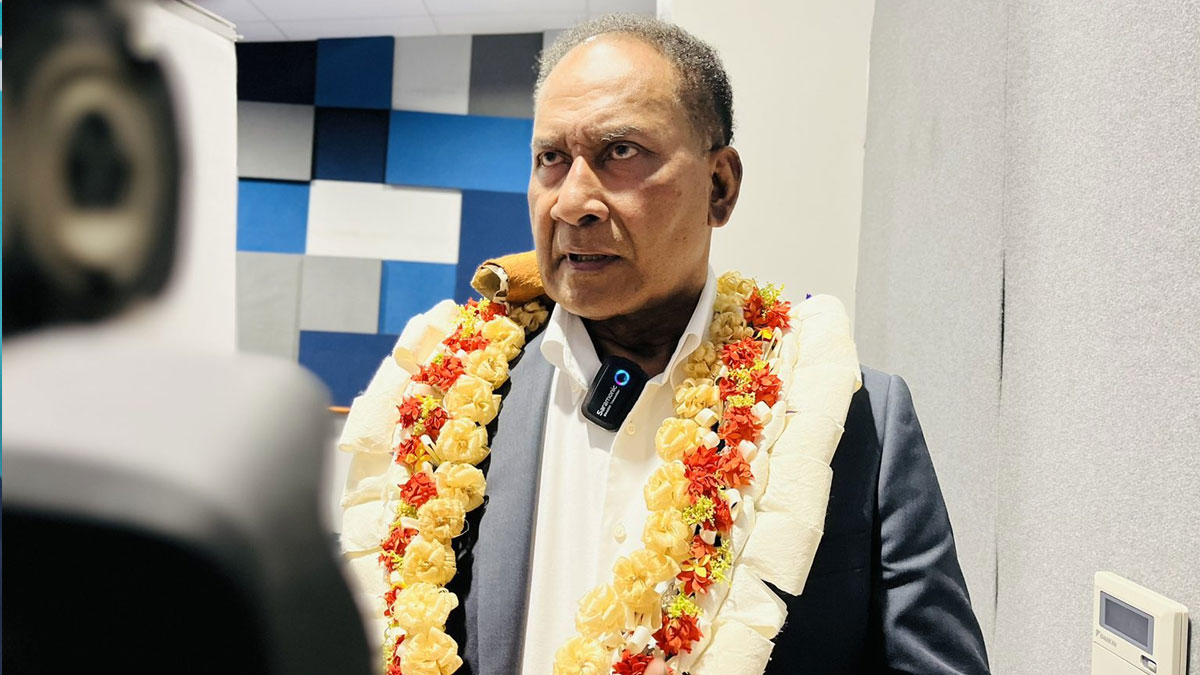
The legacy of military involvement in Fiji’s political landscape continues to cast a long shadow over national institutions, according to the Pro-Vice Chancellor of the Macmillan Brown Centre at Canterbury University, Professor Steven Ratuva.
Speaking in a recent discussion on the challenges facing democratic development in Fiji, Professor Ratuva reflected on the military’s repeated interventions in politics, beginning with the 1987 coup and extending through to the 2006 takeover.
Drawing from his own personal experiences, Professor Ratuva says he was arrested multiple times and chased by military personnel during periods of political unrest.
He says the persistent presence of military personnel in government and civil service roles has led to a culture of militarization, where coercion is defined as the use of threat and force which has become normalized.
The Professor further explained that this normalisation has contributed to an environment where the abuse of power and corruption are not only present, but exacerbated.
Professor Ratuva pointed specifically to a sense of entitlement among some in positions of authority—entitlement to leadership, to appointments, and to power itself.
He says the belief that power equals entitlement has affected how institutions are run, how appointments are made, and how certain groups maintain dominance.
Professor Ratuva says there are signs of progress—such as a new generation of more educated officers and ongoing reconciliation efforts within the ranks—deep institutional and cultural issues remain.
He says there is now some awareness among officers of the need to redefine what national security truly means, moving away from securing the country through coups, and toward more democratic, civilian-centered methods.

Stay tuned for the latest news on our radio stations