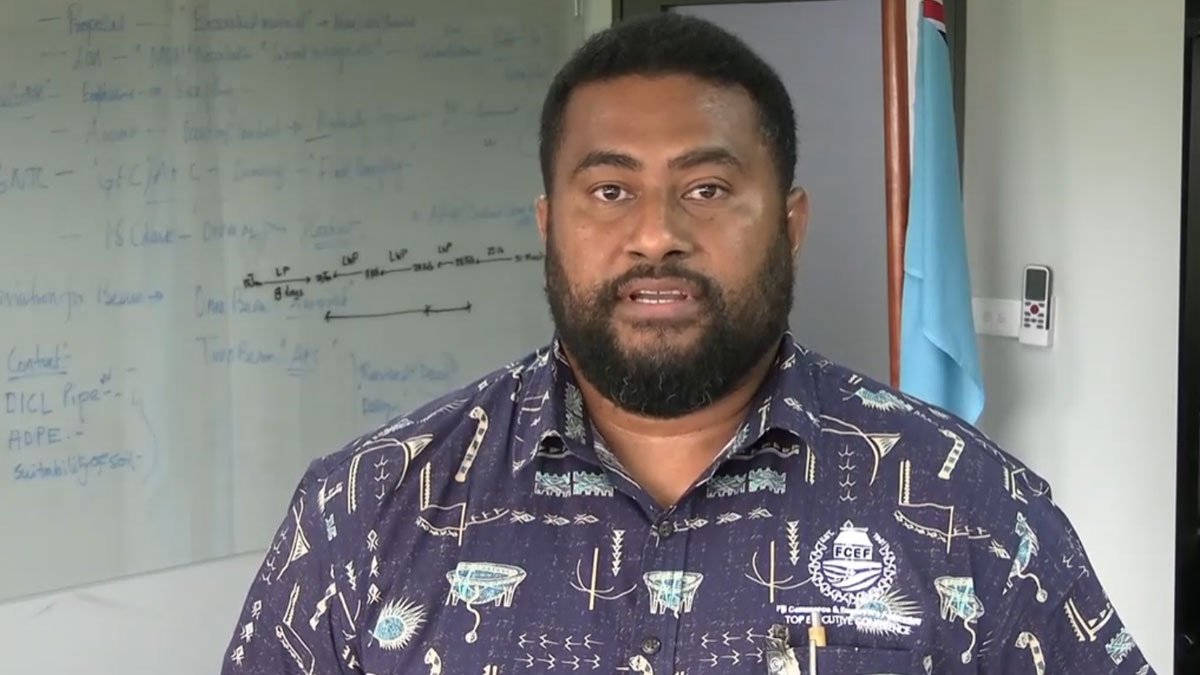
Water Authority of Fiji Chief Executive Officer, Seru Soderberg says WAF will continue targeted monitoring and will incorporate findings from ongoing research, including the USP study on the level of microplastics found in the different forms of water supply in Fiji.
Speaking to fijivillage News after the study findings, Soderberg says they will take all these into account in future planning, treatment optimisation, and system improvements.
He says at the same time, WAF is progressing major investments in treatment infrastructure and system upgrades.
Soderberg says insights from ongoing research, including on microplastics, will be considered in design and operational improvements.
He adds addressing microplastics is a broader environmental challenge that extends beyond water treatment alone.
The WAF CEO says it requires coordinated action across waste management, catchment protection, and public awareness.
Soderberg says the study is a timely and important contribution, establishing a critical reference point for Fiji and the Pacific on an emerging global water quality issue.
He says WAF supported this study by facilitating access to sampling locations.
He says establishing this baseline allows for a more informed understanding of microplastics in our systems and supports evidence based planning going forward.
WAF says microplastics have been identified in water sources globally, and the USP study characterises microplastics as an emerging contaminant and highlights that further research is required to better understand potential human health impacts, including the absence of clearly defined toxicological thresholds or tolerable intake levels at this stage.
Soderberg says the findings confirm that microplastics are present at low concentrations in both raw and treated water in Fiji.
The study also notes that conventional water treatment processes achieve partial removal of microplastics, with removal efficiencies ranging between approximately 45% and 67%, while smaller particles remain more difficult to remove.
Soderberg says the USP study shows no material increase in microplastic levels between treated water and tap water, indicating that WAF’s reticulation network is not a contributing source.
WAF adds the study further found microplastics present across raw water, treated water, tap water, bottled water, rainwater and groundwater, confirming this is a broader environmental issue, not one specific to reticulated water supply.
Soderberg says it also indicates that microplastic occurrence is influenced by environmental conditions, including the level of human activity within catchments, reinforcing the importance of catchment protection as a key component of maintaining water quality.
He adds WAF’s priority remains to ensure all treated water complies with the Fiji National Drinking Water Standards, which are aligned with World Health Organization guidelines and are designed to ensure water is safe for consumption.