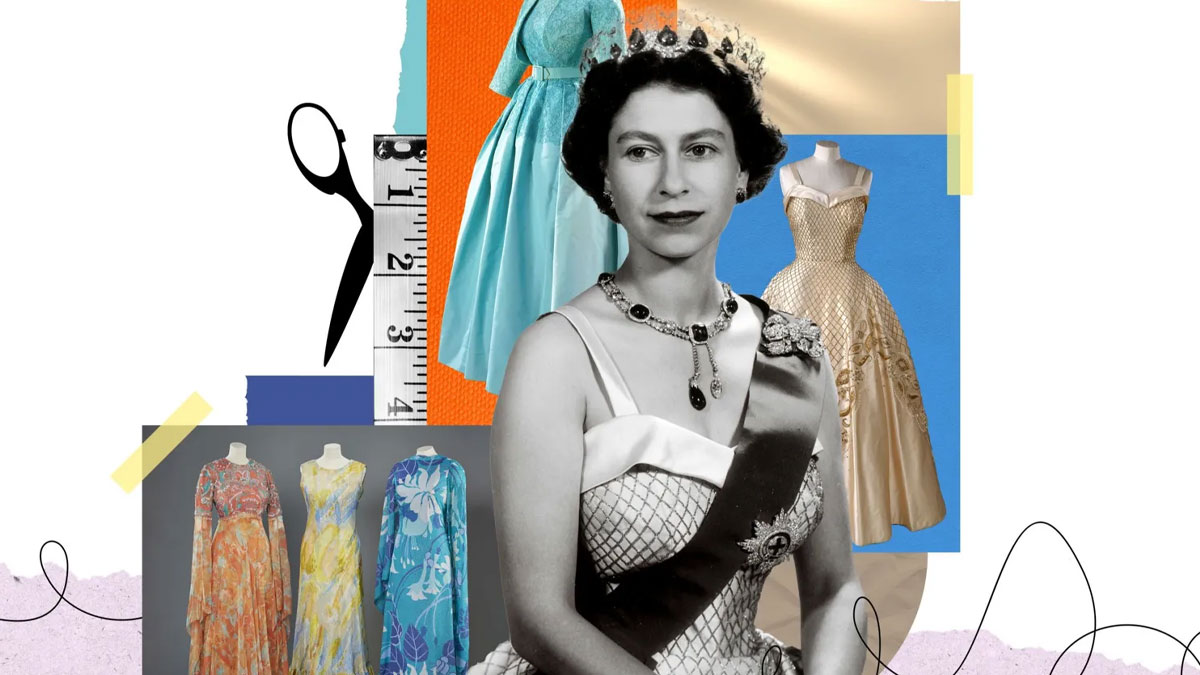
She was arguably the most famous woman of her time, and Queen Elizabeth II's style - though restrained and often conservative - was instantly recognisable.
Just as she remained a constant presence during her 70 years on the throne, so did the show-stopping hats and bright coats of her public appearances, and the tweeds, tartans and headscarves of her off-duty look.
Her outfits were meticulously designed - both with practicality in mind, and often with subliminal messages of soft power, diplomacy and stability.
Amy Walker
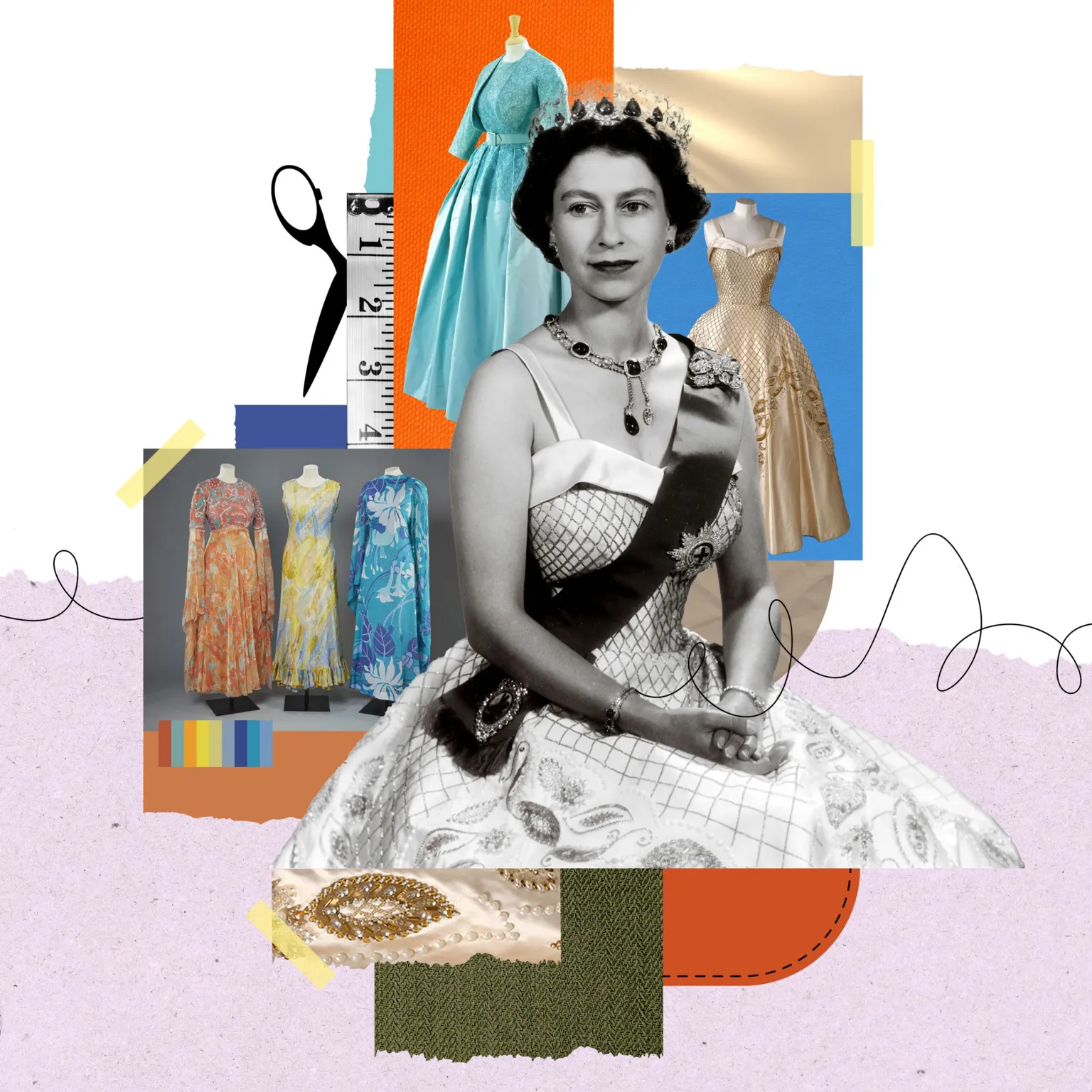
A new exhibition at The King's Gallery in Buckingham Palace - showcasing items from the 10 decades of Queen Elizabeth's life and marking the centenary of her birth - throws light on how Britain changed during her reign.
Of the 200 pieces set to be featured - including clothing, jewellery, hats, shoes and accessories - we have selected five of the most iconic outfits.
The tweed and tartan skirt
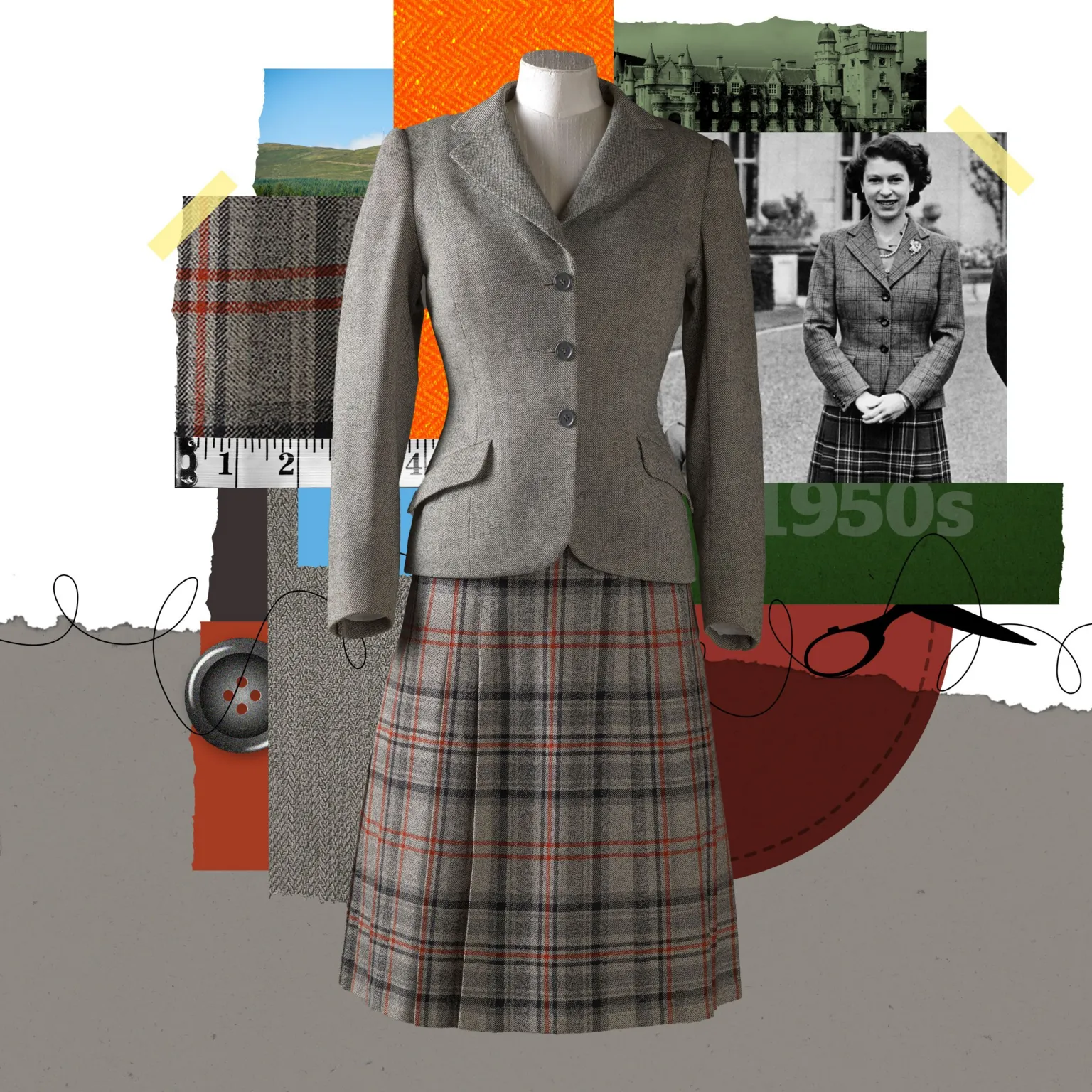
Designed by her dressmaker Norman Hartnell, the Queen first wore her Harris tweed jacket and Balmoral Tartan skirt in the 1950s.
The ensemble - which became a staple of the Queen's off-duty look through the decades - was practical for her love of the outdoors, and modest in appearance.
But royal fashion commentator and Vogue contributor Marian Kwei, says the statement it made was anything but.
The fabrics used were intended to "promote British fashion, excellence and production", says Kwei.
And weaved into the outfit's feminine cut and low-key tones are connotations of "stability, dependence, soft power", she says.
"It's 'I'm in charge', without being too loud about it."
The Coronation dress
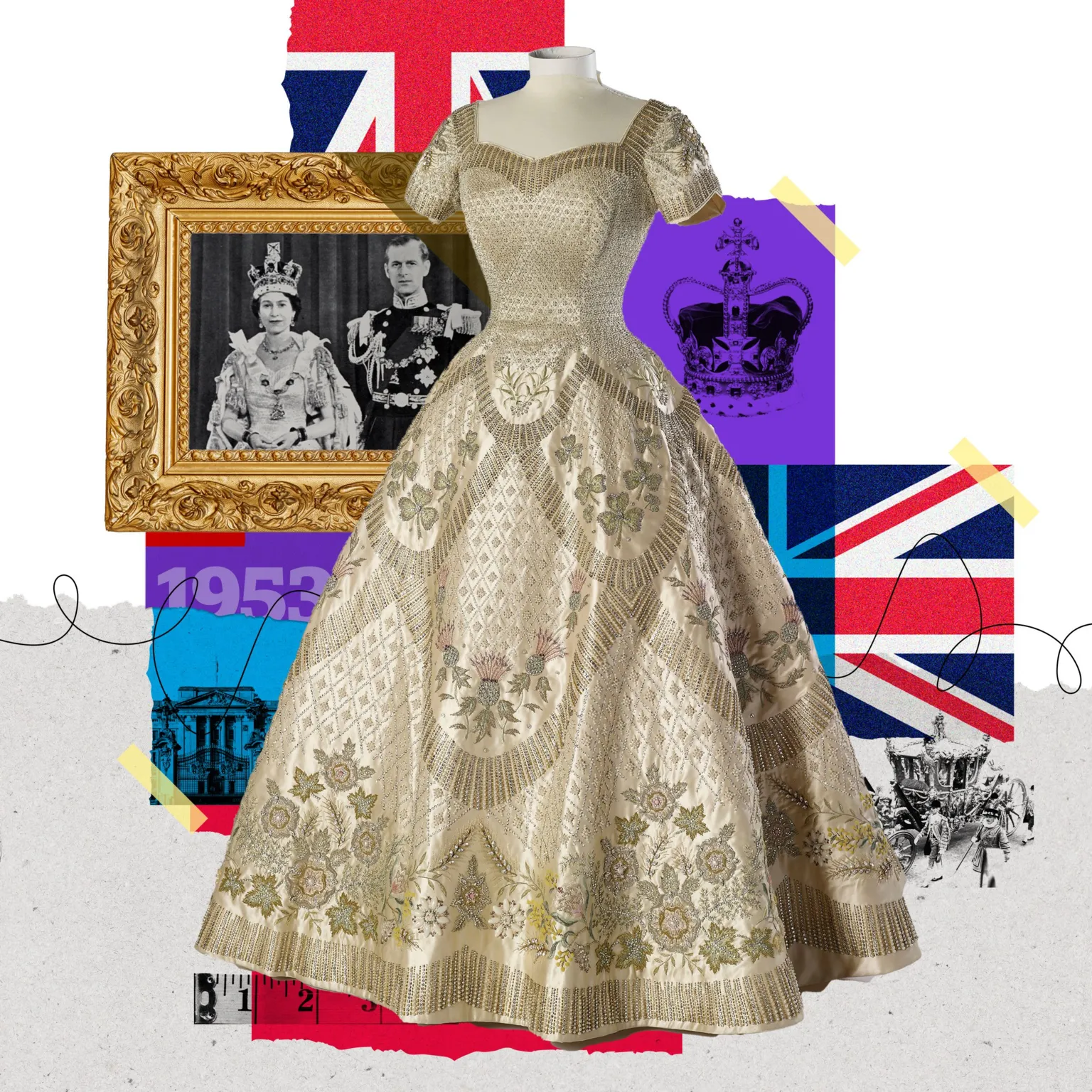
Also designed by Hartnell, the Queen's 1953 Coronation dress was made from silk produced in Kent and features gold bugle beads, diamantés and pearls in exquisitely designed embroideries.
But while it has all the hallmarks of the great British craftsmanship that was championed by Elizabeth II, it is the symbolism - for which her style came to be known - that makes the dress a particular standout.
It features the floral emblems of the four nations of the UK, and after accepting Hartnell's eighth design for the dress, the Queen also requested the emblems of other states within the Commonwealth be included.
Among England's Tudor rose, Scotland's thistle, the Welsh leek and the Irish shamrock are the Canadian maple leaf and India's lotus flower.
"The gown was pretty much a nod to Britain and the Commonwealth," says Kwei.
Her sartorial choice, she adds, was "really an indication of the kind of Queen we had and how she reigned".
The Eisenhower dress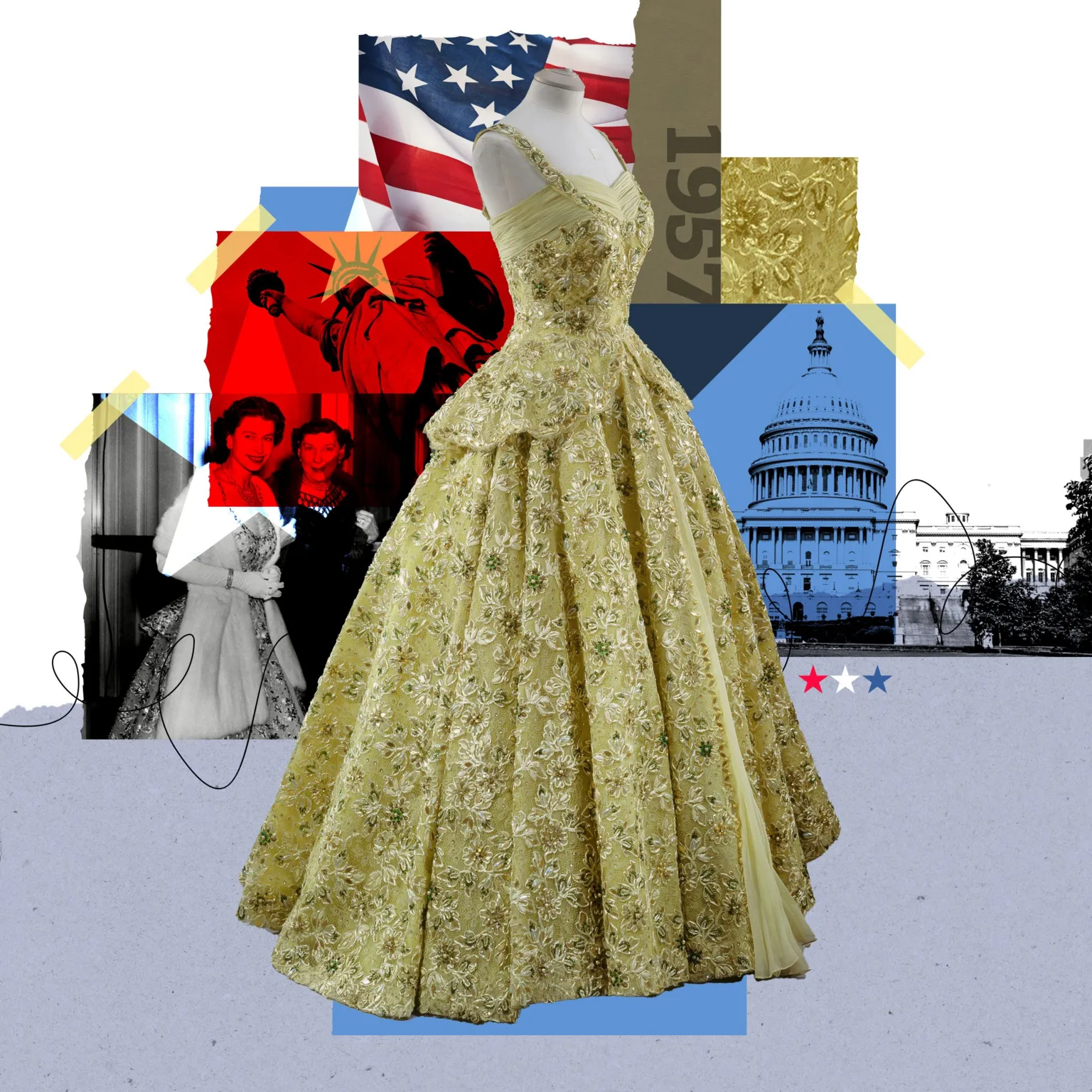
In 1957 Elizabeth II wore an elaborate sleeveless green gown, also designed by Hartnell for a state banquet thrown for US President Dwight Eisenhower at the British Embassy in Washington DC.
"She was on the world stage for 70 years and it's quite impressive to have just always made the right choice in terms of clothing," says de Guitaut.
But in terms of the particular message the Queen was trying to convey, this dress is divisive.
"It's absolutely beautiful," says de Guitaut, "but I can't quite see an overt reference in it to be honest."
Whatever the intention, we know it was worn during a US visit intended to strengthen transatlantic ties during the Cold War.
As a magnificent piece of design, Kwei suggests the Queen was looking to make a statement about Britain. Its "apple crisp green" could be a nod to America, she adds.
"From New York being known as 'The Big Apple' right through to the traditional place the 'American Pie' holds in American culture, apples have become synonymous with all things classically American."
The dress says "'I'm Britain's sovereign, this is us, but I'm also nodding to you'", says Kwei.
Author and royal fashion commentator Elizabeth Holmes points out that early on in the Queen's reign, she used her clothing to "establish herself in a new way, a glamorous young woman on a global stage dominated by men".
The pieces designed by Hartnell, often with a fitted waist and full skirt, "accentuated her femininity, rather than attempting to mask or hide it", she adds.
The blue gown and bolero jacket
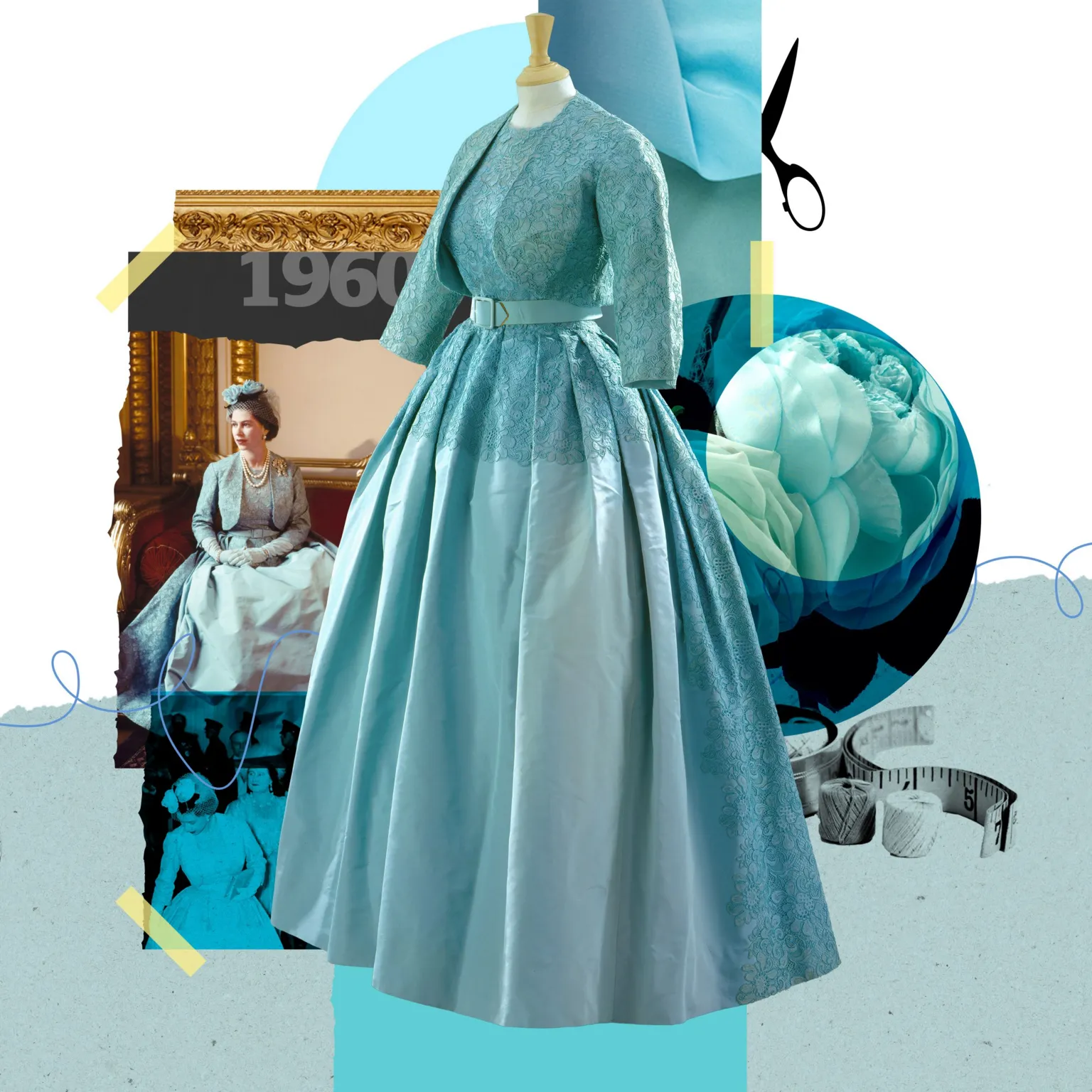
The crinoline-skirted kingfisher blue gown and matching bolero jacket the Queen wore for her sister Princess Margaret's wedding in 1960 has an "incredible timeless quality", says de Guitaut.
With guipure lace detailing, the dress echoed the silhouette of the bride's dress and was worn with a blue hat adorned with three blue silk roses, thought to have been a nod to her younger sister's full name, Margaret Rose.
While admired for its painstaking construction, de Guitaut notes the dress offers a glimpse into a moment in history in a country on the precipice of change. It marked the last time full-length dress was worn by a member of the royal family who was not the bride for a wedding.
"The Queen lived a very long time and her life chronicles this period where British fashion really emerged," says de Guitaut.
"It was 1960, we've still got to get into the swinging 60s where the hemline is raised by [British fashion designer] Mary Quant, it was just such a moment in time," says Kwei.
Having favoured darker colours in her youth, it was around this time that the Queen's love of the colour blue - among the many other bright shades she wore - begins to become apparent.
"There's something about blue that's calming, it endears trust without being too in your face. It's fashion diplomacy," says Kwei.
The transparent raincoat
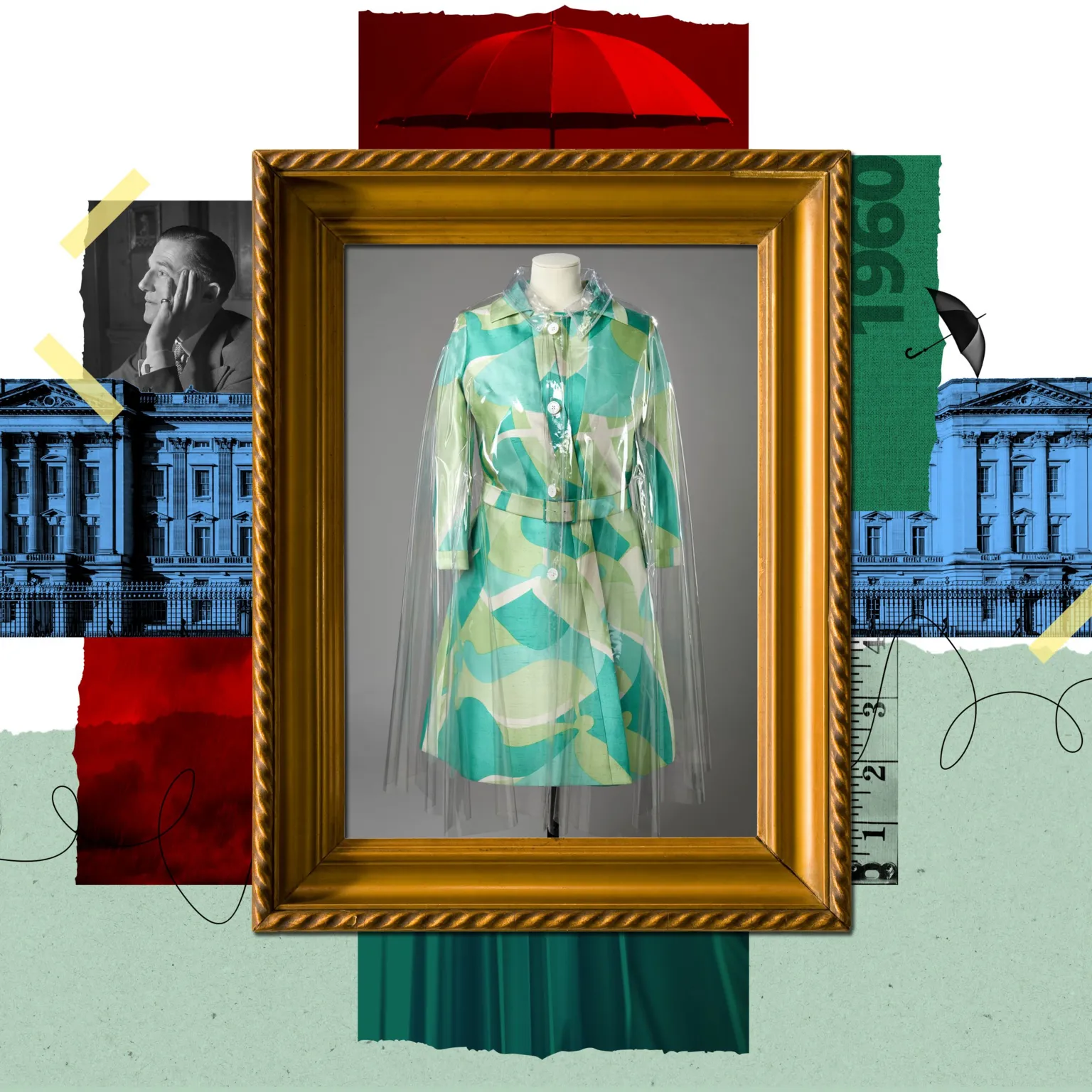
Distinct from many of the other items which will be displayed, is a clear plastic raincoat from the 1960s. It was designed by another of the Queen's couturiers, Hardy Amies, who later went on to create space-age get-ups for Stanley Kubrick's 1968 film, A Space Odyssey.
Like the transparent plastic umbrellas that later became her trademark on official engagements, this raincoat also allowed people to see the Queen's brightly-coloured dresses in all weathers.
Colours mattered, says de Guitaut, and it was important that members of the public who turned out to see her actually could. "So even if you're 10 deep in the crowd, you can see a figure in a bright yellow coat or whatever it happens to be... You've seen the Queen," she says.
The futuristic coat - modish in the 1960s - is also indicative of how the Queen was in sync with the times. Kwei points out that "she didn't want to be known as a fashion icon".
But de Guitaut points out that alongside all the subtle messaging, trends had also been key to many of the Queen's outfits in her younger years.
In the 1940s, the influence of Christian Dior's New Look cinched waists were apparent, then in the 1950s, references to Spanish fashion house Balenciaga's more voluminous style emerged in the Queen's clothes, says de Guitaut.
"In the 60s she was wearing some quite short hemlines, little tailored suits, the colours - everything really speaks to that era," she adds.
By the 1970s, even the Queen was wearing looser-fitting evening gowns with drapey arms and "swirly whirly" patterns.
Though encompassing fashion trends, the Queen's instantly recognisable style remained "very elegant, quintessentially British and restrained", says de Guitaut.
What threads each decade together, she adds, is that sartorially, the Queen "always made the right choice" - ever appropriate for the occasion.
"For someone who was on the world stage for 70 years, it's quite impressive."
Queen Elizabeth II: Her Life in Style is at the King's Gallery from 10 April 2026
[Illustrations by Jez Fraser/BBC]

Stay tuned for the latest news on our radio stations