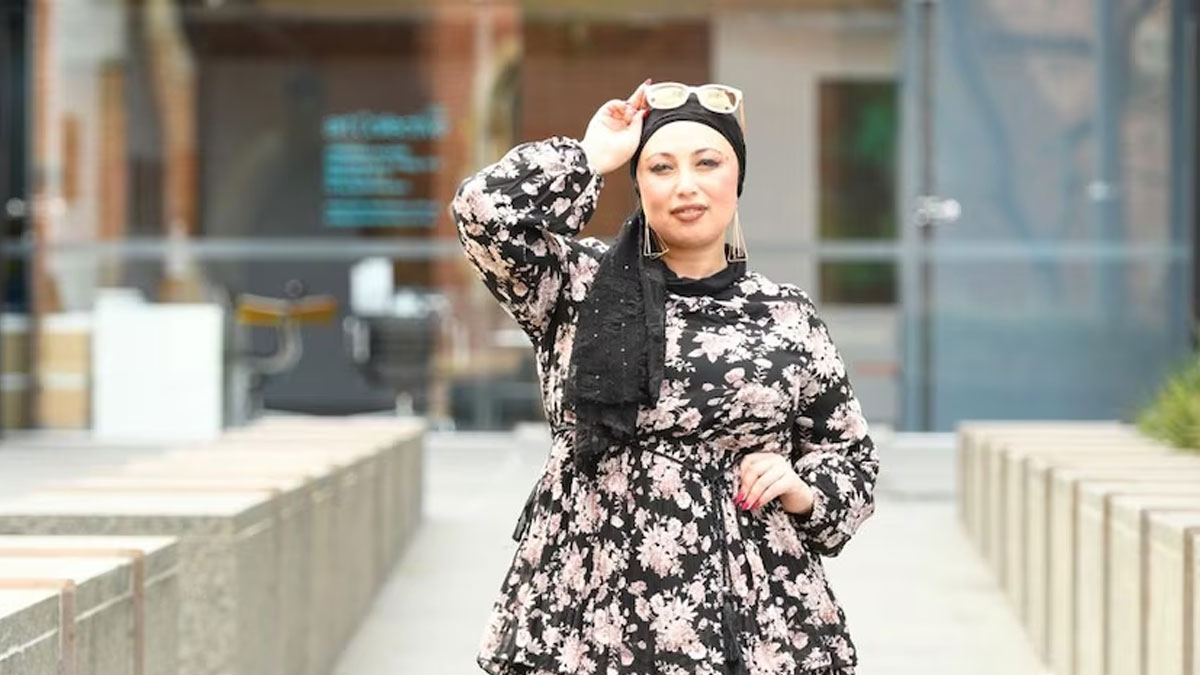
The Islamic headscarf, also known as the hijab, is often worn by Muslim women as a symbol of honour in their faith.
It's also often at the centre of heated debate.
For the hundreds of thousands of Muslim women around the world who wear the hijab, their religion is instantly identifiable. And as a result, they often end up becoming flag-bearers for their faith in the West.
But not all Muslim women choose to cover their hair.
And for some, the pressure to wear the hijab — a requirement of the Islamic faith for women from the age of puberty — can become too much.
These Muslim women share their experiences of wearing the hijab — and what it's like to take it off.
Despite the hijab being part of Islamic dress, some Muslim women believe it's possible to dress modestly without wearing a hijab.
Mariam Veiszadeh is the CEO of Media Diversity Australia and the founder of the Islamophobia Register, a service collating reports of anti-Muslim abuse from across Australia.
After wearing the hijab for 15 years, Veiszadeh decided to take it off three years ago.
The decision was about protecting her mental health.
Veiszadeh found she was experiencing increased Islamophobia and she began to "[crave] anonymity".
"The burden of being a flag-bearer of my faith … [had] well and truly taken a toll on me," she says.
"Dejabing" — the term used by Muslim women to describe taking off the hijab — was "the right thing for me", she says.
Veiszadeh is a prominent leader in the Muslim community, and the hijab was a big part of her identity, so it wasn't an easy move to take it off.
She doesn't challenge the validity of the hijab in Islam. But she says there are unfair judgements made about how women wear it, including by some men in the Muslim community.
Veiszadeh says she has a problem with "the policing of women's bodies" by some men. It's something she's been a victim of.
She would often face criticism from Muslim men in her community for not wearing her hijab "correctly". These included getting angry messages from men if her neck was showing.
According to some interpretations within Islam, the rules of hijab require women to wear clothing that covers their bodies, including the neck and hair.
In some cases, men within the community would also message her husband, which she says "was just embarrassing".
Veiszadeh says these can be difficult issues to talk about, because of the stereotype that Muslim men are misogynists.
"Do you call out some of the bad within your own community? Or do you overlook it because having that conversation publicly plays into Islamophobia?" she says.
She chooses to speak up about these behaviours to members of her community in more intimate spaces.
"The public just cannot have a nuanced conversation about this. They see it in such a black-and-white way. If a Muslim woman is calling something out, they see it as, 'Wow, you guys must be oppressed'.
"The truth is, everybody is fighting their own battles within their own community," she says.
Veiszadeh says things are slowly changing.
"I feel like we are beginning to stand up [to misogyny] … Eventually there'll be a critical mass of voices speaking in unity," she says.
In Islam, women are not the only ones that have dress codes. Men are also required to cover from their navel to their knees.
The Qu'ran prescribes that both men and women should observe modesty while also instructing "there is no compulsion in religion", meaning you can't force anybody to practise the rules of Islam.
However, in some cases, people might choose to display extra modesty.
For example, Muslim women might wear the niqab, the Islamic face covering
For lawyer Aisha Nancy Novakovich, who wore the niqab for eight years, wearing the face covering was about "doing something extra" to express her spirituality.
Novakovich, who is also the founder of fashion company Modest Fashion Australia, first wore the hijab at the age of 12. Two years later, she covered her face by choice, despite criticism from her family.
"It had nothing to do with any man forcing me to wear [the niqab]. It really was about me strengthening my relationship with Allah," she says.
She says by wearing the niqab she was "emulating the lives of the Prophet Muhammed's wives", who were known to sometimes cover their faces out of modesty, according to some narrations detailing their lives.
But Novakovich was forced to unveil her face by an abusive ex-partner, who felt uncomfortable about the Islamophobic comments she received while wearing the niqab when out in public.
This was at a time when Islamophobic attacks were especially heightened.
Novakovich says strangers would verbally abuse her with comments like, "'Go back to where you came from".
"Either I used to get sworn at or called Osama bin Laden's wife [or] ninja, Ned Kelly, letterbox … I would get those comments all the time," she says.
"It had nothing to do with any man forcing me to wear [the niqab]. It really was about me strengthening my relationship with Allah," she says.
She says by wearing the niqab she was "emulating the lives of the Prophet Muhammed's wives", who were known to sometimes cover their faces out of modesty, according to some narrations detailing their lives.
But Novakovich was forced to unveil her face by an abusive ex-partner, who felt uncomfortable about the Islamophobic comments she received while wearing the niqab when out in public.
This was at a time when Islamophobic attacks were especially heightened.
Novakovich says strangers would verbally abuse her with comments like, "'Go back to where you came from".
"Either I used to get sworn at or called Osama bin Laden's wife [or] ninja, Ned Kelly, letterbox … I would get those comments all the time," she says.
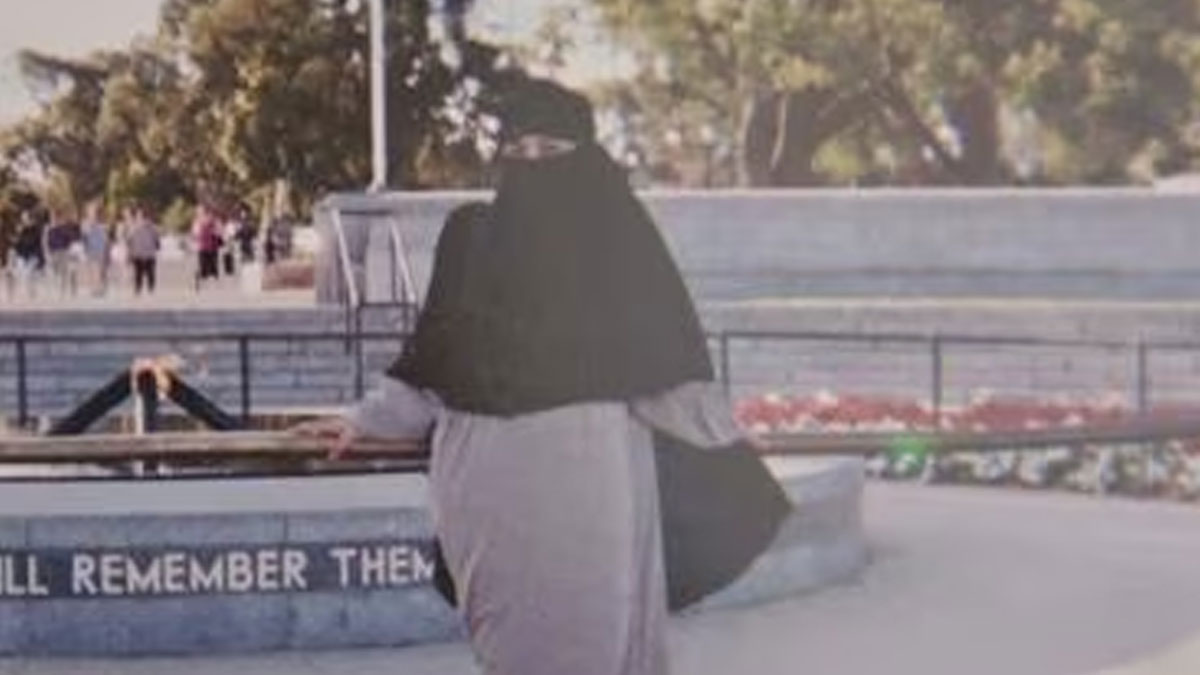
Today Novakovich, a busy single mum, is a force to be reckoned with.
She helps other Muslim women feel empowered about their Islamic dress choices through her advocacy work and by designing stylish and modest fashion for them.
She often speaks about her experience of choosing to wear the niqab to help break stereotypes that women are oppressed when they wear it.
"You read the biography of the Prophet's wife [who often wore the niqab]. Was she not a leader? Was she not feisty? Was she not an intellectual? Was she not a public figure?"
She says to think that only "meek and mild women" wear the niqab or the hijab is a "limiting belief and stereotype".
Story by Zena Charmas
Source:ABC Fashion
More story: https://www.abc.net.au/news/2023-09-24/wearing-hijab-in-west-mariam-veiszadeh-islamophobia/102884356

Stay tuned for the latest news on our radio stations