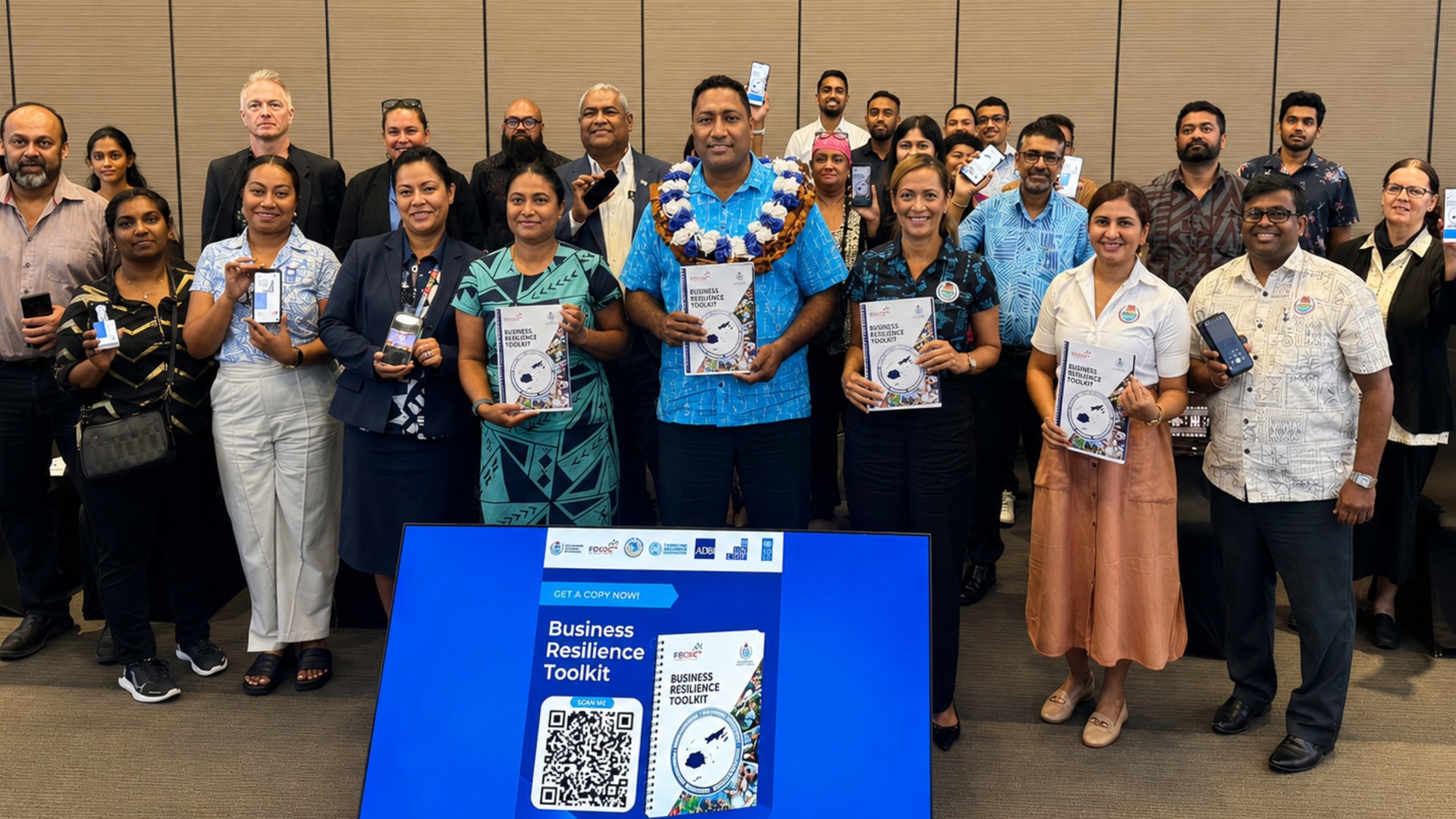
A new Business Resilience Toolkit was launched at the Grand Pacific Hotel in Suva today to help businesses across Fiji better prepare for and recover from challenges such as natural disasters, economic shocks and other disruptions.
Speaking during the launch, organisers highlighted that the toolkit provides practical guidance for businesses to improve preparedness, response, recovery and reconstruction efforts.
The toolkit includes checklists, business continuity templates, disruption assessment forms and recovery guidance tailored for businesses.
Vice President of the Fiji Commerce and Employers Federation Rowena Taito says disruptions are not a distant risk for businesses in Fiji as the country has experienced cyclones, floods, health crises, supply chain disruptions and economic challenges.
She says research shows that almost 80 percent of micro, small and medium enterprises in Fiji are affected by cyclones and flooding at least once every year.
Taito says when businesses are disrupted, it is not just income that is affected but also jobs, livelihoods, families and communities.
She adds the toolkit is designed to help businesses ask important questions including whether they are prepared, whether they have a plan in place and how quickly they can recover after a disruption.
Representatives from development organisations also highlighted the importance of supporting micro, small and medium enterprises, saying these businesses play a major role in local economies by creating jobs and supporting families and communities.
Acting Permanent Secretary for the Ministry of Rural and Maritime Development and Disaster Risk Management Mitieli Cama says resilience is not an option for Fiji but is essential for national development, the economy and the wellbeing of people.
Cama says national resilience cannot be achieved by government alone and requires stronger partnerships between government, the private sector, development partners and communities.
He says the real value of the toolkit will depend on how widely it is used across Fiji, including by businesses operating in rural and maritime communities.