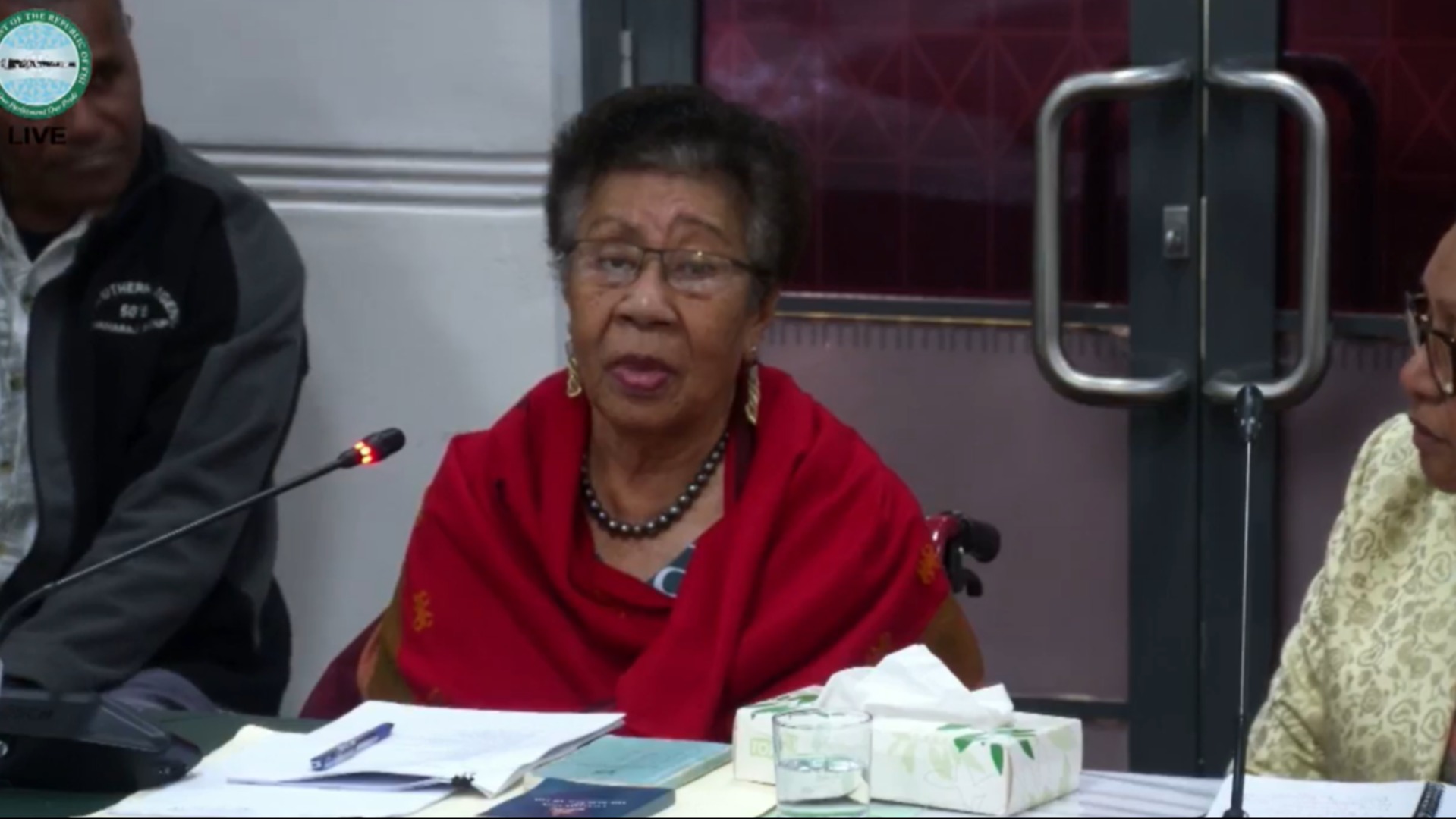
The Soqosoqo Vakamarama has called for the country's surfing law to be reviewed, arguing that indigenous qoliqoli owners should have a greater say over who is allowed to surf in their traditional fishing grounds.
Speaking on the Commercial Use of Marine Areas Bill before the Parliamentary Standing Committee on Justice, Law and Human Rights, President of the organisation, Adi Finau Tabakaucoro, says the current law allows people to surf in qoliqoli areas without the knowledge or consent of customary owners.
Adi Finau says the surfing law should not continue to encroach on the rights of qoliqoli owners simply because surfing is regarded as a tourism activity.
She says the current arrangement allows people to surf in traditional fishing grounds without the awareness of qoliqoli owners or nearby communities, raising concerns about how such activities could interfere with customary fishing rights.
Adi Finau describes this as the Soqosoqo Vakamarama's primary concern, adding that the organisation was otherwise supportive of the proposed Commercial Use of Marine Areas Bill.
During the hearing, committee member, Jone Usamate explained that the Bill would allow qoliqoli owners to apply for proprietary ownership of marine areas used for tourism activities or emissions reduction projects.
He says applications would be assessed by the iTaukei Land and Fisheries Commission, which would determine ownership and boundaries, and that the legislation was intended to replace the existing surfing legislation while retaining some of its provisions.
Committee member Faiyaz Koya sought clarification on whether the Soqosoqo Vakamarama wanted existing rights under the current surfing legislation removed.
Adi Finau responded that any existing rights that interfere with or encroach upon the interests of qoliqoli owners should be reviewed to better protect indigenous communities.
Koya then pointed to a provision in the Bill allowing the iTaukei Land and Fisheries Commission to renegotiate the terms and conditions of existing rights after ownership is transferred.
However, Adi Finau questioned the extent to which qoliqoli owners would be directly involved in those negotiations, saying the Commission did not necessarily represent the interests of customary owners.
She maintained that the protection of qoliqoli owners' rights should remain central to the legislation.
