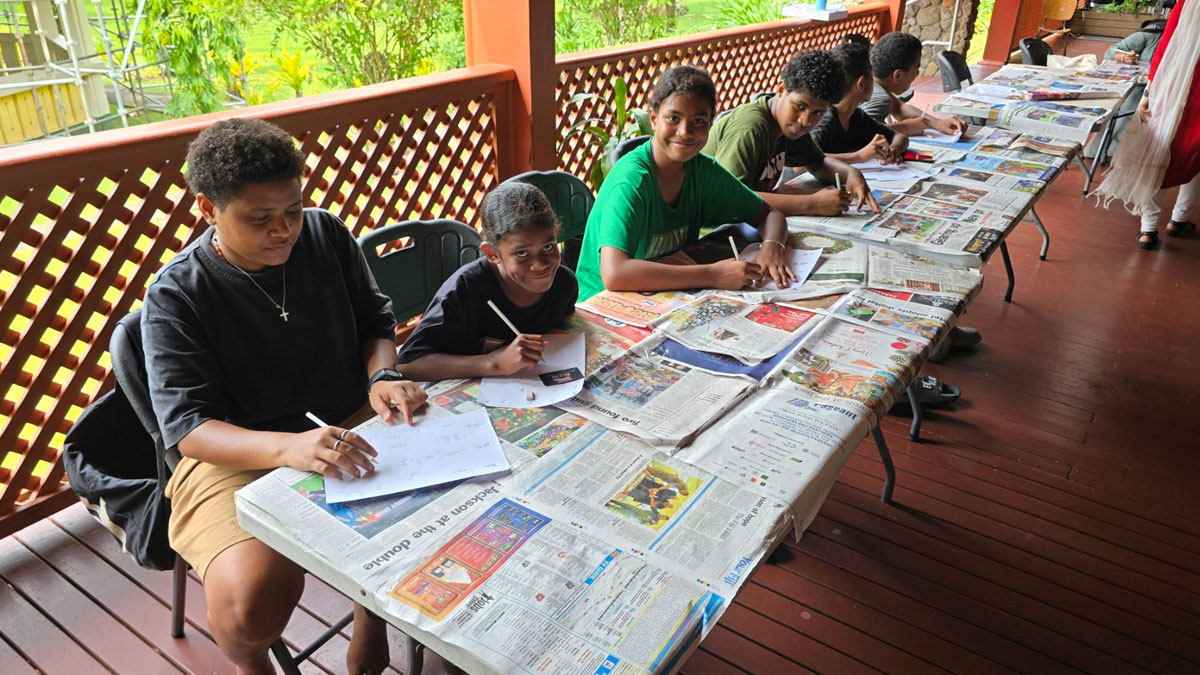
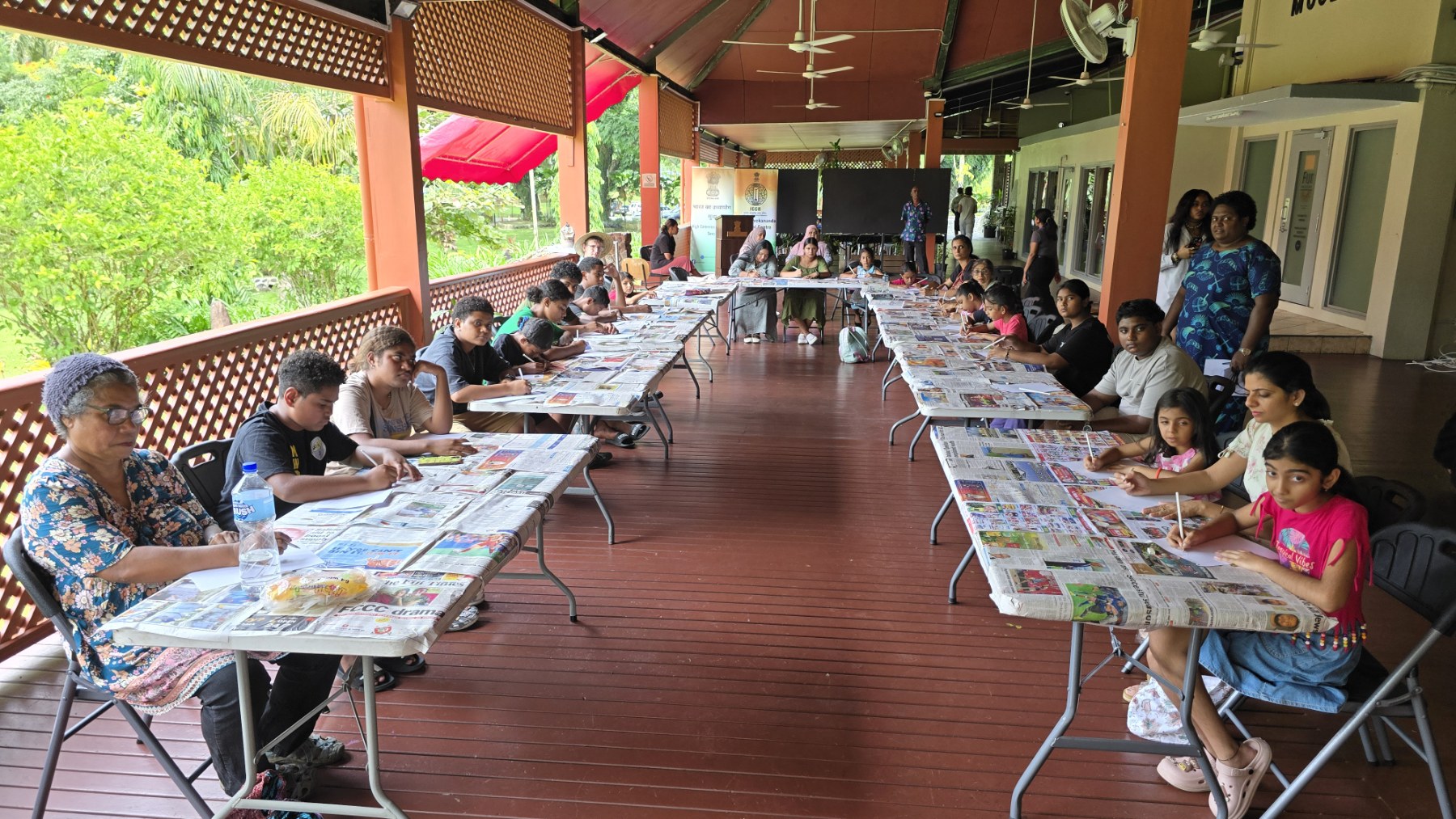
A three-day Warli art workshop, organised by the Indian High Commission in Fiji, in collaboration with the Fiji Museum, ends today as part of its ongoing cultural and educational initiatives.
The workshop introduces participants to one of the oldest forms of Indian folk art, dating back more than 2,000 years.
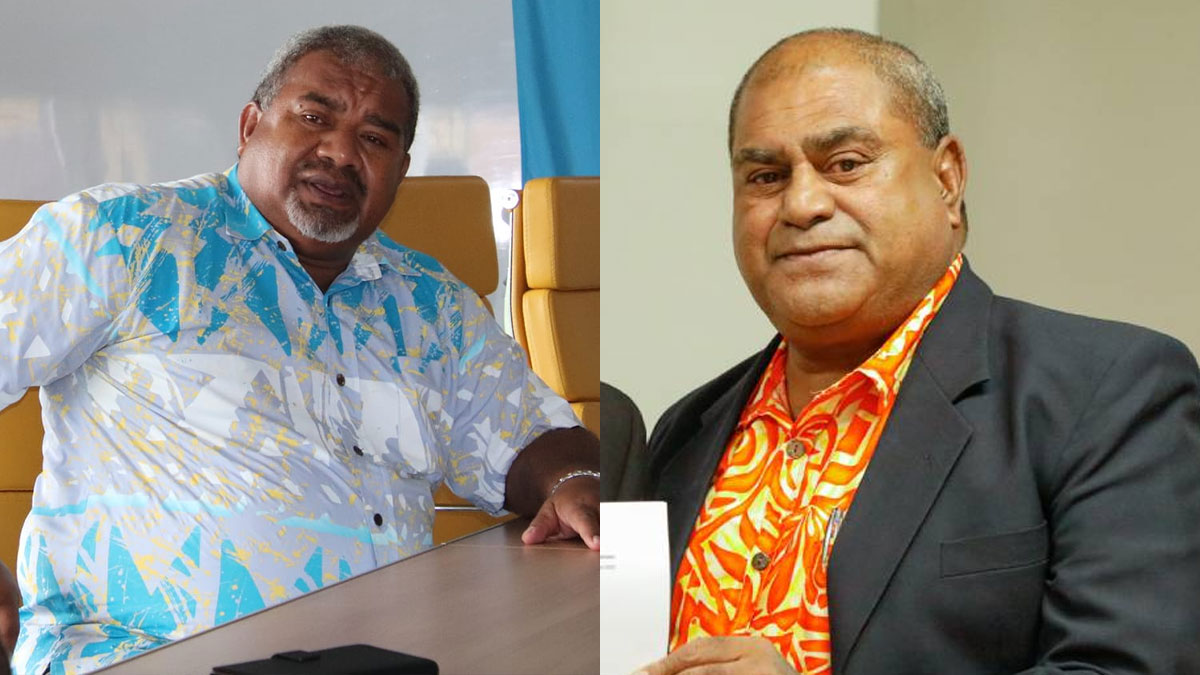
Speaking to fijivillage News, Indian High Commissioner Suneet Mehta explained that Warli painting originates from the tribal communities of Maharashtra, India, and is traditionally characterised by simple geometric patterns that depict scenes of daily life, nature, festivals, and social harmony.
He says, traditionally, Warli art was created by tribal women using rice paste on mud walls during weddings and harvest celebrations.
He adds that during the workshop, participants learn both the traditional meaning behind the artwork and modern techniques using acrylic colours on canvas and paper.
The High Commissioner says the workshop was open to children, youth, and adults, with no age restrictions.
He highlighted that the programme comes at a perfect time, aligning with the school holidays, and gives children a creative, screen-free way to use their time productively.
He adds that participants will receive certificates upon completion of the workshop.
The workshop is being conducted by Rashmi Ahalawat, a passionate Indian folk artist and certified yoga educator based in Suva, who works closely with the High Commission of India and the Indian Council for Cultural Relations to promote Indian folk art, yoga, and holistic wellness through workshops, exhibitions, and community programmes.
Meanwhile, the Indian High Commission will host a poetry recital at its office in Butt Street today as part of World Hindi Day celebrations.