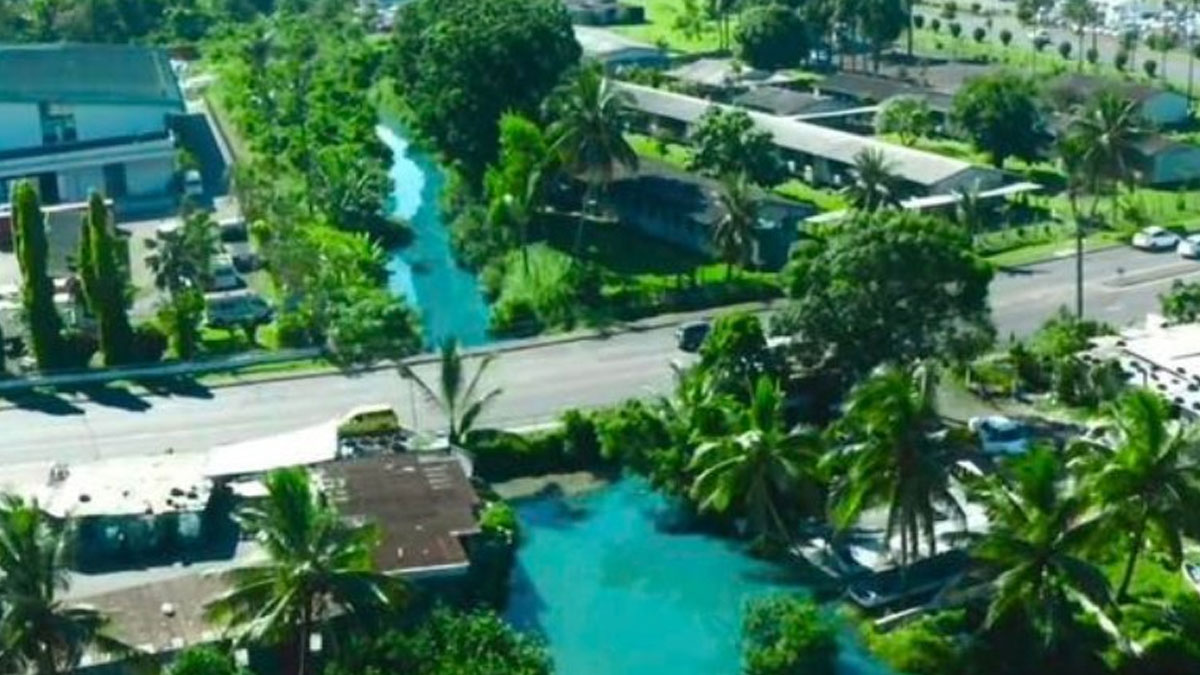
As investigations continue on the toxic discharge into a stream in Nabua, the Water Authority of Fiji says the bluish discoloration is suspected to have originated from trade waste discharged into the WAF waste water network upstream of the Nabua Wastewater Pump Station, most likely from nearby commercial or industrial customers.
The discharge had resulted in several dead eels in the stream and as a critical precautionary measure, the Department of Environment has strongly advised the public to avoid any form of use until further notice.
The Department says on Tuesday, investigations found raw sewage overflowing from an underground culvert near the Nabua Sewerage Pump Station, which had been non-operational since Christmas, allowing sewage and a bluish substance to enter the waterway.
While responding to questions by fijivillage News, WAF says due to an electrical fault affecting the pump controls at the Nabua Wastewater Pump Station, wastewater including this substance overflowed through the emergency overflow system and entered the nearby drain, which then flowed into the stream towards the Jerusalem Road.
They say this resulted in the temporary blue coloration observed in the waterway.
WAF says to accurately determine the level of risk, laboratory testing would normally be required but, based on field observations and reports from the Department of Environment, including reports of dead aquatic life such as eels, it is likely that the discharge contained toxic elements associated with inappropriate trade waste.
The Authority says this reinforces the importance of strict controls on what is discharged into the wastewater system, as certain substances can be harmful to the wastewater infrastructure, its treatment process, environment, and aquatic life, particularly during emergency overflow events.
When asked why was the pump station was non-operational since Christmas, WAF says the pump station experienced an electrical fault affecting the pump control board soft starters, which caused the duty pumps to trip and shut down.
They say this interruption prevented normal wastewater pumping from the pump station to Kinoya Waste Water Treatment Plant and contributed to the overflow.
WAF says the issue was identified during routine operational checks on Tuesday and their Mechanical and Electrical teams responded promptly and rectified the electrical fault on the same day, restoring the pump station to full operation.
They say while the pumping function was restored quickly, the visible discoloration in the stream took some time to naturally disperse once the source was stopped.
WAF confirms the affected areas were cleaned and disinfected using Bio-Plus bacteria treatment to help address the contamination.
WAF says they take responsibility for the electrical fault affecting the pump station and acknowledges that multiple technical factors can contribute to such failures.
However, they say the toxic nature of the bluish substance points to inappropriate trade waste being discharged into the wastewater system, which is the responsibility of the respective commercial and industrial customers and shows the level of pre-treatment at their facilities.
The Authority stresses that such discharges are harmful to wastewater infrastructure, treatment processes, and the environment, especially during unforeseen operational events.
To prevent similar incidents in the future, WAF says they are progressing upgrades to electrical control systems, improving reliability of pump operations and monitoring of these stations.
They say in parallel, their Liquid Trade Waste Unit is actively investigating the source of the suspected toxic discharge and will engage directly with the responsible parties to ensure compliance and prevent repeat occurrences.
WAF adds these actions are part of their ongoing commitment to protecting public health, infrastructure reliability, and the environment.
Meanwhile, Permanent Secretary for Environment, Dr Sivendra Michael says raw sewage contains harmful pathogens, toxic nutrients and high organic matter.
He says sewer can cause acute oxygen depletion, leading to fish kills and the death of aquatic organisms, such as the eels observed at the site.
Dr Michael says this oxygen depletion alone is sufficient to make the discharge toxic to aquatic life.
The Permanent Secretary says in this particular incident, the bluish discoloration observed raised concerns that another substance may have entered the sewerage system upstream.
He stresses sewerage networks are not designed to receive chemicals, paints, detergents, or industrial liquids and if such substances are illegally disposed of into the sewer system, they can concentrate and be released untreated when a pump station fails, significantly increasing toxicity.
Dr Michael adds the Department of Environment treats such incidents seriously and will take appropriate regulatory and enforcement action, should unlawful disposal or negligence be established.