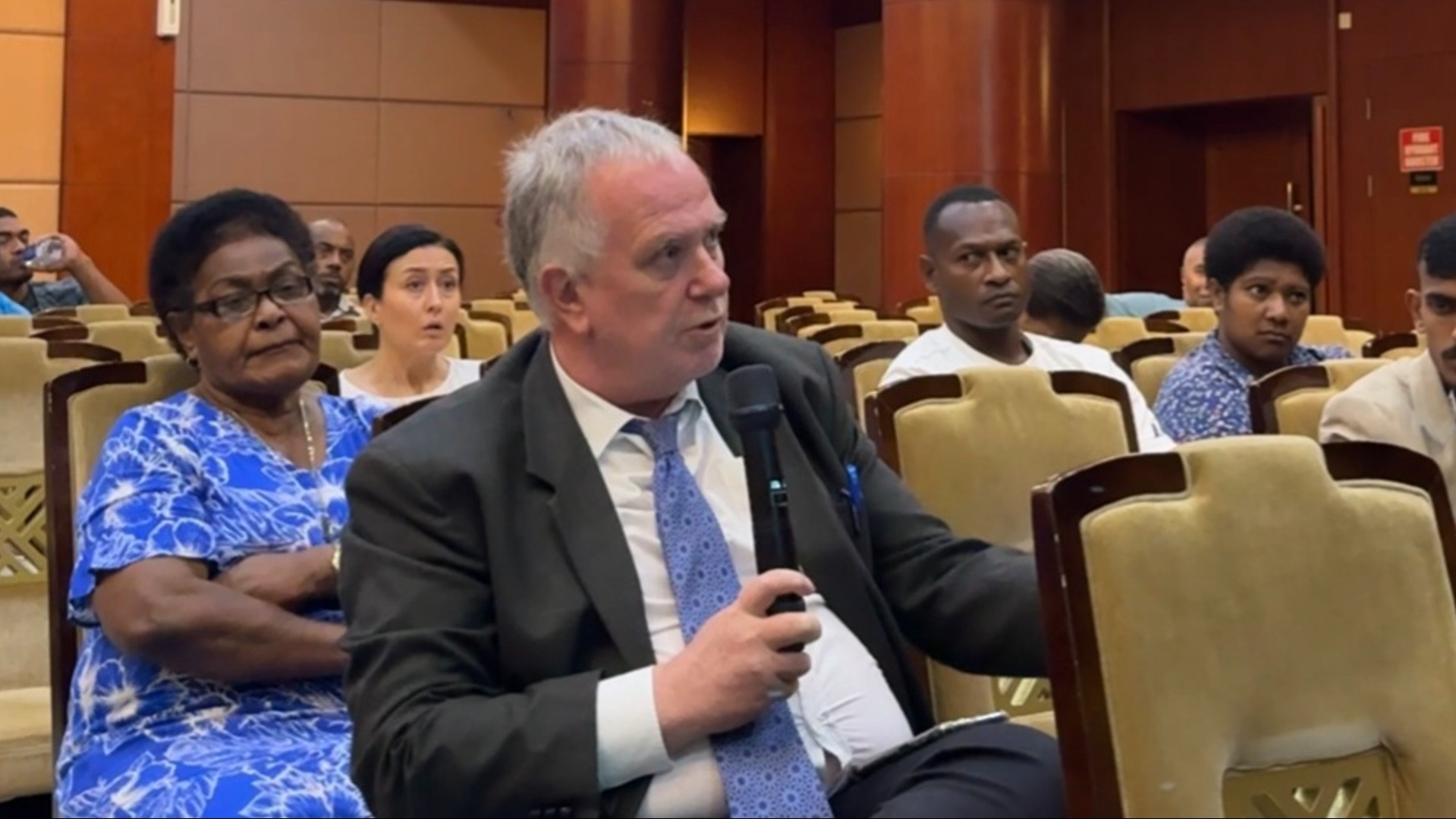
A senior Fiji lawyer with nearly three decades of experience in drug cases has highlighted that he knows of at least five or six methamphetamine houses over the years in the country, and in one case close to three tonnes of precursor ingredients were discovered, yet charges were laid for only two kilograms, as that was the only manufactured product.
In his submission to the Ministry of Policing during the Counter Narcotics Bill consultation at the Suva Civic Centre, Gavin O'Driscoll said a major gap in Fiji’s drug laws, noting that the chemical ingredients used to manufacture methamphetamine are not illegal.
O'Driscoll says these ingredients can be purchased in significant quantities without committing an offence because there is no legislation regulating them, and this loophole has had serious consequences.
He warns that tougher penalties, including any move towards the death penalty, will not solve the country’s growing methamphetamine problem, and is urging lawmakers to focus instead on rehabilitation, corruption-proof policing, and addressing gaps in existing legislation.
O’Driscoll says any review of drug laws must begin with a clear understanding of the underlying problem.
He says methamphetamine was virtually unknown in Fiji two decades ago but has since become a serious concern, while other hard drugs are largely transiting through the country rather than supplying a local market.
O’Driscoll warned against increasing penalties beyond those already provided under the Illicit Drugs Act, which carries sentences of up to life imprisonment, saying harsher punishment is not an effective deterrent.
He also expressed concern about the proposed Counter Narcotics Task Force, warning that similar units in the past had contributed to problems rather than resolving them.
INSERT: O'Driscoll on task force 10th Feb
O’Driscoll says any new task force should be built from the ground up to reduce corruption, with recruits having no prior involvement in drug policing and receiving training from international agencies.
He says officers would need to be independent, incorruptible, and adequately paid.
O’Driscoll stresses that Fiji’s greatest failure in addressing drug abuse is the lack of rehabilitation services.
He says there are no rehabilitation facilities in Fiji and that individuals seeking treatment must travel overseas at a considerable cost.
He adds that while hard drug use cannot be eliminated entirely, it can be reduced significantly through effective rehabilitation.
O’Driscoll says that although the Illicit Drugs Act is generally effective, rehabilitation measures could be introduced through other legislation, including sentencing laws, and should be accessible in major centres.
He welcomed recent court approaches that avoid harsh penalties for first-time, low-level offenders, saying early criminalisation often worsens outcomes.
When asked about the possible introduction of drug courts, O’Driscoll says he did not believe Fiji needed a separate drug division within the judiciary, adding that existing court structures are sufficient given the country’s population size.
He also challenged claims that drug offending has increased significantly, saying charges have remained broadly consistent over the years, aside from methamphetamine cases.
O’Driscoll raised concerns about sentencing guidelines for hard drugs, arguing that they operate as mandatory tariffs rather than flexible guidance.
He says the 2019 guideline judgement Aburisk requires imprisonment regardless of how small the quantity involved, including for first-time offenders.
He adds that this approach draws offenders further into the criminal justice system, rather than addressing addiction through rehabilitation and alternative sentencing.
Responding to him, Police Officer at the Ministry of Policing, James Lave says rehabilitation models and stricter monitoring of drug precursors are already being considered.
He says officials have examined approaches used in countries such as Singapore, where drug users are offered a choice between rehabilitation and the normal court process.
Lave confirmed discussions with pharmaceutical stakeholders, noting that many chemicals used to manufacture drugs are legally sold as medicinal products.
He says the responsibility for monitoring the sale of such substances would largely rest with the Ministry of Health and the Government Pharmacy.
He adds that rehabilitation and education remain key areas under discussion, alongside the structure and recruitment of any future Narcotics Bureau.
Lave says the issues raised during the consultation would assist the Ministry’s work going forward.
Cabinet endorsed Fiji’s Counter Narcotics Strategy 2023–2028 on June 4th 2024, which recognises that drugs are no longer just a police issue; they are a national security, public health, and social stability issue.
As part of that strategy, the Government has established the Counter Narcotics Bureau and is developing a new Counter Narcotics Bill to give the Bureau its full legal powers and responsibilities.
Meanwhile, public consultations on the Counter Narcotics Bill are underway at Keiyasi Government Station in Navosa, and will be at Nawaka Village in Nadi from 5pm to 8pm today.