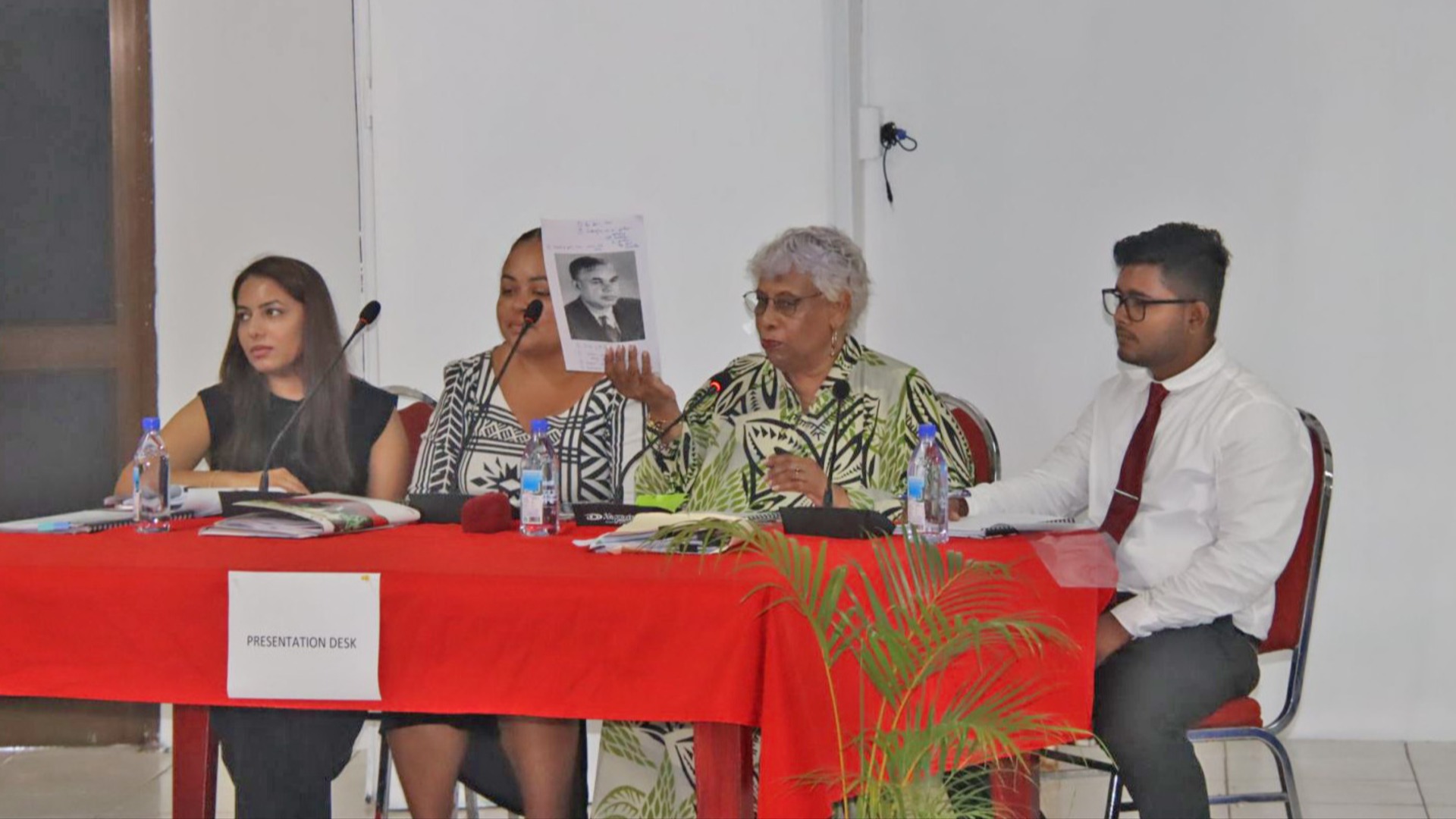
University of Fiji Vice Chancellor, Professor Shaista Shameem has reaffirmed the university's support for the continued prohibition of corporal punishment in schools, stating that violence does not solve behavioural issues, instead, proper discipline guidelines should be implemented.
Speaking during the consultation before the Parliamentary Standing Committee on Justice, Law and Human Rights at the UniFiji Campus in Saweni, Professor Shameem also supported the introduction of mandatory national service for young people aged 18 to 25 years, arguing it could help address rising youth drug use and HIV cases, and would be a better alternative to corporal punishment.
The university also welcomes the inclusion of the higher education framework in the substantive Education Act for greater transparency and oversight.
However Professor Shameem states that some Higher Education provisions need strengthening to protect universities’ programme self-accreditation and academic freedom.
She clarifies the difference between university accreditation (similar to registration and oversight) and programme accreditation, which should remain under the universities’ authority.
She also stresses the need to clearly outline qualifications for Higher Education Commission members and ensure proper review processes.
She adds concerns were raised that the Commission’s power to compel information could be too broad and risk breaching privacy rights.
The Vice Chancellor also states that on micro-credentials, the university recommended regulation and recognition, but not as formal qualifications, and only through suitably qualified institutions.
She has commended the Ministry of Education for the Education Bill, describing it as modern, non-discriminatory, and aligned with court rulings prohibiting violence against children in public institutions.
Professor Shameem said the university worked closely with the Ministry for over three years to ensure the Bill guarantees the right to education from early childhood to adult continuing education.
Professor Shameem also highlighted the historical significance of holding public consultations at the Pundit Vishnu Deo Hall, described Pundit Vishnu Deo as the first Fiji-born Indo-Fijian leader, known for his strong stand on human rights and opposition to discrimination.
He advocated for a casteless society, girls’ education, widow remarriage, and the abolition of child marriage.
Vishnu Deo served in the Legislative Council from 1929 and was later appointed to the Executive Council in the 1940s.
He was recognised as the “Father of the House” for his long service and is regarded as an eminent national leader alongside Ratu Sir Lala Sukuna.
Professor Shameem also noted the close friendship and mutual respect between Vishnu Deo and Ratu Sukuna, which helped bridge ethnic divides during colonial Fiji.
She adds beyond politics, Vishnu Deo was a religious leader, educationist, advocate for cane farmers, and a media figure with his own newspaper and radio programme.

Stay tuned for the latest news on our radio stations