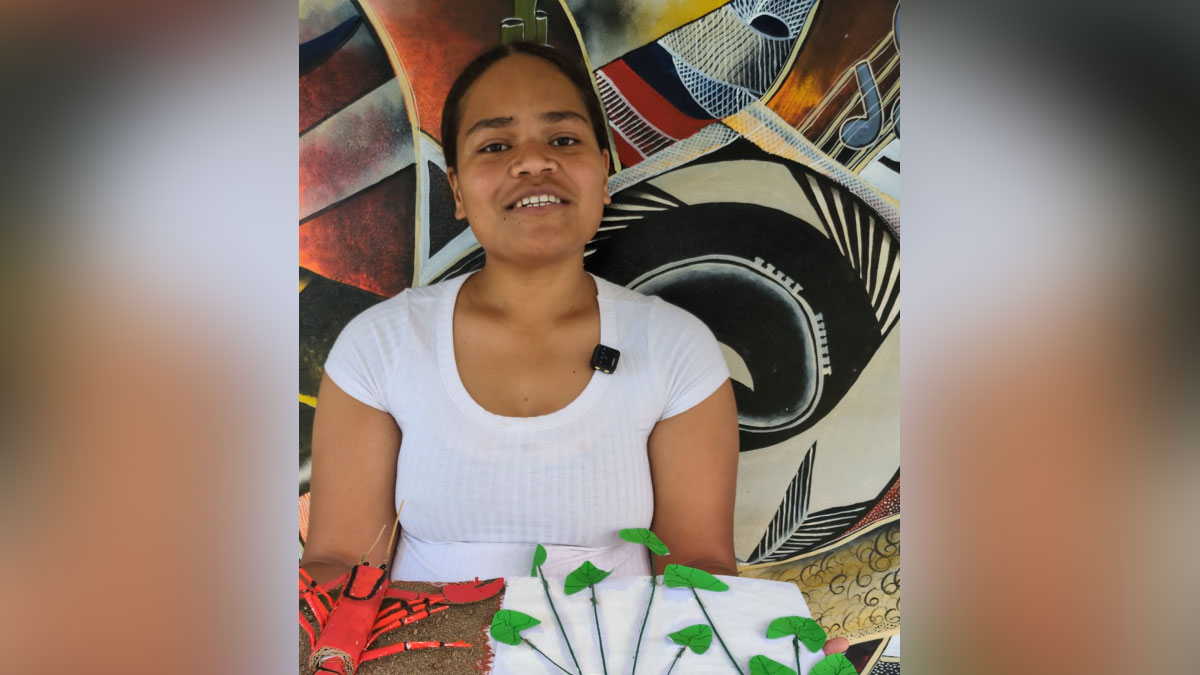
Laisani Ratukula has always had a deep connection to her roots and the natural world. Raised in a family that values cultural heritage and environmental stewardship, she has long understood the importance of maintaining a balanced relationship with the land and the sea.
From a young age, Ratukula was surrounded by stories, traditions, and community practices that shaped her understanding of identity and responsibility. These lessons, passed down through generations, have not only influenced her personal values but also ignited her passion for marine science.
Growing up in a family with strong ties to their vanua (land), Ratukula learned early on about the significance of food security, resilience, and the respect for ecosystems that sustained her community. These values continued to guide her academic pursuits and daily life, particularly her desire to bridge her cultural identity with her environmental knowledge. Her family, particularly the women who have guided her, taught her to nurture the land and respect its power, lessons that have shaped her perspective on the world.
This foundation led Ratukula to participate in the Matai Project, an interdisciplinary initiative under the Oceania Centre for Arts, Culture and Pacific Studies (OCACPS) programme at The University of the South Pacific (USP).
The Matai Project offers students the opportunity to explore the connection between Pacific heritage and contemporary environmental issues. For the second-year Bachelor of Marine Science student, the project provided a unique chance to reflect on her upbringing while also applying her scientific knowledge. These values strongly influenced her project choices, which were to explore two organisms that represented one’s culture.
Her first organism, the Mud Lobster (Thalassina anomala), is symbolic for her because of its role as a hidden but essential “ecosystem engineer.” Found in Fiji’s mangrove mudflats, the mud lobster helps maintain the health of mangrove systems through its burrowing activity. For Ratukula, this species represented resilience, quiet strength, and the unseen work that sustained communities, similar to the values passed down by her elders.
The second organism, the Giant Swamp Taro (Cyrtosperma merkusii), is deeply tied to Pacific food traditions and the safeguarding of cultural practices. Often grown in specially maintained pits and used during important ceremonies, the giant swamp taro reminded Ratukula of family unity, endurance, and the knowledge shared between generations particularly the guidance of women in her family who have taught her the importance of nurturing the land.
Her family’s encouragement has motivated her academic journey and her commitment to contributing to the sustainable future of Pacific communities.
Outside the classroom, Ratukula is known for her love of reading, swimming, and exploring coastal areas activities that strengthened her connection to the ocean and reinforce her interest in marine ecosystems. She also enjoyed learning traditional crafts and spending time with her siblings, grounding her in the cultural values that guided her studies.
Ratukula’s work highlights how USP students are integrating Indigenous knowledge with modern science to generate solutions for environmental resilience. Through initiatives like the Matai Project, the University continues to cultivate young leaders who are grounded in culture, informed by science, and ready to contribute to a sustainable Pacific. Interested students can Apply Now for Semester 1, 2026 studies via www.usp.ac.fj/apply
USP Roadshow
Prospective students can also visit the USP Roadshow venues on the following dates from 9AM-4PM (unless specified) to access on-the-spot application support, programme advise, scholarship information and career guidance.
9 January
· Nausori Plaza Foyer in Nausori
· My FNPF Centre, Nadi
· USP Labasa Campus and Damodar City Labasa
· USP Lautoka Campus
· USP Savusavu Centre
· Infront of Tappoos Sigatoka
10 January
· Nausori Plaza Foyer in Nausori
· My FNPF Centre, Nadi
· USP Labasa Campus and Damodar City Labasa
· USP Lautoka Campus
· USP Savusavu Centre
· Infront of Tappoos Sigatoka
· Inside Shop and Save Supermaket, Navua
· Opposite Ba Bus Stand
· Tavua - Beside Courts
· Uluda Grounds in Rakiraki
12 January
· Taveuni – at South Taveuni (2-5PM)
13 January
· Naqara (EzaQua Xperience) (9AM-4PM)
16 January
· Nausori Plaza Foyer in Nausori
· My FNPF Centre, Nadi
· USP Labasa Campus and Damodar City Labasa
· USP Lautoka Campus
· USP Savusavu Centre
· Infront of Tappoos Sigatoka
17 January
· Nausori Plaza Foyer in Nausori
· My FNPF Centre, Nadi
· USP Labasa Campus and Damodar City Labasa
· USP Lautoka Campus
· USP Savusavu Centre
· Infront of Tappoos Sigatoka
· Inside Shop and Save Supermaket, Navua
· Opposite Ba Bus Stand
· Tavua- Beside Courts
· Uluda Grounds in Rakiraki

Stay tuned for the latest news on our radio stations