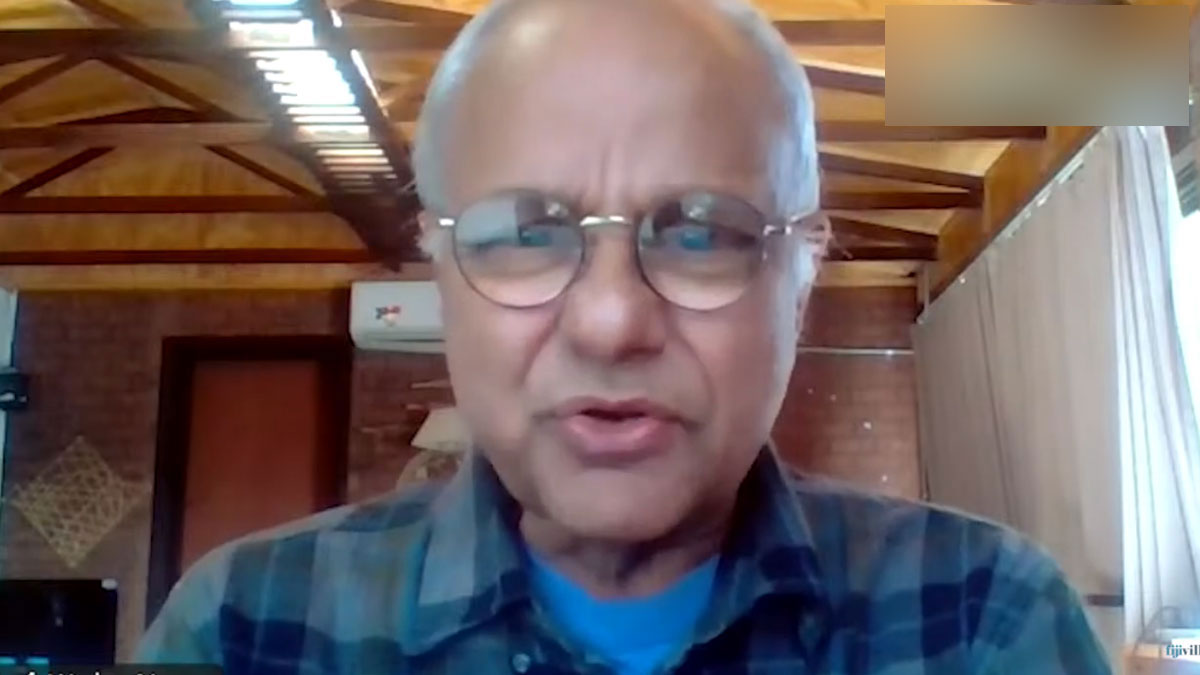
Prof. Narsey proposes constituency-based electoral system, reserved seats for women and removal of immunity provisions

iTaukei now make up about 67% of the population and will account for about 73% of voters within the next decade

Prof. Narsey proposes constituency-based electoral system, reserved seats for women and removal of immunity provisions
Electoral Reform Commissioner, Professor Wadan Narsey
Former Electoral Reform Commissioner Professor Wadan Narsey has called for several constitutional reforms, including introducing a new constituency-based electoral system, reserved seats for women, re-establishing the Senate, removing the military's constitutional role in civilian governance, and abolishing immunity provisions.

While making his submission to the Constitution Review Commission, Professor Narsey addressed the question of what Constitution Fiji currently has, saying he accepted the Supreme Court's opinion as the practical starting point for his submission, although he strongly disagreed with its reasoning.

Professor Narsey questioned how the court concluded that the 2013 Constitution remains Fiji's Constitution when it had never been passed by any Parliament and never been approved by any referendum.

He also criticised the Constitution's amendment provisions, which says that you can't change a single line in the Constitution unless you have three-quarters of Parliament and three-quarters of registered voters in a referendum.

He says this is an impossibility as you never get three-quarters of registered voters voting ever.

He says people were effectively being prevented from changing a Constitution that was never approved through such a process.

However, Professor Narsey says he agreed with one aspect of the Supreme Court's reasoning, which is that too much has happened since 2013 to simply revert to the 1997 Constitution.

He says the task facing both the Government and the Constitution Review Commission is to substantially amend the current Constitution through Parliament and a referendum, creating what would effectively become a new Constitution.

While giving his recommendations to the Commission, Professor Narsey says the Electoral Reform Commission spent months consulting people throughout Fiji and the primary thing that people wanted was their own local constituencies and MPs who would identify with them and be accountable to them.

He criticised the current electoral system, saying party leaders receive the overwhelming majority of votes while many MPs enter Parliament with very little personal support.

INSERT: Narsey on electoral system 6th July


Professor Narsey also criticised the current ballot paper, saying the system of identifying candidates by numbers creates unnecessary confusion for voters.

He recalled that during the 2014 General Election, an unknown candidate received more than 4,000 votes because his candidate number closely resembled that of the party leader.

He says the Electoral Reform Commission proposed replacing the current nationwide constituency with 25 open constituencies, using existing voter registration information and polling station boundaries.

Professor Narsey also urged the Constitution Review Commission to retain the Electoral Reform Commission's proposal for 25 reserved seats for women, saying they are necessary to improve women's representation in Parliament.

He says the Commission recommended creating 25 reserved seats for women using exactly the same constituency boundaries as the 25 open constituencies, adding that every woman in Fiji would then have a woman Member of Parliament representing her area.

He says women's organisations had been calling for stronger parliamentary representation for decades.

He says the effectiveness of the system could instead be reviewed after 15 years if women were then competing on a genuine level playing field.

Professor Narsey also proposed reducing the electoral threshold from five percent to two percent to allow smaller political parties and independent candidates a greater opportunity to enter Parliament.

He also argued that retaining proportional representation would remove one of the historical justifications used for Fiji's coups.

He says Indigenous Fijians now make up about 67 percent of the population and, according to demographic trends, will account for about 73 percent of voters within the next decade.

He says this means that the iTaukei parties supported by iTaukei voters will always form the majority in Parliament.

He adds that this means the arguments used to justify the 1987 and 2000 coups, that Indigenous Fijians had been politically marginalised, would no longer have any basis.

Professor Narsey also proposed restoring the Senate to provide stronger checks and balances on the powers of the Government.

He says his proposed Upper House would include nominees of the Prime Minister, the Leader of the Opposition, the Great Council of Chiefs and religious organisations.

Professor Narsey urged the Commission to remove the immunity provisions contained in the 2013 Constitution, arguing they have never been approved by Parliament or through a referendum.

He distinguished them from the immunity provisions in the 1997 Constitution, saying those were debated and approved by a democratically elected Parliament.

He also questioned whether immunity should extend to serious acts committed after the 2006 coup and said no Constitution should place anyone above the law.

He warned that if you have immunity provisions in the Constitution, you are always giving the message to the people of Fiji that they can remove the Government, hold on to the Government for eight years or ten years, put their own electoral system in place, have a rigged election and then give themselves immunity.

He says that cycle would never end unless Fiji drew the line here and now.

Professor Narsey also called for the removal of Section 131 of the 2013 Constitution, saying the Republic of Fiji Military Forces should have no role in civilian governance.

He says responsibility for internal security belongs to the Police, while the military should deal only with external threats.

He argued that Section 131, which assigns the military responsibility for the security, defence and well-being of Fiji and all Fijians, is an invitation to the military to do a coup when they feel like it.

Professor Narsey welcomed recent comments by the Republic of Fiji Military Forces Commander supporting the removal of constitutional immunity provisions and says he was very happy the Commander had taken that position.

He says every coup pushed Fiji backwards, with the country taking years to recover before returning to normal growth, but never recovering the ground that had already been lost.

He also said the full truth behind Fiji's coups has never emerged.

He questioned who was really behind the 1987 and 2000 coups and said there are still unanswered questions about the events leading up to the 2006 coup.
During the question-and-answer session, Constitution Review Commission member Merewalesi Nailatikau asked Professor Narsey about his proposed Senate composition and the role of the GCC in constitutional arrangements.

She referred to his reservations about the extent to which indigenous guardianship responsibilities should be delegated to the GCC and recalled covering Parliament as a cadet journalist when Professor Narsey served in the Senate.

In response, Professor Narsey says the role of the GCC requires careful reassessment and warned against its use for political purposes.

He says he was encouraged by recent leadership within the GCC, adding that the institution appeared to be on a new trajectory but still required clearer direction regarding its constitutional role.

He says the GCC needs real guidance as to what their role should be in Fiji.

He also says that demographic and social changes, including migration trends, have significantly changed Fiji and that traditional institutions must evolve alongside modern governance.

Professor Narsey urged the Commission to ensure it's final report is tabled in Parliament, made public and implemented through a clear constitutional process.

In response, the Commission Chairperson Sevuloni Valenitabua said the Commission has been given until 31st August to complete its work and submit its report, proposed constitutional amendments and recommendations to the President.

He says implementation would then follow the constitutional amendment process as refined by the Supreme Court, requiring a two-thirds parliamentary majority and a simple majority in a referendum.

The Chair says the Commission's role is limited to producing its report and recommendations.

Professor Narsey says previous reform commissions failed in part because they did not secure firm government commitments to implement their findings, resulting in reports being shelved without ever being tabled in Parliament.

He urged the Commission to recommend that both its report and the Electoral Reform Commission's earlier report be tabled and made public, saying accountability to the people of Fiji requires transparency throughout the constitutional reform process.

The Commission acknowledged the request and said it would consider the proposal during its deliberations.


Stay tuned for the latest news on our radio stations

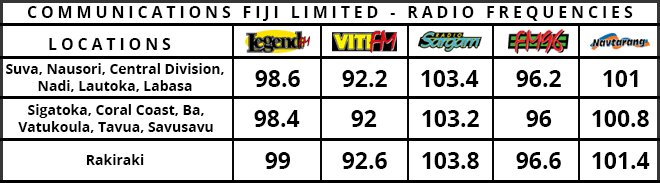
CFL radio frequencies
LIVE SCORES
West Tigers vs Warriors 10:00PM
Dolphins vs Sharks 5:00PM
Bulldogs vs Raiders 7:30PM
Maroons vs Blues 10:05PM
Portugal 0–1 Spain Full Time
USA 1–4 Belgium Full Time
Drua Women vs Reds 1:05pm
Western Force vs Waratahs 6:05pm
New Zealand vs Italy 5:10pm
Australia vs France 7:40pm
Japan vs Ireland 10:10pm