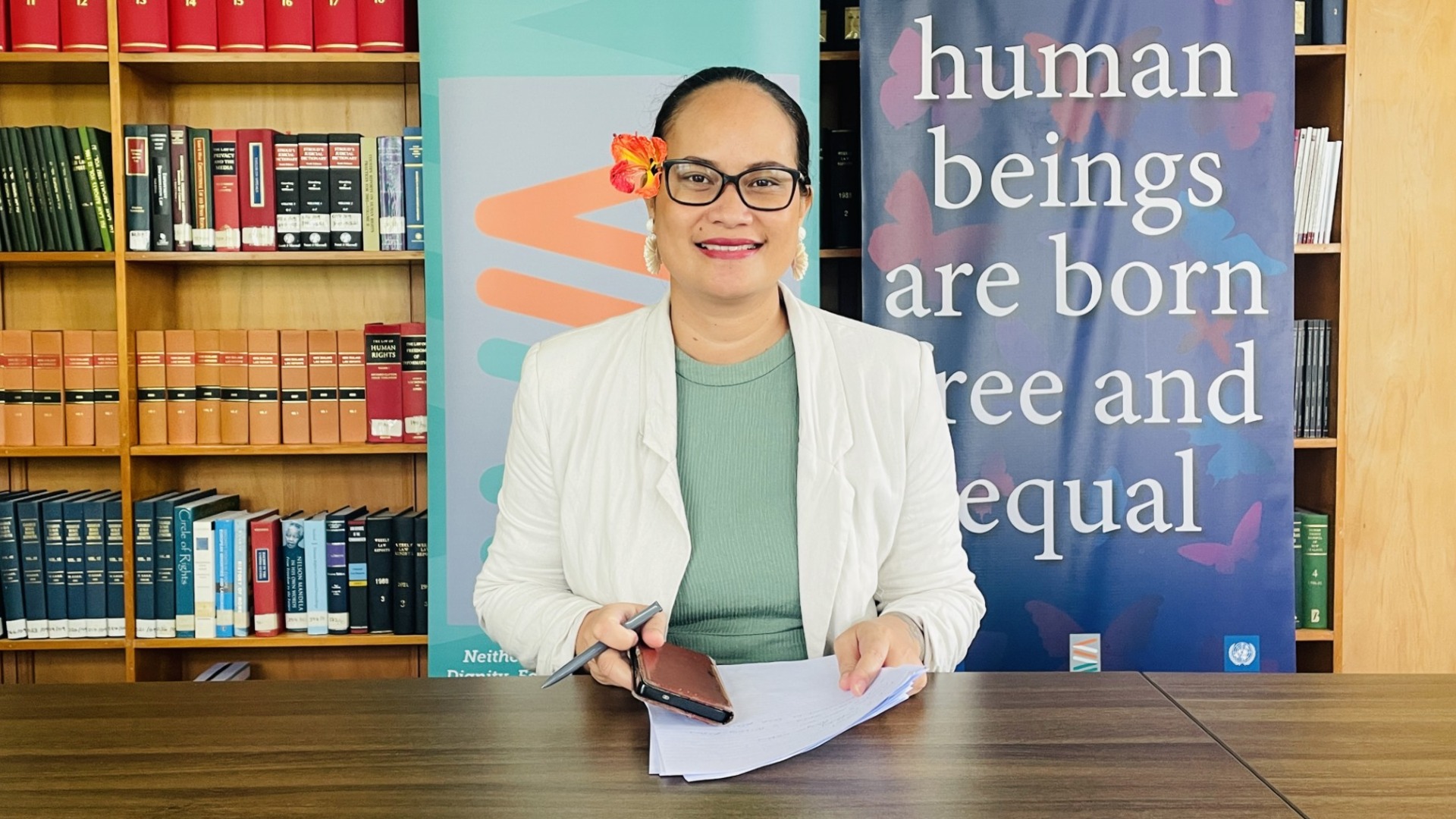
Fiji Human Rights and Anti-Discrimination Commission Director, Loukinikini Lewaravu
The Fiji Human Rights and Anti-Discrimination Commission is sounding the alarm over persistent public misunderstandings about human rights, warning that misinterpretations, particularly within the context of family life and child discipline, could place children at risk.
Citing recent consultations on the Education Bill before the Parliamentary Standing Committee on Justice, Law and Human Rights, Commission Director Loukinikini Lewaravu says these misunderstandings are troubling, especially in light of serious cases of child abuse and neglect, some of which have resulted in death.
Lewaravu says that misinterpreting human rights can inadvertently cause harm by creating a false conflict between cultural values and the need to ensure children's safety.
She stresses that there is no “right” under human rights law for an individual to do whatever they want or say whatever they want to whomever they choose.
She says individuals do have rights, but these rights have limits, particularly when their exercise begins to harm other people or the wider community.
She adds that there is no “right” for children to be disrespectful or to “talk back” to parents, teachers, or elders.
Lewaravu says human rights are accompanied by duties towards others and the broader community, strongly emphasising respect, responsibility, and duty within families, values deeply rooted in Fijian culture and reinforced by religious teachings.
She says parents and guardians have a clear right and duty to guide, nurture, protect, and discipline children, but stresses that positive discipline must involve teaching and mentoring through loving guidance, and must never cross the line into abuse.
The Director clarifies that assaulting a child, including hitting, beating, or inflicting physical or psychological harm, is a criminal offence, just as it would be if committed against any other person.
She says the line is crossed when discipline ceases to be about teaching and becomes an act of violence, intimidation, harm, or cruelty.
Lewaravu is reminding the public, institutions, and government that Fiji, as a State Party to the Convention on the Rights of the Child (CRC) and the Convention on the Elimination of All Forms of Discrimination against Women (CEDAW), has binding international obligations to protect children and uphold their dignity.
She says all forms of discipline must be non-violent, constructive, age-appropriate, and respectful of a child’s inherent dignity.
Lewaravu further highlights that the 2013 Constitution’s Bill of Rights guarantees every person, including children, the right to be free from torture, and from cruel, inhuman, and degrading treatment or punishment, explicitly prohibiting corporal punishment in any form.
She says culture, tradition, or any other justification cannot be used to excuse actions that violate these rights.
She is urging all community leaders, faith-based organisations, and families to participate in this crucial dialogue, reaffirming the Commission’s commitment to protecting children while honouring Fijian cultural and religious values.