The Fiji Human Rights and Anti-Discrimination Commission strongly advocates for an age-neutral medical fitness requirement for all drivers as the most effective and fair way to improve road safety in Fiji while preventing discrimination.
The Commission says road safety is a shared national responsibility, and driving risks are not determined by age alone.
They say factors such as drink-driving, drug-impaired driving, medical conditions, and physical, cognitive, or mental impairments can affect drivers across all age groups.
The Commission adds that singling out drivers aged 70 and above is therefore an unreliable measure of driving ability and risks reinforcing ageism.
The Commission emphasises that medical fitness, not chronological age, should be the basis of driver licensing decisions.
They say age-based assumptions undermine equality and discourage older persons who remain medically fit from participating fully in society.
The Commission proposes that licensing authorities adopt a uniform, age-neutral system under which all drivers, regardless of age, are required to submit a current medical fitness report when renewing their driver’s licences; and licensing decisions are based on individual medical assessments, including vision, physical capability, cognitive function, and any condition that may impair safe driving.
They say this approach strengthens road safety by identifying genuine risks among drivers of any age, including those related to substance use and medical impairment, rather than focusing narrowly on age.
They say an age-neutral system would also ensure fairness and consistency in the licensing process and prevent age-based discrimination, particularly against older persons who remain fit to drive, and align Fiji’s driver licensing regime with international best practice.
Given the alarming rate of road traffic accidents in Fiji, many involving drink-driving and drug-impaired driving, the Commission stresses that public safety measures must apply universally, not selectively.
The Commision says that targeting specific age groups fails to address the broader causes of unsafe driving and undermines both fairness and effectiveness, and a uniform, age-neutral approach reinforces the principle that road safety is about responsible behaviour, health, and proven fitness, not arbitrary age thresholds.
They say it ensures that all drivers are held to the same safety standards, protecting road users and the wider public.
The Commission reiterates that human rights and public safety are mutually reinforcing and a rights-based, age-neutral driver licensing framework supported by universal medical fitness assessments will uphold constitutional guarantees of equality, dignity, and non-discrimination while keeping Fiji’s roads safe.
The Commission urges policymakers and relevant authorities to adopt inclusive, evidence-based reforms that address real road safety risks, particularly drink- and drug-impaired driving, without unfairly disadvantaging any group.
The Commission says they will continue to monitor developments and advocate for approaches that protect both public safety and human rights for all.

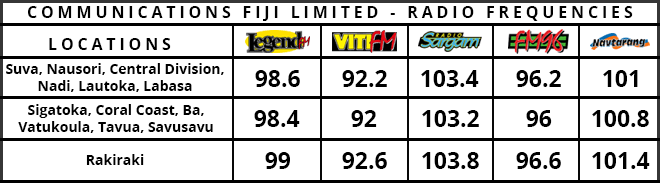
Stay tuned for the latest news on our radio stations