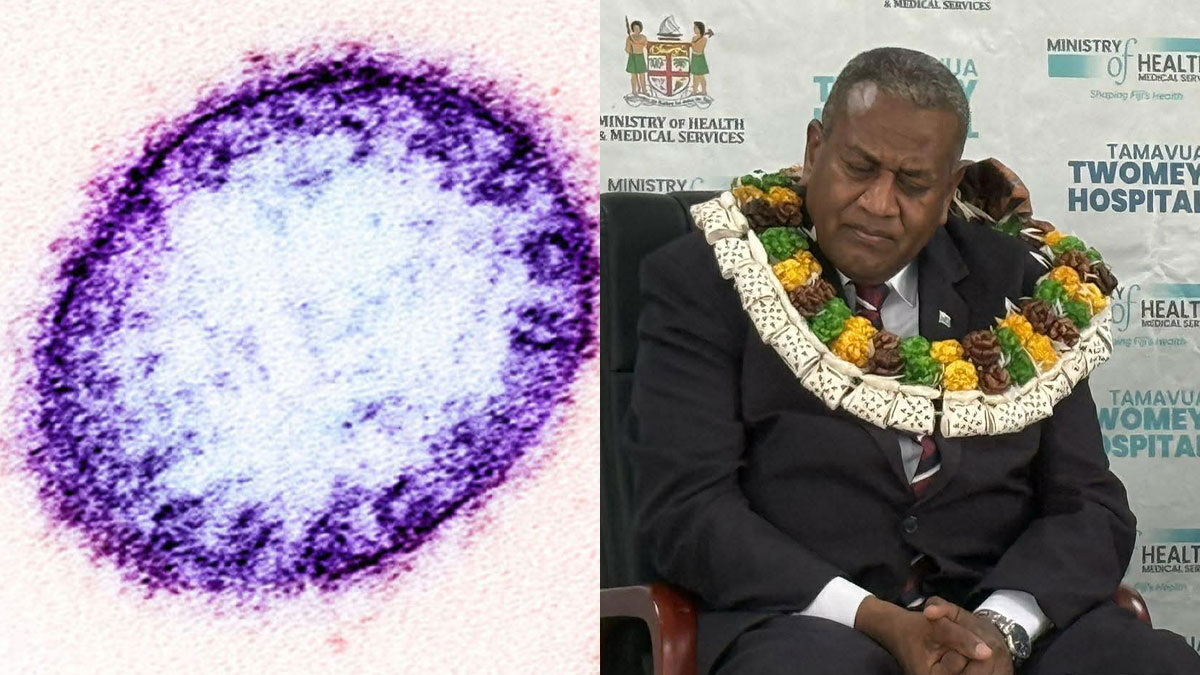
The Health Ministry has assured people that they are on top of the Nipah virus outbreak that happened around the region and that Fiji is safe now.
This comes as Dialogue Fiji is raising questions on what Fiji's Centre for Disease Control is doing at a time when the world is facing renewed outbreaks of the highly lethal Nipah virus and why Fiji’s CDC remains largely invisible to the public.
Outbreaks of Nipah virus infections have been reported in India, Bangladesh and China with confirmed cases and heightened surveillance measures introduced across the region.
Countries in Asia have reintroduced COVID-style airport health checks and quarantine protocols, reflecting the seriousness of the threat.
The Nipah virus can be transmitted from animals, like pigs and fruit bats, to humans.
It can also spread person-to-person through contaminated food.
The World Health Organization has described Nipah in its top ten priority diseases, along with pathogens like Covid-19 and Zika, because of its potential to trigger an epidemic.
The incubation period ranges from four to 14 days.
People who contract the virus show a wide range of symptoms, or sometimes, none at all.
Initial symptoms may include fever, headaches, muscle pain, vomiting and sore throat.
In some people, these may be followed by drowsiness, altered consciousness, and pneumonia.
Encephalitis, a sometimes-fatal condition that causes inflammation of the brain, may occur in severe cases.
To date, no drugs of vaccines have been approved to treat the disease.
While responding to questions by fijivillage News, Assistant Minister for Health Penioni Ravunawa says CDC will give indication when there is a risk.
He says there no need to report on anything if there is insignificant number of cases.
Ravunawa says once the numbers reach a level considered significant for Fiji, an advisory will be issued accordingly.