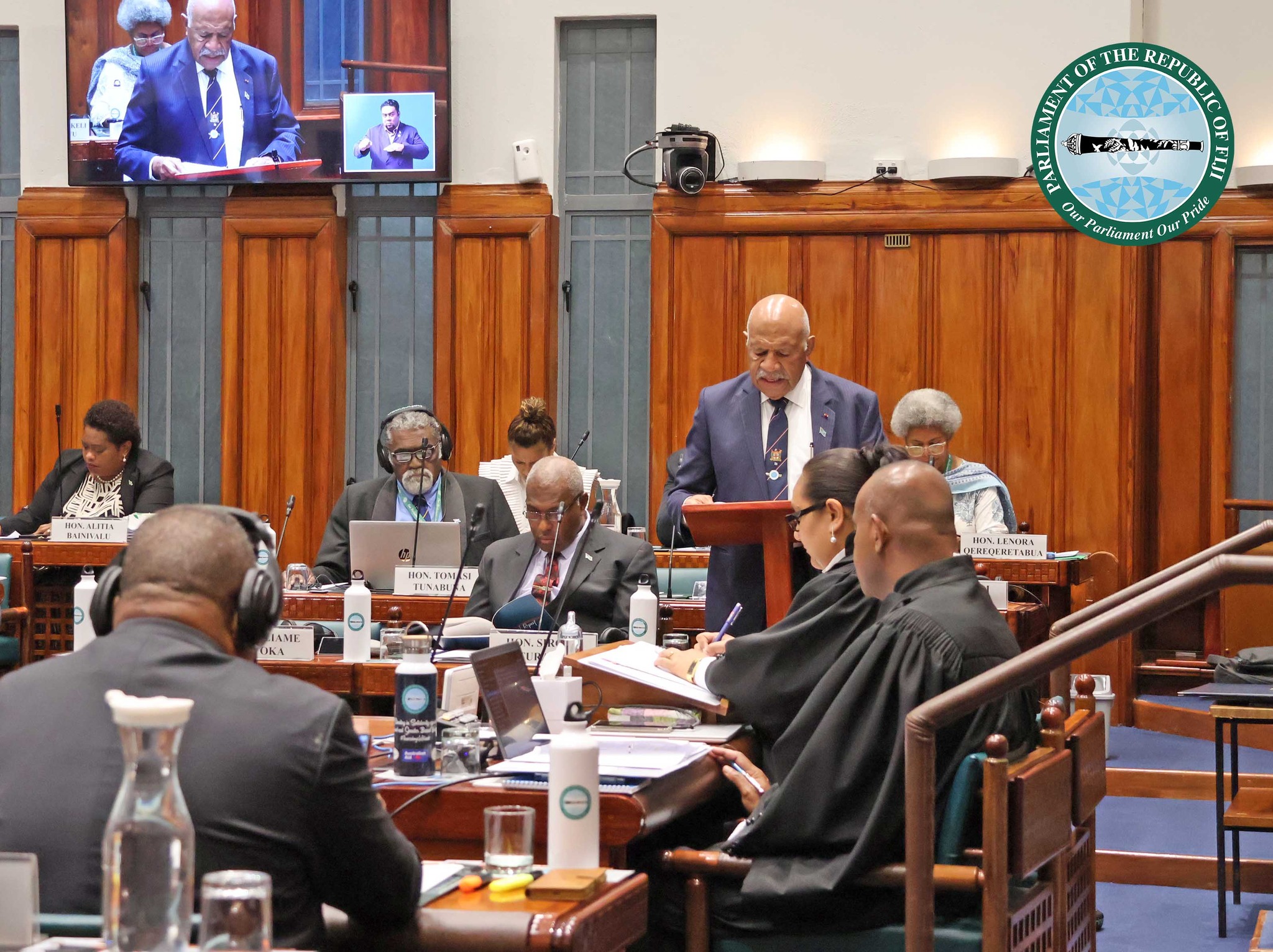
Prime Minister Sitiveni Rabuka says the government has already intensified national efforts to combat the illegal drug trade through strengthened law enforcement operations, regional cooperation, and enhanced surveillance measures.
While speaking in his Right of Reply to the contributions made by members of Parliament regarding the President’s address, Rabuka says the government has already strengthened national efforts to combat the illegal drug trade through strengthened law enforcement operations, regional cooperation, and enhanced surveillance measures.
He says this includes increased deployment of police resources, intelligence-led operations, and the use of modern surveillance technologies, including CCTV systems in high-risk areas.
He further says the fight against drugs must also involve communities, families, schools, and religious institutions.
Rabuka also revealed in Parliament how embarrassed he was that his own tikina is one of the worst offenders on this issue.
Insert: Rabuka on embarrassed, 13th Mar 26.
On the economy and cost of living, Rabuka says they acknowledge that global economic conditions, including geopolitical conflicts, supply chain disruptions and rising fuel prices, also attributable to supply chain disruptions, continue to affect economies worldwide.
He says despite these challenges, our economy has shown strong recovery following the pandemic, with continued growth in tourism investment and private sector activities. However, growth alone is not sufficient.
He also says this government will remains focused on ensuring that the benefits of economic recovery reach ordinary households.
He adds that the key measures include social protection programmes for vulnerable households, support for small and medium enterprises, targeted subsidies and assistance programmes, and investment in rural and maritime development.
He has also reiterated that any proposed constitutional changes will be guided by the principles of transparency, public consultation, and democratic legitimacy as they are now in the process of constitutional reform and amendment work.
Rabuka says the government remains committed to ensuring that the Constitution evolves in a manner that strengthens democracy, protects the rights of all citizens, and reflects the aspirations of the people of Fiji.
He says he welcomes constructive dialogue with the Opposition and with the broader public in this process and let it go through the Parliamentary process.
The Prime Minister also spoke on education reform, saying that through the Ministry of Education's ongoing National Curriculum Review that is underway, they are trying to modernise the school curriculum to reflect the realities of a diverse, multicultural and digitally connected Fiji.
He says the review includes strengthening content on civic values, multicultural understanding, national identity and social cohesion, ensuring that our young people grow up with a deeper appreciation of the diversity that defines our nation.
Rabuka says the government, through the Ministry of Education, in collaboration with the Fiji Police Force and school management committees, are developing a teacher safety and protection framework that will strengthen protocols for addressing harassment, violence and violence against educators.
He says teachers must be able to perform their duties in an environment that is safe, respectful and supportive.
Speaking on Public Service, Rabuka says several MPs have raised concerns about governance, institutional integrity and the public sector appointments.
He says this government is firmly committed to merit-based appointments, transparency and institutional independence.
He also says reforms being implemented through the Public Service Commission and the Civil Service Reform Programmes are aimed at strengthening professionalism, performance evaluation and accountability across the public sector.
He adds that it is important that our civil servants are treated with dignity and respect and the Government is working on strengthening policies that ensure protection, professionalism and integrity within the Public Service.
The Prime Minister says where allegations of misconduct arise within public institutions, they must be investigated through the appropriate independent processes.
He says the government supports transparent investigations and due processes as these are fundamental to maintaining public confidence.
On the challenges facing the Health Sector, Rabuka says the government fully recognises these challenges and has prioritised health sector strengthening through multiple initiatives.
He says investment is being done and will be directed towards recruitment and retention of health care professionals, upgrading hospitals and health centres, improving medical supply chains, strengthening rural and maritime health outreach services.
He also highlighted preparatory works are underway for the 300-bed speciality hospitals including project structuring and investment arrangements.
He adds that this major health infrastructure project remains a strategic priority and will significantly expand Fiji's capacity to deliver specialised medical services domestically.
He also says the government is intensifying its national response to emergency or to emerging health challenges, including the rising number of HIV cases, flu prevention programmes, awareness campaigns and expanded testing and treatment services.
The Prime Minister says debt management also remains a key priority and the Government will continue to pursue a balanced fiscal strategy that ensures equitable infrastructure and national development.
He adds that agriculture remains central to Fiji's rural economy and national economy.