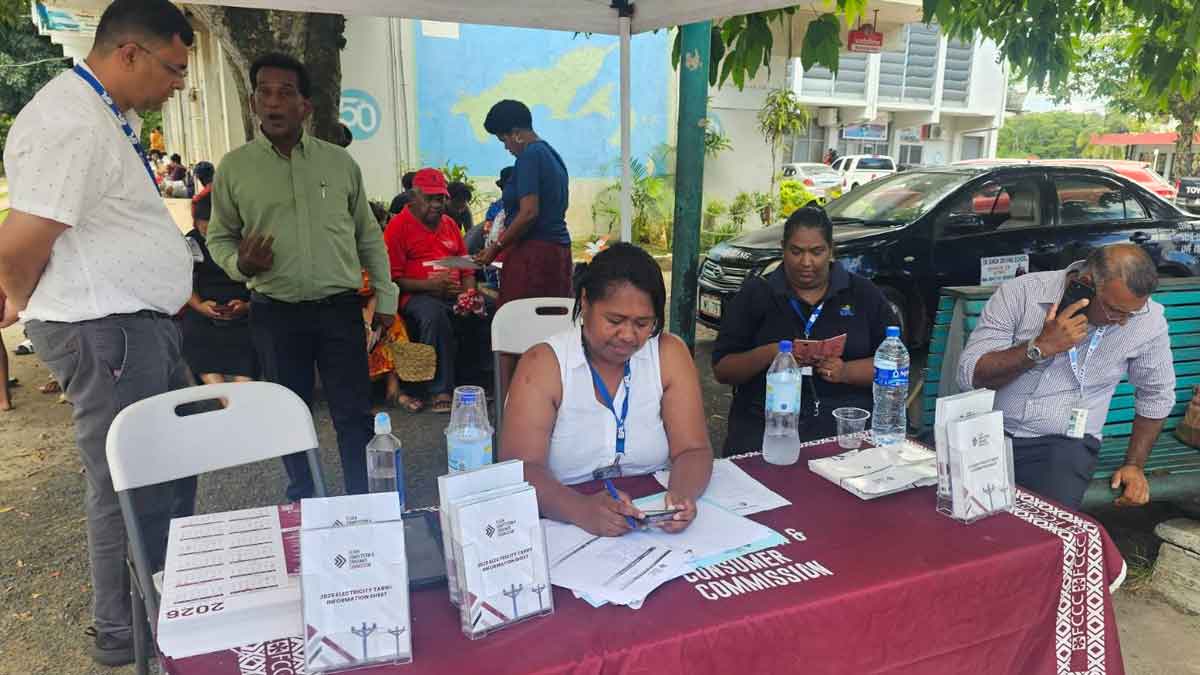
The Fijian Competition and Consumer Commission says at no point did they state that consultation sessions would involve group presentations and these are one-on-one sessions.
This has been highlighted by the FCCC after Labasa residents raised concerns about the manner in which consultations were conducted today.
The residents say only names were being registered and they were given free calendars.
Labasa farmer Dewan Chand, who also works at a law firm, says this was not a consultation but merely an information session where people were told that tariffs would increase.
A frustrated Chand says a consultative process is one in which people’s views are heard, expressed and considered before major decisions are made.
Chand also says he does not agree with the increase, as many people are already living in poverty while the cost of living continues to rise.
While responding to questions by fijivillage News, the FCCC says it is false to claim that only names are being registered.
They say these were the type of consultations that FCCC carried out in 2019, 2023 and, currently are following the same format.
The Commission says Chand attended but only spoke to EFL, asked no questions nor sought to submit his views.
FCCC says they are actively meeting directly with members of the public to explicitly ask for their feedback on the proposed increase.
They say today, they met with 112 individuals.
They say they have established a 21-day window for all interested parties to provide views via multiple platforms; email, online survey, written submissions, or face-to-face at their booths.
The Commission says they are also actively recording all feedback.
They say they are actively on the ground in major towns and cities to hear the public’s views directly.
They reiterate that they are bringing the consultation to the people through face-to-face engagement, which they maintain is the correct approach.
They also say EFL teams are on the ground to clarify technical details, so if there are questions about the submission, valid questions must be directed to them.
FCCC says for those who cannot attend in person, they have online survey forms, email options, and a 'Bill Calculator' on their website where customers can see the exact impact of the proposed tariff structure on their bill.
They say they have utilised this inclusive approach so all affected groups to participate.
When asked why increased tariff rates are not being explained, FCCC insists the increase and the reasons behind it are being explained at their venues.
They say FCCC officers are present to explain the regulatory process and receive feedback, while EFL personnel are on hand to clarify any questions regarding their submission.
They stress that EFL’s non-confidential submission and their online survey have been published on their website.
When asked if they believe this is meaningful consultation, FCCC insists that
these are meaningful consultations.
They say this is not a box-ticking exercise.
FCCC says people have asked to be heard, and they are urging them to make submissions.
They say beyond the 112 Fijians they engaged with in Labasa today, their inclusive strategy covers everyone from individual households to businesses.
FCCC adds they accept feedback at their offices, venues, via email at energy@fccc.gov.fj, and through links conveniently available at https://linktr.ee/fijianccc.