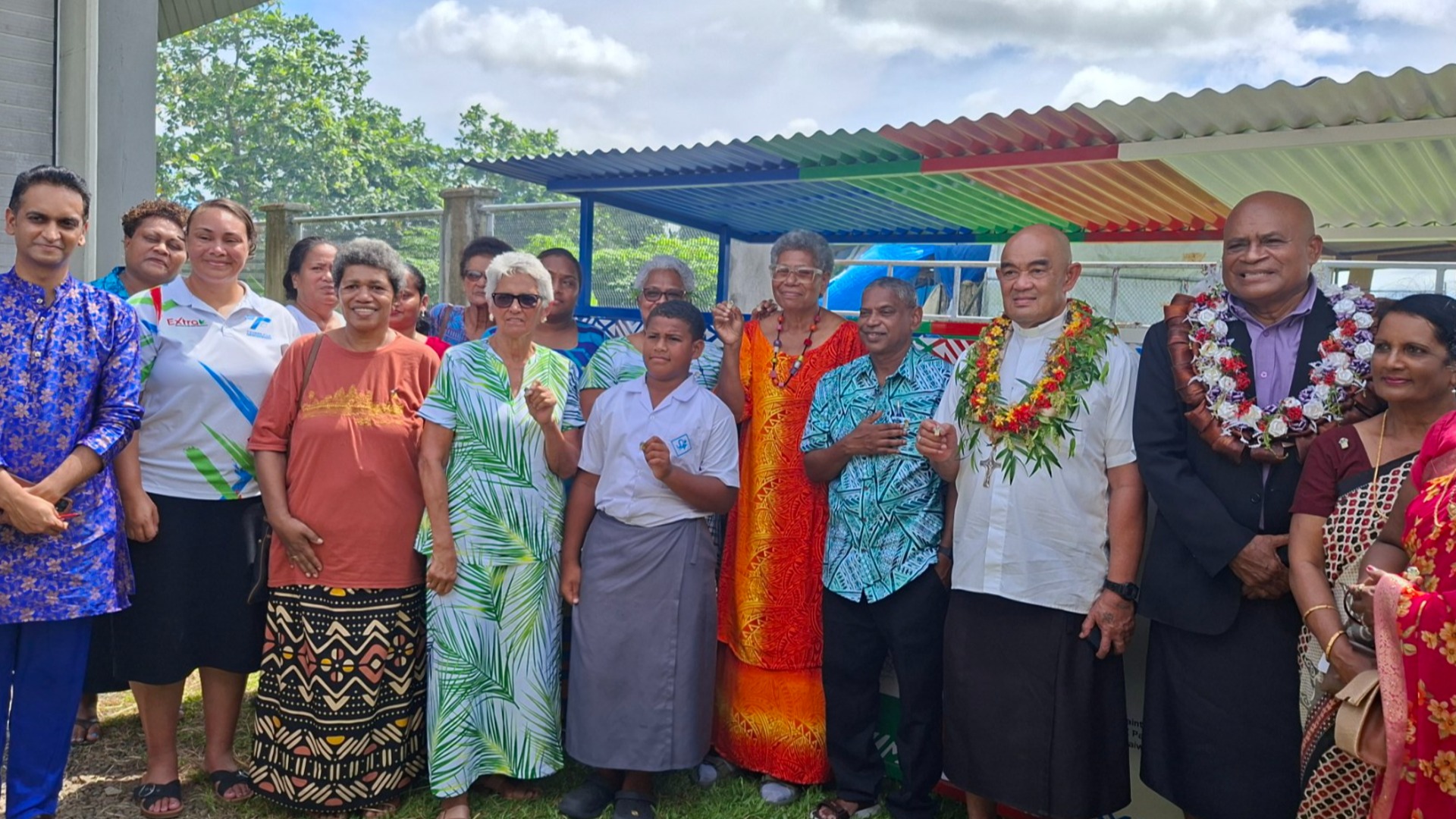
Faith-based organisations are taking a leading role in addressing Fiji’s growing waste management crisis, as the Pacific Recycling Foundation launches Phase 2 of its Circular Pacific Plastics Project through a pilot programme based at the Saint Pius X Parish in Raiwaqa.
The initiative brings together church leaders, women’s groups including the Nakaikogo Mothers Club, youth, community representatives and local authorities to strengthen recycling advocacy at the grassroots level.
PRF founder Amitesh Deo highlighted the influence of faith-based leaders in driving shared responsibility, saying recycling and waste management are often viewed as the responsibility of a single agency, rather than a collective effort.
He says the project aims to connect community action to national and regional solutions, with plans to expand into schools and women’s groups, and to work with Pacific partners through regional logistics.
Deo says the pilot will begin within the parish and is expected to expand to other faith-based spaces nationwide, helping to change mindsets and remove stigma around waste and those involved in waste collection.
He adds that Phase 2 focuses on innovation and alignment with international best practices, particularly for difficult-to-recycle materials such as soft plastics.
INSERT: Deo on challenges 28th Jan
Deo says recycling must always be prioritised, adding that waste-to-energy options should only be considered after all recycling avenues have been exhausted.
He identified behaviour change and greenwashing as key challenges from Phase 1, saying that many people still do not view responsible disposal of packaging as their responsibility.
Adding to the founder's comments, Head of the Catholic Church of Fiji, Archbishop Peter Loy Chong described plastic pollution as both an environmental and moral crisis for Pacific island nations already threatened by sea level rise.
He says Pacific islands are vulnerable to rising seas and plastic waste, pointing to Kiribati and Tuvalu among the most at risk, and warned that plastic discarded on land eventually enters rivers and oceans, breaks down into micro-particles, contaminates fish and returns to people through the food chain.
The Archbishop says recycling is not just waste management, but a moral imperative, adding that churches provide a powerful platform for environmental education through weekly services and other faith gatherings.
Meanwhile, Suva City Council Acting CEO Tevita Boseiwaqa reveals that the Council spends around $3 million annually on waste collection and disposal, yet still faces significant challenges in maintaining a clean and healthy city.
He says that despite major investment, councils cannot manage waste alone, stressing the need for stronger partnerships with organisations such as the PRF, communities and faith-based groups.
Boseiwaqa says the Council has begun staff and youth training, community outreach and policy alignment under its five-year development and corporate plans, but acknowledged a critical gap in engagement.
He says the inclusion of spiritualism in this initiative may have been the missing element needed to strengthen efforts to protect the environment.
The Fiji Bus Operators Association has formally written to the Minister of Finance and the Minister of Transport requesting urgent intervention to ad...
6 minutes ago
Opposition MP, Vijay Nath has questioned by the Fijian Competition and Consumer Commission waited until 7:35pm last night to drop the bomb on the ...
57 seconds ago
Former Attorney General Aiyaz Sayed-Khaiyum has raised serious concerns about the proposed Education Bill, describing it as prescriptive and lacking ...
2 hours ago
The effects of the global fuel crisis has started for Fiji as prices of fuel will increase drastically from today.Kerosene which is VAT exempt, will ...
3 hours ago
Radio Sargam is celebrating its 22nd anniversary, marking a journey of growth, resilience and strong connection with listeners across Fiji and ...
14 hours ago
The Fiji Revenue and Customs Service has launched its new website, marking a significant milestone in its digital transformation. The website is ...
14 hours ago
I was invited to travel to New Zealand by the Fiji Sports Council for a grassroots 7s tournament in 2024, I travelled business class but it was ...
26 days ago
The illicit drug situation in Fiji has been described as a national emergency, with 2,400 drug-related cases recorded in 2025. Minister for Policing ...
33 days ago
Fijian national, Charlie Charters is being held at immigration at Nadi International Airport because of a FICAC flag on his file.fijivillage News has ...
33 days ago