Findings from the Fiji Disabled People’s Federation and the Disability Rights Fund survey show that during COVID-19, 24 percent of respondents experienced physical violence, 34 percent faced emotional abuse, and Deaf respondents were among the most affected.
Minister for Women, Children and Social Protection Sashi Kiran says women and girls with disabilities are facing rising risks of online abuse as digital access grows.
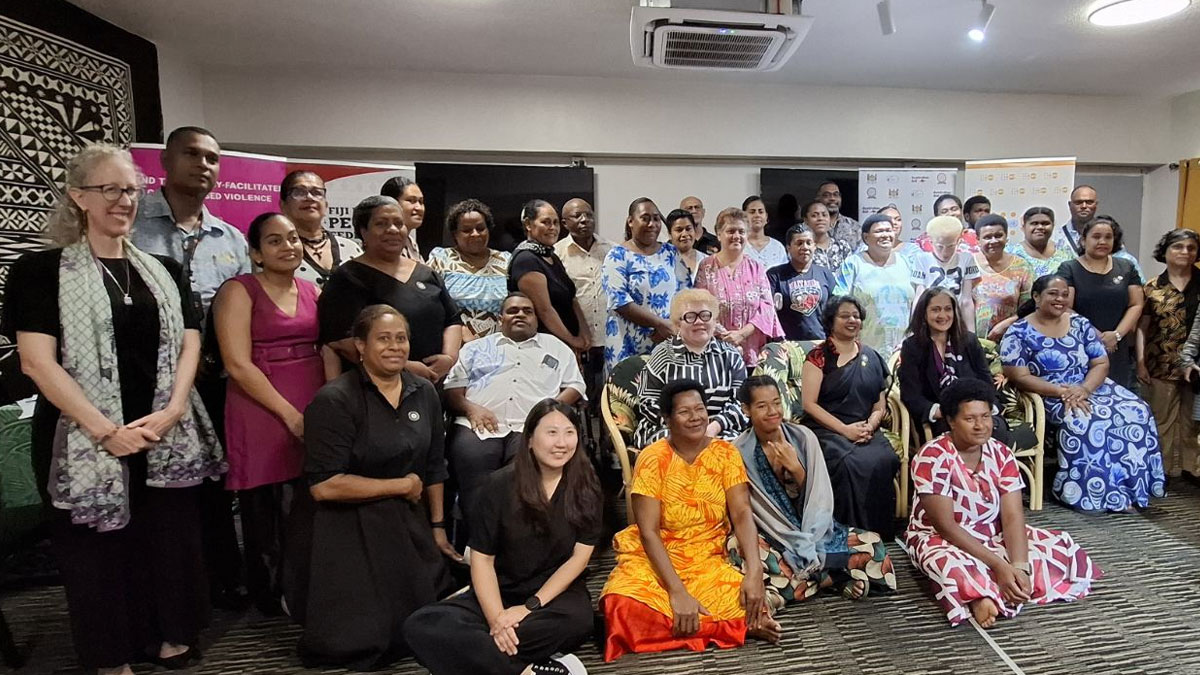
Speaking at the Preventing and Responding to Technology-Facilitated Gender-Based Violence for Persons with Disabilities workshop at the Pacific Theological College in Suva, Kiran says Fiji’s 96 percent digital connectivity gives people more opportunities to learn, create and stay connected.
She says the workshop pilots a training toolkit that will be reviewed by the FDPF and returned with recommendations.
She warns that online risks are also growing and says women with disabilities continue to share experiences of image-based abuse, online bullying and impersonation.
Deaf Fijians are particularly targeted because they rely on video communication and facial expressions.
Kiran mentions a national incident where a sign language interpreter for Parliament faced hateful comments but continued her work so Deaf Fijians could access information.
She also points to negative comments against youth parliamentarian Josaia Suqesuqevanua during the mock Youth Parliament in September.
Kiran says this shows how deep-rooted biases contribute to online discrimination and warns that violence that exists at home is now spilling into digital spaces.
She adds that violence against women and girls in Fiji is higher than the global average, and girls with disabilities are at even greater risk.
Kiran says the Online Safety Commission and the Fiji Human Rights and Anti-Discrimination Commission are working to respond, but online harm is growing faster than laws can keep up.
She acknowledges the review of Online Safety Commission legislation and Fiji’s joining of the Budapest Convention on Cybercrime, and says that despite the risks, digital spaces empower women with disabilities.
She adds that digital platforms provide independence, income opportunities and tools such as screen readers, sign-language apps and AI-based descriptions.
Kiran says women should not withdraw from digital platforms.
She says abusers must be held accountable, and technology companies must make online spaces safer and more inclusive.
The Minister says the Government is improving digital literacy, strengthening safeguards and helping frontline workers respond under the revised Service Delivery Protocol, which now includes online harm.
She says building a safe digital Fiji requires inclusive design, stronger governance and policies that recognise the vulnerabilities of women with disabilities.
Kiran adds that technology-facilitated gender-based violence is not just a digital issue but a human rights issue that requires unity, education and stronger institutional action.
CEO of the Pacific Disability Forum, Sainimili Tawake, acknowledges support from UNFPA, the Partnership for Disability Rights Forum, the Fiji Disabled People’s Federation and the Fiji Government through the Ministries of Health and Women, Children and Social Protection.
During the training, she says women and persons with disabilities face serious online challenges, including harassment and exploitation.
She adds that many people still lack awareness about cyber threats, cyber hygiene and how to report online harm.
She highlights that reporting remains very low, especially among people with intellectual or psychosocial disabilities.
Tawake also raises concern about parents giving unsupervised children or persons with disabilities mobile phones, putting them at risk online.
She urges parents and caregivers to supervise online activity, guide children to safe platforms and teach them about cyberbullying.
Tawake says keeping families safe requires awareness, supervision and stronger digital literacy as Fiji becomes more connected.

Stay tuned for the latest news on our radio stations