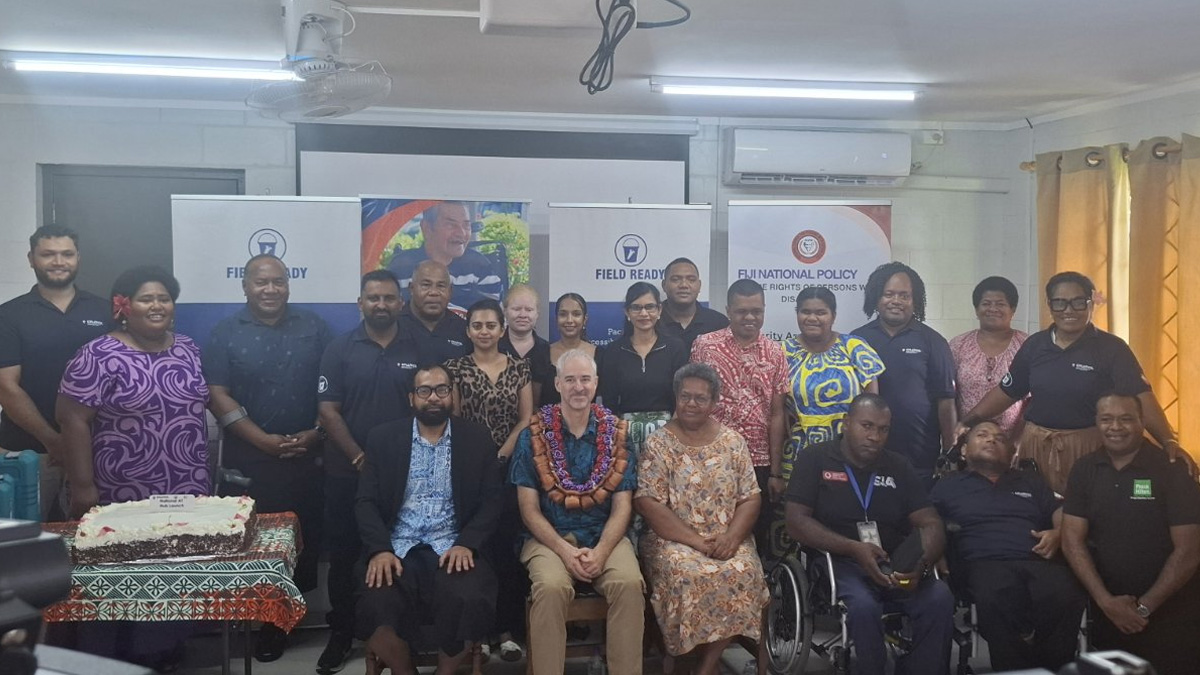
The Government of Canada has reaffirmed its commitment to the Pacific with the launch of Fiji’s National Assistive Technology Hub in Suva.
The community-led initiative aims to improve access to essential assistive devices for persons with disabilities and is funded through the Canada Fund for Local Initiatives.
Speaking at the launch, Canada’s Head of Cooperation for the Pacific, David Fournier, praised FieldReady and its partners for establishing the Hub, which combines technology, skills development and community outreach to support persons with disabilities across Fiji.
Fournier says the initiative reflects Canada’s ongoing commitment to inclusive governance, gender equality, human dignity and climate resilience in the Pacific.
He says the Hub will provide mobility aids and other assistive devices, while training local technicians and artisans to maintain and repair equipment to ensure long-term sustainability.
Fournier adds that mobile outreach services will extend essential support to rural and underserved communities.
He says a key feature of the Hub is the use of 3D printers to design and locally produce assistive device parts, reducing reliance on costly imports.
Fournier adds that this approach aligns with Fiji’s Green Fiji Vision by promoting repairs and extending the lifespan of assistive devices.
He says the technology will be made available to key partners, including the Ministry of Health and Medical Services, the Frank Hilton Organization, the Spinal Injury Association and the United Blind Persons of Fiji.
The initiative is a partnership between the National Council of Persons with Disabilities and FieldReady Pacific, with strong collaboration from government agencies, civil society, international partners and technical experts.
The launch was attended by representatives from the Canadian Embassy, disability service providers, organisations of persons with disabilities, development partners and the media.
Fournier says the Hub is expected to enhance dignity, independence and opportunities for full participation in society.
Canada’s support builds on more than 50 years of development cooperation in the Pacific, with over $500 million invested since 2000 and a new $40 million development program currently being rolled out.
Meanwhile, National Council of Persons with Disabilities Executive Director Sevanaia Tuiwasa says the handover of equipment and tools represents a collective commitment to ensuring dignity, independence and full participation in society for all persons with disabilities.
Tuiwasa says the use of 3D printing technology will allow assistive device parts to be designed and produced locally, with the printers made available to disability service partners including the Ministry of Health and Medical Services, the Frank Hilton Organization, the Spinal Injury Association and the United Blind Persons of Fiji.
He adds that local production will reduce reliance on costly imports and support timely repairs, while aligning with Fiji’s Green Fiji Vision by extending the lifespan of assistive devices through repair and maintenance rather than replacement.
Tuiwasa also acknowledged FieldReady Pacific for its innovative leadership and for training technicians, caregivers and community members to design and print assistive device components, ensuring critical skills remain within local communities.
He says the initiative reflects strong collaboration between government, civil society, technical experts and international partners, while the Canada Fund for Local Initiatives was recognised for its support in making the Hub possible.
Despite limited national resources, Tuiwasa says Fiji remains committed to ensuring no one is left behind.
Access to assistive technology was emphasised as a fundamental right for persons with disabilities, with partners expressing confidence that the Hub will significantly improve quality of life by enhancing independence, dignity and opportunity.

Stay tuned for the latest news on our radio stations