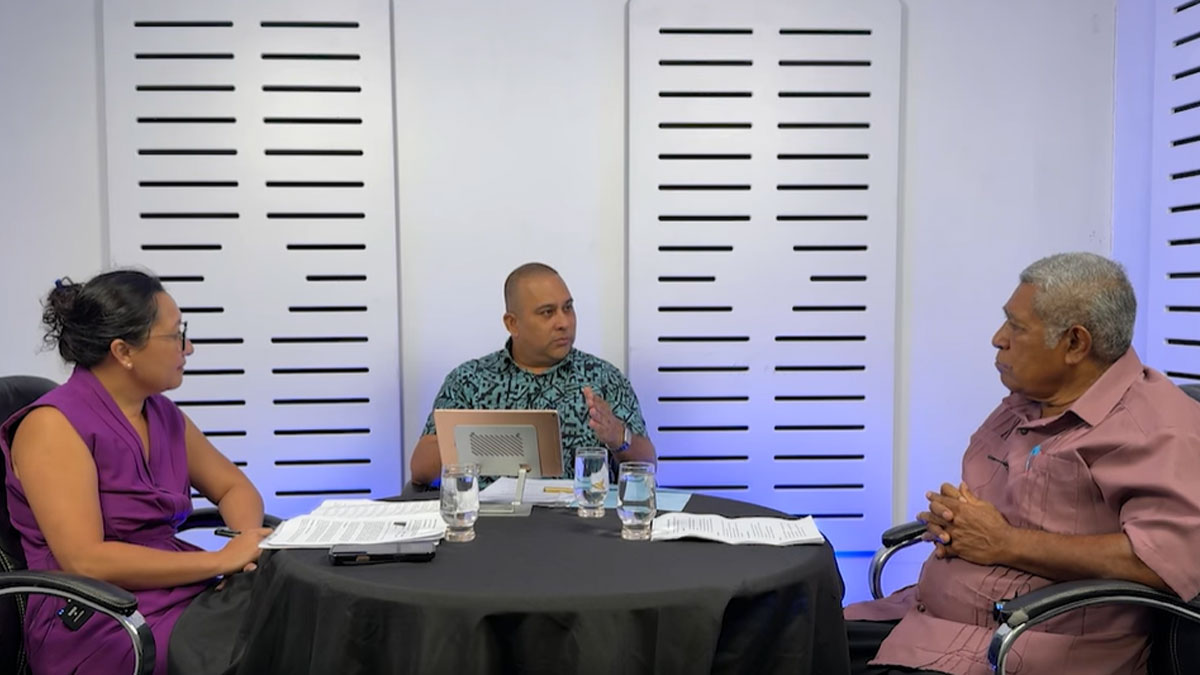
Representative of Catholic Education and former Principal, Ben Salacakau and parent, lawyer and representative of Chinese Education Society, Glenis Yee say if the 2025/2026 National Budget delivers meaningful increases to the Free Education Grant, restores flexibility for fundraising activities, and allows schools to charge targeted levies for specific needs, it will represent a fundamental shift toward sustainability.
They are grateful to Deputy Prime Minister and Finance Minister Professor Biman Prasad for acknowledging the urgent needs of the school management committees and promising positive announcements in Friday's budget.
Yee and Salacakau say Professor Prasad's recognition that the previous approach was "an election gimmick" that left schools in a "dilapidated state" validates what they have been documenting.
They say 80.4 percent of school administrators tell them the Free Education Grant is insufficient to meet basic needs.
Yee and Salacakau say the schools receive less than one dollar per day per student, and we clearly need this policy reset.
They stress we must be realistic about the scale of the challenge ahead.
They add this proposed budget measures, while welcome, is just the beginning of a long road to recovery that our schools desperately need.
The Australian Government-supported Infrastructure Assessment Report documented that 70 percent of schools in the Suva-Nausori corridor alone are overcrowded, with over half having structural defects.
Yee and Salacakau say these problems were not created overnight, and they will not be solved overnight.
They say for too long, our education system has been operating on a declining path, with infrastructure deteriorating, teacher morale falling, and student outcomes suffering.
They particularly welcome the Minister's acknowledgment that the previous government "dismantled the parents, teachers and school committee partnerships".
Yee and Salacakau say the religious and community organisations that built and manage 96 percent of our schools have always been willing partners in education delivery.
They say restoring these partnerships and treating school management committees as collaborators rather than obstacles is essential for long-term success.
They stress the children sitting in overcrowded classrooms today cannot wait for perfect solutions.
They remain committed to working constructively with the Government, and all stakeholders to ensure that these positive announcements translate into real improvements in our classrooms.
The education stakeholders say our children deserve nothing less than a world-class education system.
They say the budget submission has been made by Catholic Education, Methodist Church Education, Indian Education Society, Gujerat Education Society, Arya Samaj, TISI Sangam, Rishikul Maha Sabha and the Great Council of Chiefs. Out of the 916 schools in Fiji, only 13 are government schools.

Stay tuned for the latest news on our radio stations