There are too many talk fests but not enough action on preventing not only the HIV scourge but other public health catastrophes in Fiji. The focus should be on prevention, and that requires a society-wide campaign.
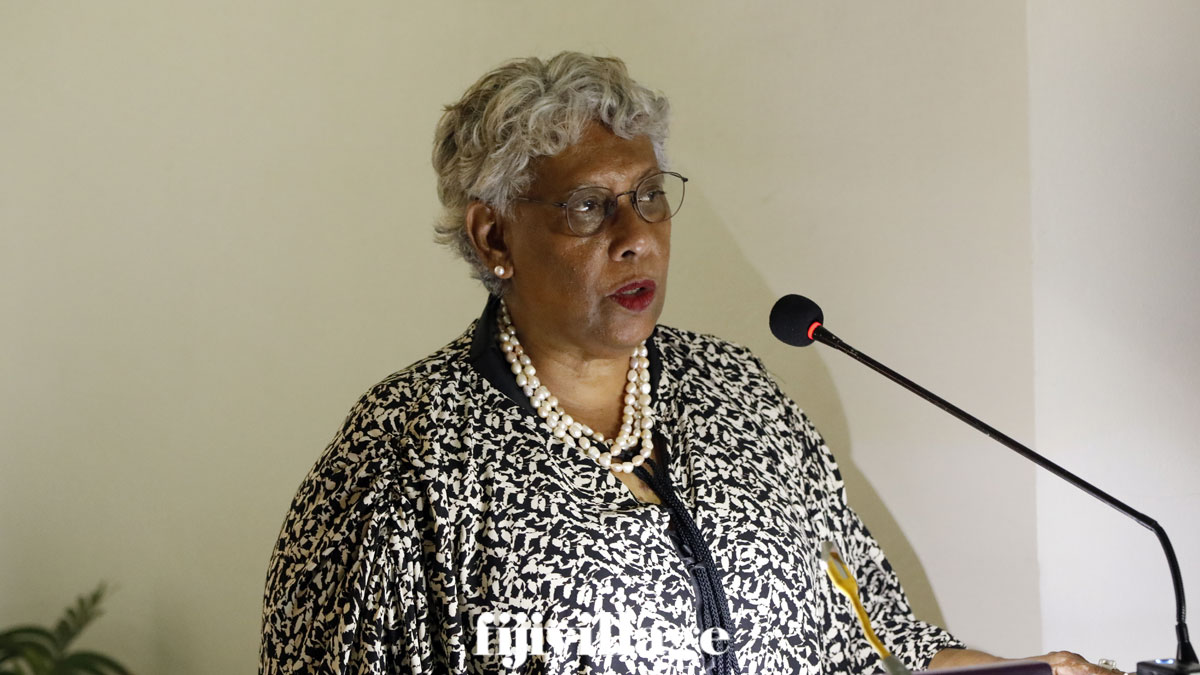
That is the clear message from Vice Chancellor of The University of Fiji, Professor Shaista Shameem who is calling for urgent attention to Fiji’s growing HIV outbreak, following the declaration made by the Minister for Health and Medical Services in January 2025.
Professor Shameem says Fiji, a small South Pacific nation with a population of less than one million, has become the focus of one of the world’s fastest growing HIV epidemics in recent years.
She says the increase in cases has become a major public health concern.
In reaffirming the University’s role in public health advocacy, Professor Shaista Shameem says it is clear that new strategies for managing Fiji's public health crises are needed.
She says for example, where are the epidemiologists in the public health system who can conduct research on the individuals and communities vulnerable to diseases that can be prevented and why these are not under control.
Professor Shameem says the HIV epidemic shows a society in crisis with leadership completely out of kilter with realities on the ground.
According to Dr. Samuela Korovou, Public Health Consultant and Senior Lecturer at The University of Fiji, the rise in HIV infections is linked to a spiraling trend of drug use, unsafe sex, needle sharing and a practice known as “bluetoothing” among youth today.
He notes that Fiji’s major challenge in managing the HIV outbreak is worsened by the increasing use of methamphetamine and the concerns surrounding needle sharing or bluetoothing.
He further stresses that HIV is not a death sentence and treatment is available, encouraging individuals nationwide to get tested and know their HIV status, and if positive, to seek treatment early rather than later.
He states that statistics show that the number of HIV/AIDS cases in Fiji increased to 552 from January to June 2024, marking a 573 percent rise compared to 2017.
Previous records showed 66 cases in 2020, 120 in 2022, and 500 people living with HIV in 2014.
The numbers have now soared to approximately 5,900, with 1,583 new cases recorded.
Of those recorded in 2024, 41 are aged 15 or younger, compared to 11 in 2023.
Dr. Korovou says HIV became an issue of concern after the COVID-19 crisis.
He recommends a range of public health strategies that have been implemented internationally, including opioid substitution pharmacotherapy, needle syringe exchange and distribution, condom and bleach distribution, outreach to injecting drug users, peer education programmes, social network interventions, new models of intervention, empowering faith-based organisations through youth divisions, review of Family Life Education in schools, community awareness through groups and by people living with HIV, stakeholder “Vuvale or Talanoa” sessions, and effective implementation of the HIV Surge Plan with close monitoring and evaluation.
The University of Fiji supports the call for these solutions and emphasises that Fiji’s HIV crisis must be addressed through approaches that are sorted the Pacific or Fiji way, because every problem has a solution.

Stay tuned for the latest news on our radio stations