Only Fiji has witnessed repeated coups, and each coup has two separate phases; first, the illegal overthrow of government and then the abrogation of the Constitution, which is unusual.
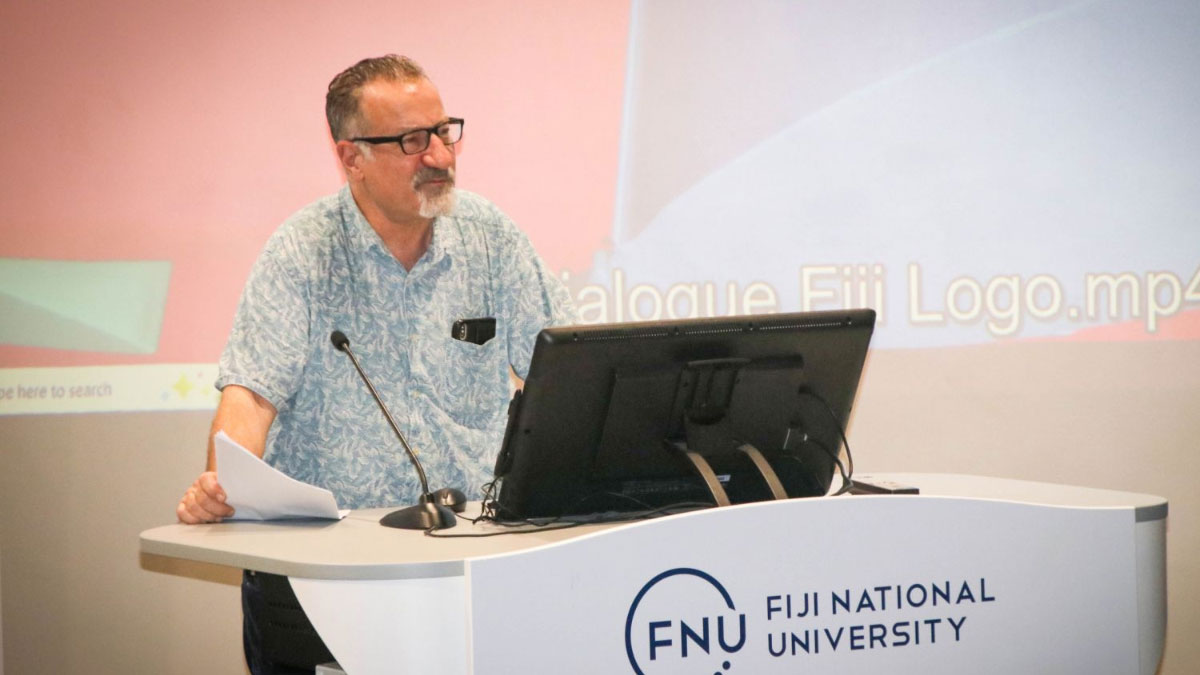
Professor of Comparative Politics of Victoria University of Wellington, Jon Fraenkel highlighted this during the Fiji Law Society Convention and the 2nd Pasefika Lawyers Collective Conference, held under the theme “Embracing Change: The Future of Law in the Pacific,” currently underway at the Crowne Plaza in Nadi.
Professor Fraenkel says one conclusion they can draw is that, in Fiji, coup perpetrators have carried out coups without fully envisioning the repercussions of their actions.
He says the December 2006 coup could be described as a “clean-up campaign” — as if it were akin to a rubbish collection day along the Suva waterfront.
He says that law courts are not particularly effective at dealing with coups or imposed authoritarian constitutions, not least because the first question they invariably ask concerns the source of their own jurisdiction — as seen in August here in Fiji.
Professor Fraenkel says, as a consequence, some legal scholars argue that courts should declare themselves unable to address such “meta-legal” political questions, however, that is a conclusion many judges are understandably reluctant to reach, for one reason or another.
He notes that many regimes owe their origins to revolutions or other unconstitutional political upheavals, prompting the question: how much time must elapse before courts are allowed to rule on the legality of a political order.
He says in 2025, the Supreme Court was asked by Fiji’s government to deliberate on the status of the 2013 Constitution.
Following the December 2006 coup, that Constitution had been promulgated by decree by a military-backed regime to replace the abrogated 1997 Constitution.
He says its amendment provisions were so contrived as to effectively rule out the possibility of change, requiring 75 percent support of all registered voters in a referendum.
Professor Fraenkel says coup leader and former Prime Minister Voreqe Bainimarama won two elections in 2014 and 2018, but narrowly lost a third in December 2022.
He says the incoming administration, comprising members of the former opposition, signalled a preference for constitutional change.
He also noted that the judges of Fiji’s Supreme Court had been appointed under the 2013 Constitution, and the questions posed to the Court by the government presupposed their endorsement of that foundational law.
Professor Fraenkel says without that endorsement, the judges would have no jurisdiction.
He adds that the Fiji Supreme Court was correct to strike down those draconian amendment provisions on the grounds that they were designed to prohibit constitutional change.
Click here for more stories on the Fiji Law Society Convention 2025

Stay tuned for the latest news on our radio stations