The Great Council of Chiefs acknowledges the Supreme Court’s advisory ruling issued today, which affirms the continued legal validity of the 2013 Constitution, while also recognising its "democratic deficit", acknowledging that it was “imposed on the people and not chosen by them.”
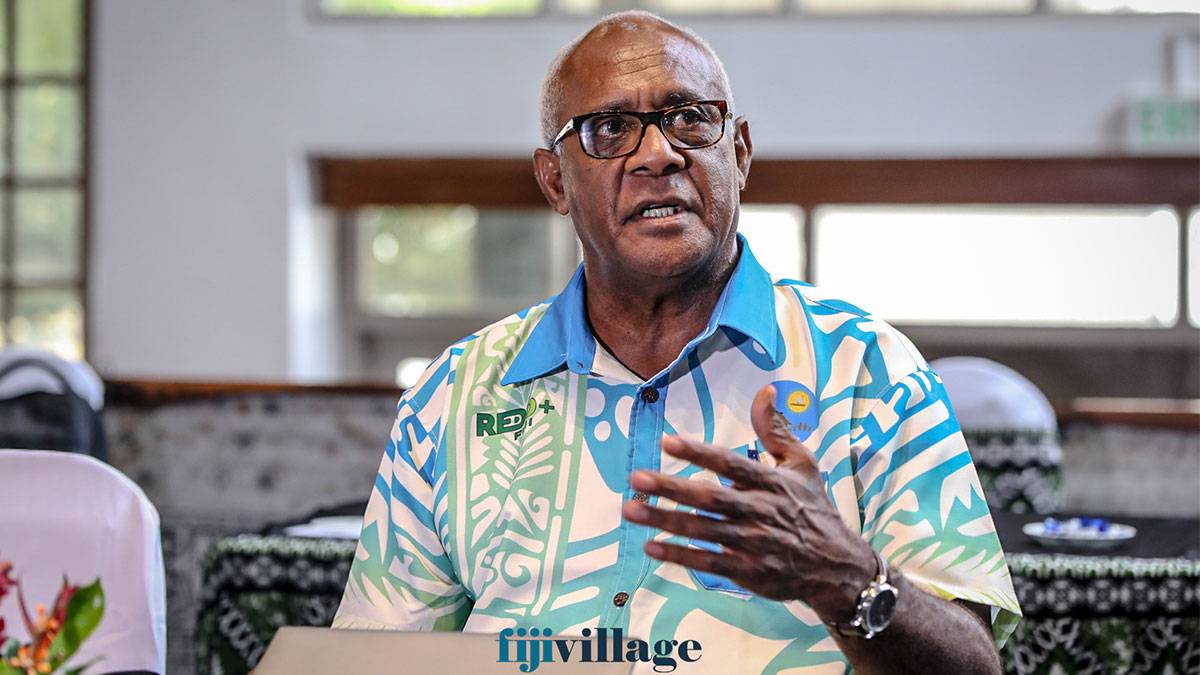
GGC Chairman Ratu Viliame Seruvakula says they note the Court’s reliance on the principles of common law in affirming the Constitution’s continued application—highlighting that it has served as the operating framework for governance, legislation, and national elections since its enactment.
Ratu Viliame says the Supreme Court also reaffirmed that certain provisions—particularly Sections 159 and 160 concerning the amendment process—are constitutionally entrenched and cannot be changed through ordinary parliamentary or referendum procedures.
He says while the ruling upholds the 2013 Constitution’s legal continuity, they continue to question its cultural legitimacy.
He emphasizes that this document lacks the customary dialogue and community endorsement integral to Fijian constitutional development—a process our traditions hold sacred.
The GCC Chairman says entrenchment without flexibility undermines democratic capacity.
He says the “unamendable” nature of certain provisions hampers their capacity to adapt and renew their constitutional framework in line with evolving societal needs.
Ratu Viliame says sustained resilience requires not rigidity, but a structure that balances protection with the wisdom to reform.
He adds that they respect the Court’s conclusion under the rule of law, and at the same time, the GCC stands for the voice of the iTaukei vanua and the broader Fijian sense of identity.
He says a constitution that endures must arise not just from legal machinery, but from lived values and communal consensus.
Ratu Viliame urges the nation’s leaders to consider pathways for inclusive and participatory constitutional review.
He says such a process must involve our chiefs, grassroots communities, civil society, the business community and industry professionals, women, the elderly, and youth, people living with disability, and others—ensuring that any future constitutional reforms are both legally sound, and culturally anchored and importantly, elevates and meaningfully addresses the needs of the most vulnerable in our society.
He also says today’s ruling reinforces that the 2013 Constitution remains Fiji’s supreme law, as interpreted under common law, and maintains entrenched provisions that preclude amendment under current procedures.
The GCC Chairman says, yet it also exposes an urgent democratic fissure—one that calls upon us all to chart a more inclusive, enduring, and culturally resonant constitutional future.
The Great Council of Chiefs reaffirms its commitment to supporting Fijians in honouring our shared heritage while advancing democratic values grounded in customary authority and collective will.