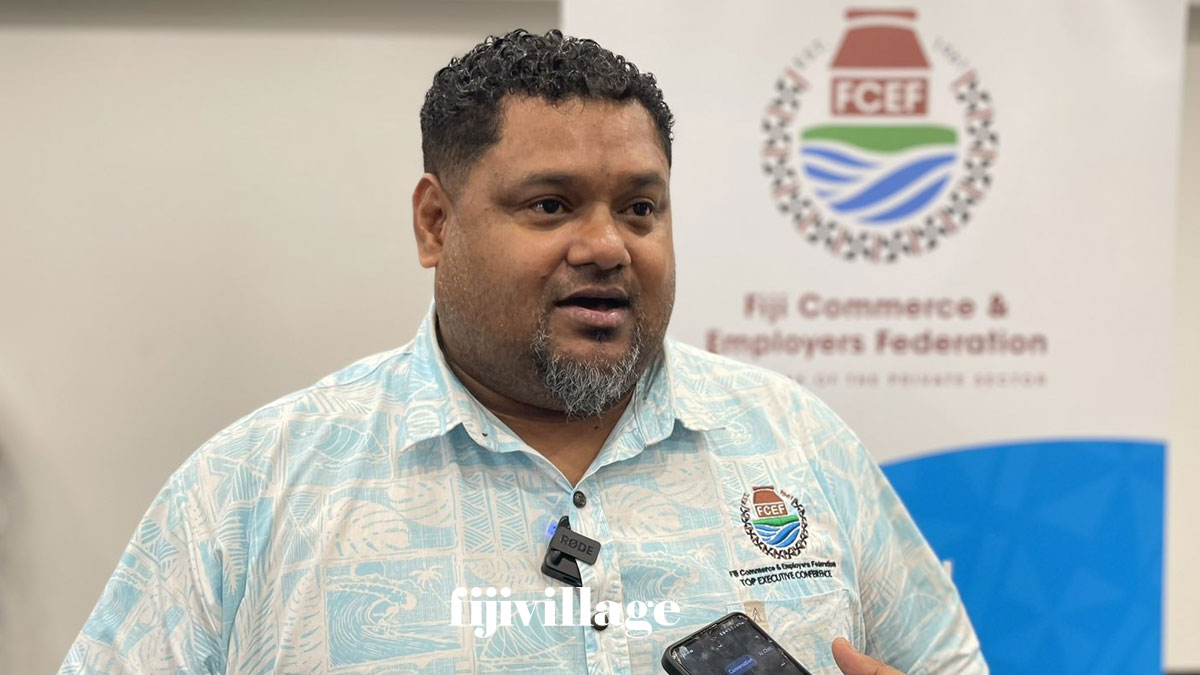
Fiji Commerce and Employers Federation CEO Edward Bernard says that matching or exceeding the financial offers made by Australia and New Zealand does not make economic sense, and if the Vice-Chancellor of the University of Fiji believes otherwise, then her understanding of economics is fundamentally flawed.
Bernard made this statement in response to claims by the Vice-Chancellor of the University of Fiji that employers are to blame for the current labour and skills crisis in Fiji.
He says branding FCEF as “selfish” is baseless and far from reality.
He says last month, the Fiji National Provident Fund reported an increase in average wages by 10 percent.
Bernard adds that this increase includes what employers are paying on top of the national and sector minimum wage rates in order to source, attract, and retain workers.
He says the Reserve Bank of Fiji has also reported that wage growth, coupled with an inflow of remittances, continues to support households’ ability to spend.
He says many factors have distorted the labour market, and that FCEF is continuously working with the Government, training institutions, and development partners to address this major crisis.
A stern message has been sent out to the employers in the country and that is for the private sector to face up to the reality that the labour crisis that it says it's facing is no one's fault but it's own.
University of Fiji Vice Chancellor Professor Shaista Shameem says she is disappointed with the remarks made by the Fiji Commerce and Employers Federation at the Post Budget public forum which she said were 'selfish'.
Professor Shameem says pay workers what they are worth and there won't be a skill or labour crisis in Fiji.
She says the workers, including white and blue collar workers of Fiji, as well as all others in paid work in all sectors, have never received fair recompense for their labour.
Professor Shameem says their labour was expended in the interest of the private sector, from colonial times to now, to make profits for that sector.
She says now that workers of Fiji have an opportunity to go overseas to earn better wages for themselves, including in foreign armies like the UK in the past and now in Australia, the private sector has no option but to wake up to the reality of internationalisation in the labour market.
The Vice Chancellor says the University of Fiji encourages its graduates to seek work where the salaries and wages are better aligned to living costs as every graduate has the responsibility to look after his or her own interest first, as no one else will. She adds we must future-proof our young people, so they can live well for themselves, their families and for happy retirement.
Professor Shameem says if they have better opportunities overseas where the pay and conditions of work are better, they should go for it.
She says nation building is very important but the nation should also ensure that the private sector looks after our people in their employment.
Professor Shameem says she is getting a bit tired of listening to industry representatives like FCEF who are constantly bemoaning skills and labour shortages, especially in the TVET sector.
She says not only is the TVET sector not the answer to the nation's problems, but this emphasis is leading the government wildly astray.
Professor Shameem says anyone who knew what is going on internationally is aware that TVET is not going to save the world from the economic crisis.
She says top influences such as JP Morgan have said that the big jobs are going to be in advanced manufacturing, like robotics and AI, as well as in health and teaching.
The UniFiji Vice Chancellor says blindly following the TVET sector for jobs is a sure shot way of having our people work their way to the bottom.
Professor Shameem says the University encourages its graduates to be careful about where to apply for jobs, first, jobs that paid a fair wage or salary including profit sharing, as through Labour Management Consultation and Cooperation Committees in the Employment Act of Fiji and, second, working for companies that facilitate the UN Sustainable Development Goals that Fiji is committed to.
She adds company members of the FCEF are audited annually by the University to see which ones facilitate the criteria to provide UniFiji's graduates with the best opportunities.

Stay tuned for the latest news on our radio stations