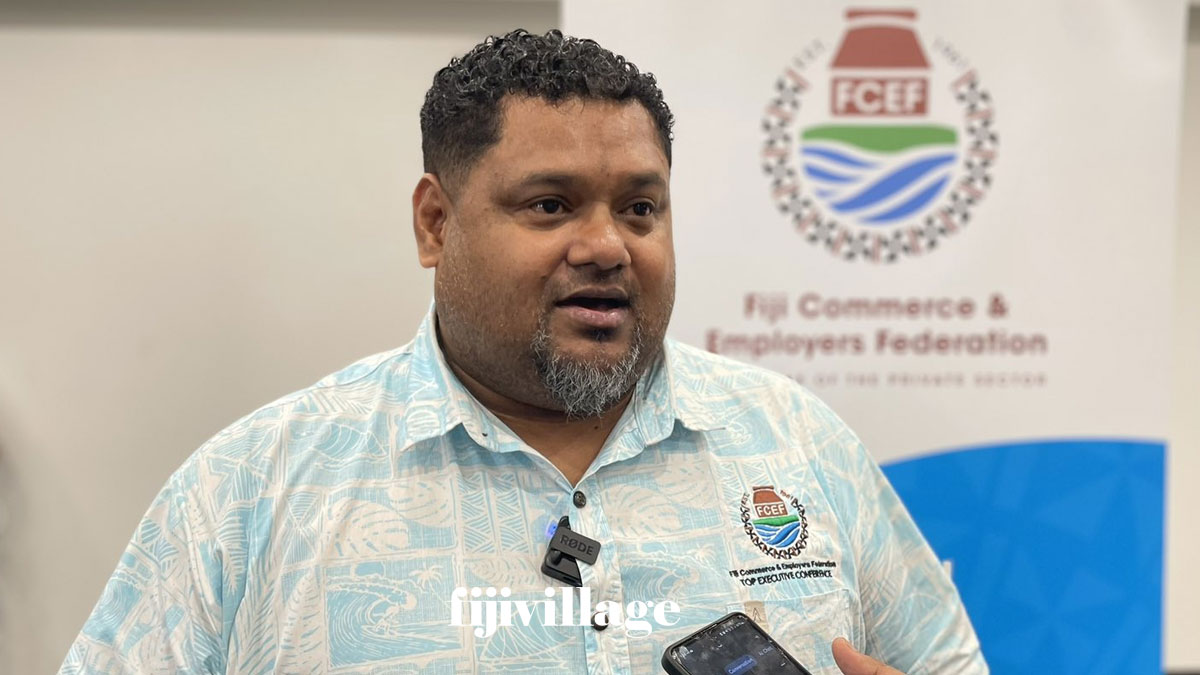
As we await the 2025/2026 National Budget announcement this Friday, Fiji Commerce and Employers Federation CEO Edward Bernard has outlined high costs, tax reforms, and skills shortages as key concerns affecting businesses and workers in the country.
Bernard says high cost of doing business in Fiji is one of the biggest challenges for the private sector.
He adds that this, combined with labour and skills shortages and low productivity, has made it difficult for many local businesses
He says he is hoping that the budget will provide incentives, such as tax breaks for local businesses and potential investors, to help cushion the high cost of doing business.
The CEO stressed the need to protect local industries, particularly manufacturers who produce goods for both the local and export markets.
He says these industries not only provide a significant portion of local employment but also contribute greatly to Fiji's export revenue.
Bernard also raised concerns about the impact of last year’s budget, which saw a 5 percent increase in corporate tax saying that, coupled with increases in VAT and the minimum wage, many businesses were hit hard.
He says he is hopeful that the government will consider reducing corporate tax rates to ease the financial burden on businesses.
The CEO also pointed out that protecting local manufacturers is crucial, which can be done through the regulation of imports.
He says there is a need to restore the 32% import duty on automotive batteries.
Bernard also expressed concerns about Fiji’s growing talent drain, saying that many skilled workers are leaving the country, with health and education being major factors influencing their decision.
He says that to address the challenges faced by our health, education, and infrastructure sectors, the government and the private sector must work together to ensure these essential services are adequately supported.
Bernard says he is hoping that the upcoming Budget would also address the issue of skills development.
He suggested reinstating the 1% Fiji National Training Council levy for employers to support the training and development of their staff.
The CEO raised concerns about the proposed minimum wage increase to $8 per hour by the Fiji Trades Union Congress.
He says this proposal is not sustainable, as there has already been a more than 80 percent increase in the minimum wage over the last five years.
Bernard also highlighted the critical need for government investment in Fiji’s public transport system, saying that traffic congestion means workers spend more time commuting, which affects productivity.
He says that it is also important to develop the country’s sea ports, as 90 percent of Fiji's trade passes through these ports.
He says the lack of investment in port development has been a long-standing issue.
He adds the potential revenue it could generate for the country is enormous.
Deputy Prime Minister and Minister for Finance, Professor Biman Prasad, will deliver the 2025/2026 National Budget at 10am this Friday.

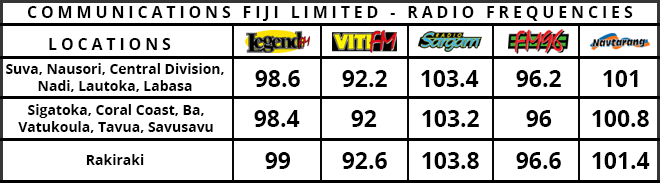
Stay tuned for the latest news on our radio stations