Narco-subs carrying a huge amount of drugs found in the Pacific is now demonstrating the need for effective maritime security cooperation more than ever before.
It has been established that Narco-subs, first used by Colombian cartels in the 1990s, remain a primary method for transporting large quantities of drugs.
Colombia, the world’s largest producer of cocaine, set records last year in production and coca cultivation. Australia, with the highest per capita cocaine use globally, is a key destination for traffickers.
Narco-subs are small, low-on-the-surface, semi-submersible vessels that can make their way across vast oceans with no stops. The Lowy Institute reports that in recent Australian maritime security conversations, it would be fair to say that submarines have featured fairly prominently.
This is after a 62-country operation busted six “narco-subs” carrying a whopping 1000 tonnes of marijuana and 400 tonnes of cocaine bound for Australia.
The value of the drugs was estimated at AU$1.5 billion.
It shows narco-subs are an emerging security risk.
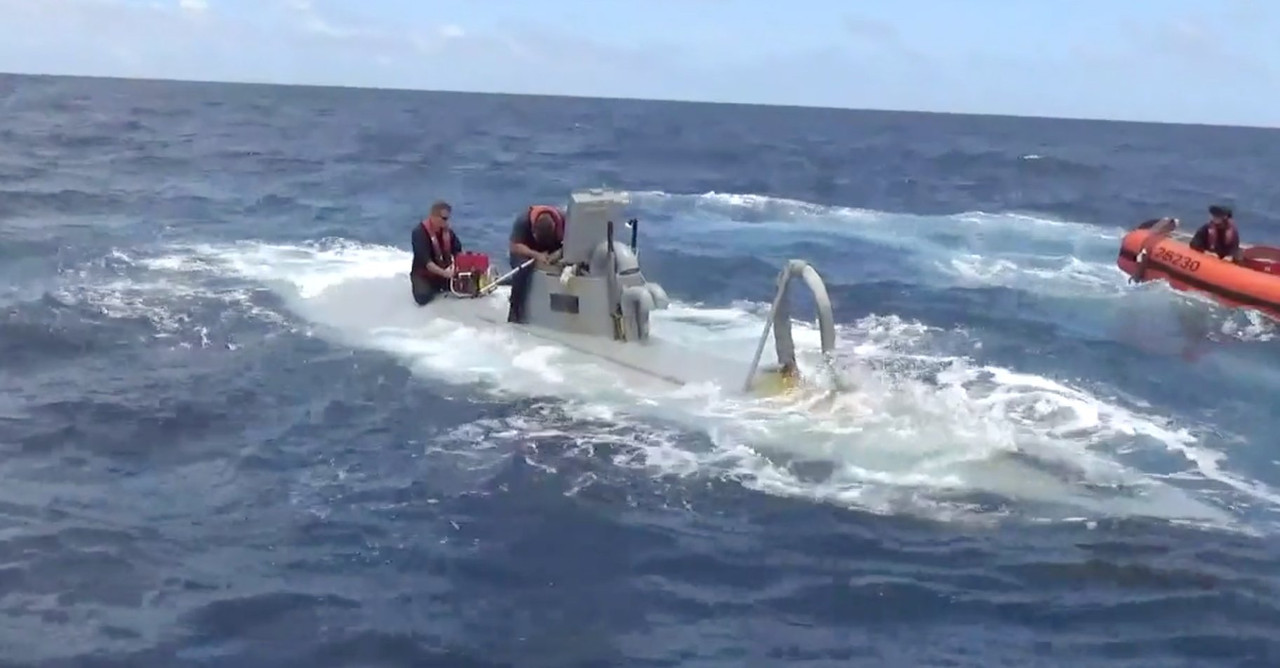
The Lowy Institute says it is a law enforcement adage that criminals try to stay one step ahead of authorities, and technology is one way of doing so. These small, low-on-the-surface, semi-submersible vessels can be challenging to detect and can make their way across a vast ocean with no stops – thereby limiting opportunities for interdiction by authorities.
The local consequences of the drug trade across the Pacific are significant.
Criminal organisations, particularly South American cartels, are not working alone.
Reports say the cartels are complex co-operatives made up of criminals from different organisations seeking to leverage economic advantage over the drug trade, with influence in different places, working together towards a common cause – profit.
They are, by nature, international commercial ventures, and like any other business, they are willing to invest capital.
Alarmingly, despite being discovered near the uninhabited French-controlled atoll of Clipperton Island, around 1000 kilometres south-west of Mexico, one of the vessels was apparently destined to deliver its five-tonne load of cocaine to Australia, more than 11,000 kilometres west across the Pacific.
The reason is simple: in Australia, cocaine attracts a reported premium of around AUD$240,000 per kilogram – six times higher than the US price for the same product.
It has also been revealed that while semi-submersible technology is relatively new, the trans-Pacific route is not. They say for more than a decade, authorities have been combating narcotics transshipment through remote paths and lesser-populated islands.
Heroin, cocaine, and the precursors for methamphetamine have crossed the Pacific Ocean, sometimes washing up or intentionally landing on Pacific Island shores.
Some Pacific states have become places of re-packing drugs for export.
The local consequences of the drug trade across the Pacific are significant. Fiji, Guam and Tonga have seen clandestine labs develop, hooking many locals on meth in countries where there is little drug addiction assistance.
The Pacific Islands Forum this year launched its Regional Transnational Organised Crime Strategy, where importation, transshipment, precursor trafficking, domestic trafficking and usage of illicit drugs were noted as the most prevalent form of transnational criminal activity in the region.
The Lowy Institute says large-scale busts this year in Fiji and Tonga alone demonstrate that Pacific Island countries are taking transnational crime seriously.
It says it also proves their detection, investigation and prosecution can deter further crime of that type – but criminal actors are always looking for the next step to evade the law.
They say their research project on maritime security cooperation highlights the need for coordination between Pacific states and partners, particularly foreign actors who without coordination are “repeatedly identified as undermining regional security” by Pacific leaders.
They say maritime security is often left as a conversation just held between militaries – of which there are only three in the Pacific Islands region – Fiji, Papua New Guinea and Tonga (although Vanuatu has a paramilitary).
However, the Institute says all Pacific Island states are connected by and rely upon the ocean for food security, economic security, and their relationship with culture and ancestors.
Prime Minister, Sitiveni Rabuka along with other Pacific Island leaders have called for an “ocean of peace”, and while the precise meaning of this concept is still to be clarified, it’s clear that human security issues are the priority for Pacific Island countries.

The Lowy Institute says maritime security must move beyond militaries, but be central to engagement in the region from a Pacific perspective.
It says as the debate heats up about future AUKUS submarines for Australia, below the surface, it is the narco-subs that deliver direct security challenges now.
The Institute says by prioritising resources towards existing and emerging maritime security issues that the Pacific want to see addressed, Australia can demonstrate it is listening to Pacific partners
Click here for stories on the Drugs Situation in Fiji

Stay tuned for the latest news on our radio stations