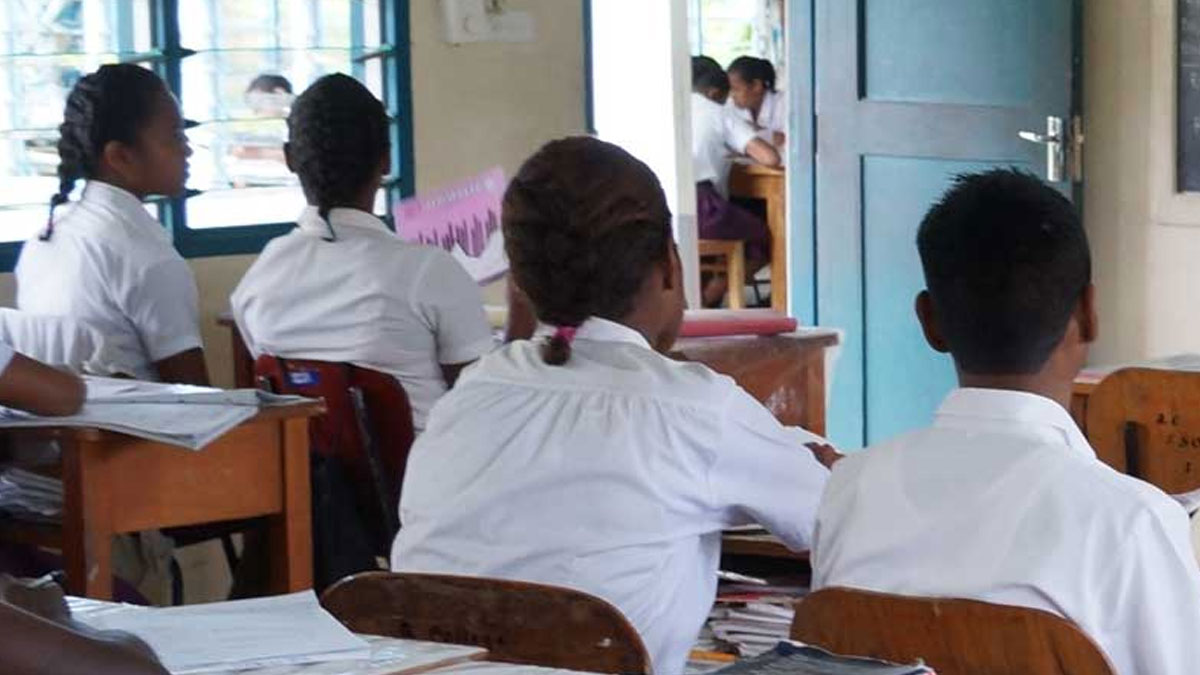
Fiji's future is built in its classrooms, but those classrooms are crumbling. Our survey of 107 school leaders nationwide found that 80.4% deem the Free Education Grant (FEG) insufficient to meet basic needs, let alone repairs.
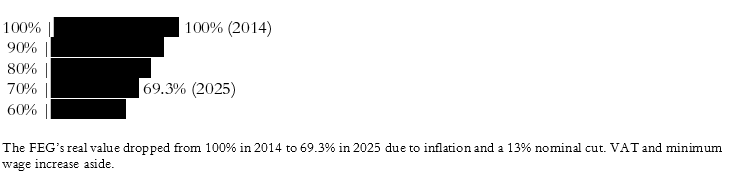
FEG Purchasing Power (2014-2025)
The Australian Government-supported Infrastructure Assessment Report for Suva-Nausori Schools validates this. In assessing 86 urban schools, it found 70% were overcrowded (requiring 249 new classrooms). Over half have structural defects - cracks, corrosion, potential asbestos - while sanitation facilities fail to meet basic student to toilet ratios. Primary schools fare worse. These issues, severe in urban areas, are likely exacerbated in rural and maritime schools. We’ve seen the impact of these conditions on students and teachers. Imagine, Tomasi, a Year 9 student, who sits in the corridor outside his overcrowded classroom, his focus disrupted - this reflects the daily struggles of our children.
Those crumbling classrooms cannot be rectified overnight or fixed solely through increases in the FEG, vital as those increases are. Addressing infrastructure deficits and resource gaps accumulated over the years requires a multi-faceted approach that first acknowledges the scale of the problem and empowers all stakeholders to deal with it.
A Generation at Risk
The urgency cannot be overstated. Each day we delay reform and repairs, we deepen infrastructure needs, widen inequities, and compromise the educational outcomes of our children. The time for incremental adjustments has passed; decisive action is needed to reverse this crisis. Policy reform can occur now, it need not wait for a new Education Act.
In our continued efforts to address this crisis, and following our previous appeal, we have formally presented our comprehensive budget submission, and we are in discussions with Ministry of Finance officials regarding Budget measures. This is significant and we remain hopeful that these efforts will lead to the decisive action our schools so desperately need. Our Heritage: A Community-Led System
Strengthening the partnership between Government and the Churches/community groups managing our schools is crucial. Remember that Fiji’s education system is truly remarkable - 96% of our schools were built by parents, local communities or religious organisations. The founders of those schools had the foresight to recognise that their future, and Fiji’s, would be shaped by the education opportunities that they provided their children. They worked hard, donated land and resources, and fundraised to build schools which also allowed for the preservation of their values – the Catholic Church manages over 60 schools, the Methodist Church, over 30, the Chinese Education Society, 3. In a way, it was an act of faith, a promise to the future. The results were self-evident, and Fiji’s education system was a model for the region producing literacy rates of 98%, among the highest in the world. Now, only 57% pass Year 8 English and 41%, Math. Because how can students concentrate if they are sitting in corridors, worried about a leaking ceiling or termite infested classrooms. The proposed approach
We need that bold, shared approach — uniting Government, Churches, and communities— to rebuild safe, modern classrooms for our children. The reality is that funding 901 schools across Fiji, each with its own unique set of needs and challenges, stretches the State’s resources. Depending solely on external support to solve these issues also sends a concerning message to our children about our own commitment and capacity for self-reliance.
Rebuilding our education system requires a multi-pronged strategy that empowers all stakeholders: · Respecting the partnership with communities and religious organisations: The Ministry of Education can focus on core functions like curriculum development, teacher resourcing and national standards which will allow it to amplify its impact. Schools should manage their operations without rigid controls
Given the pressing funding gaps, particularly for critical infrastructure, we must consider additional funding methods.
The ban on school fees inadvertently prevents solutions to those urgent problems.
Fiji’s Constitution allows for practical limits on free education with qualifiers suggesting the right to free education is not absolute but dependent on the state’s capacity and resources.
The Prime Minister recognised this in August 2023 and stated that schools could levy fees, however restrictions on fees remain.
The reality is that the State cannot sufficiently fund the operations of 901 schools nationwide.
We recommend exploring the possibility of allowing schools, through their management bodies and in consultation with their communities, to levy specific, targeted fees for clearly defined purposes like infrastructure repairs or essential technology upgrades.
This can be implemented transparently with clear communication, and mechanisms to support students from low-income families ensuring no child is left behind, like the fee remission systems that existed previously.
This approach, combined with increased government investment and greater fundraising freedom, can accelerate recovery from years of chronic underfunding and ensure safer, better-resourced schools for our children.
Investing in education means investing in Fiji's future.
By increasing government funding, respecting our unique community-led system, enabling local fundraising, and allowing transparent, targeted fees we can rebuild our schools and empower our communities, just as our forefathers, and mothers, did for us. This is our shared responsibility.
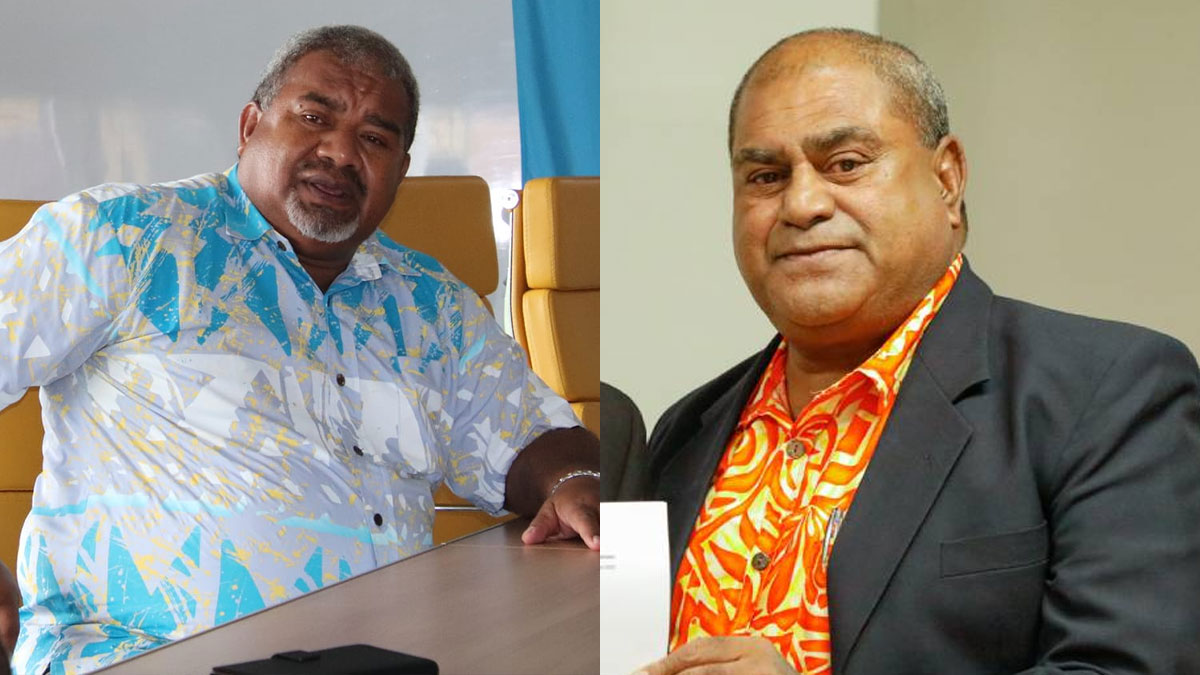
Ben Salacakau is the Chief Operating Officer of the Archdiocese of Suva. Glenis Yee is the Deputy Chairperson of the Chinese Education Society and a Partner at Munro Leys
For more Yellow Bucket opinion pieces click: HERE
Opinion Note
Long time fijivillage users may remember the Yellow Bucket opinion column that ran in the years leading up to the 2006 coup. Well following the repeal of the MIDA Act we are delighted to announce that YB is back!
The Yellow Bucket is something of a Communications Fiji Ltd institution…. Yes it exists…. A real Yellow Bucket that the CFL team and visitors gather around after work to drink grog and discuss the day. Legend has it that every Fiji Prime Minister has at some stage enjoyed a bilo from the bucket.
The YB column ran from 2003 to early 2007 when it was shut down under extreme pressure from the military government. Later the MIDA Act specifically forbade any use of nom de plums or pseudonyms requiring every published article to have a named author.
So why the pseudonym. The YB column was and will continue to be a product of group thinking and discussion, so it would be impossible and a little unfair to attribute it to a single author.
It will continue to provide fact-based opinion offering context to the complex and constantly unfolding story, that is our home Fiji. We stress, FACT BASED…. No rush to judgement here ….. Our aim will be to run weekly but that could change depending on the situation.

Stay tuned for the latest news on our radio stations