One of the most talked-about topics this year is the potential of bamboo as a low-carbon, cyclone-resilient building material.
As the Pacific braces for another cyclone season, experts are calling for faster adoption of sustainable, storm-resistant building materials, with bamboo emerging as a serious contender.
The appeal comes ahead of the Pacific Islands GIS and Remote Sensing User Conference, to be held from the 24th to 27th of this month at the USP Japan–Pacific ICT Centre.
The annual gathering, hosted by the Pacific GIS and Remote Sensing Council (PGRSC), will draw more than 300 delegates from across the region and beyond.
Under the theme “Building and Enhancing Geospatial Networks in the Pacific” this year’s event will focus on how satellite imagery and mapping technologies are helping island nations plan safer communities, protect coastlines, and manage natural resources under growing climate pressure.
Bamboo already has a proven track record in countries like Nepal, the Philippines, and India.
The Global Green Growth Institute (GGGI), in collaboration with Forestry Fiji, recently completed the first-of-its-kind bamboo resource inventory for Naitasiri Province, in Fiji.
The findings, which used satellite imagery to map bamboo resources, will be presented at the Pacific Islands GIS and Remote Sensing User Conference, and show bamboo’s significant potential for climate-smart development.
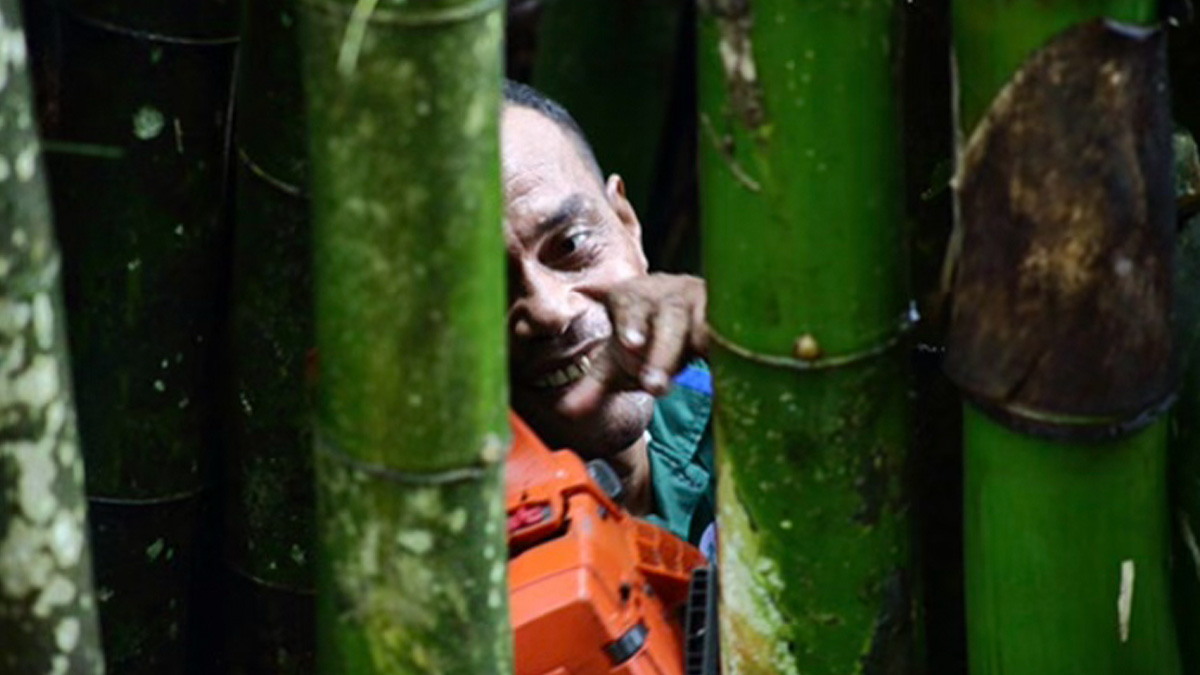
Field work was also an important component of mapping the Naitasiri bamboo.
The teams needed to measure the stems within the clumps, a demanding task that required cutting and extracting them for assessment.
Because dead bamboo can hold water, making it heavy and unstable, safety precautions were vital to prevent bamboo falling from heights of up to 20 metres.
At recent World Bamboo Day celebrations in Fiji, Minister for Fisheries and Forestry, Alitia Bainivalu, described bamboo as “the timber of the 21st century.”
Research by Fiji National University’s Asheel Kumar and Dr Patrick Singh backs that claim, showing that Bambusa vulgaris, known locally as Bitu ni Vavalagi, is as strong as traditional timber.
Bamboo is fast-growing, renewable, and, when used in buildings, it continues to store carbon.
In Fiji, it can even be harvested and transported with almost no carbon footprint, for example, by using bilibili rather than motorised transport.
Despite its abundance, much of Fiji’s bamboo remains unused.
Tapping into this resource could create new sources of income for rural communities while supporting a more sustainable, resilient built environment.