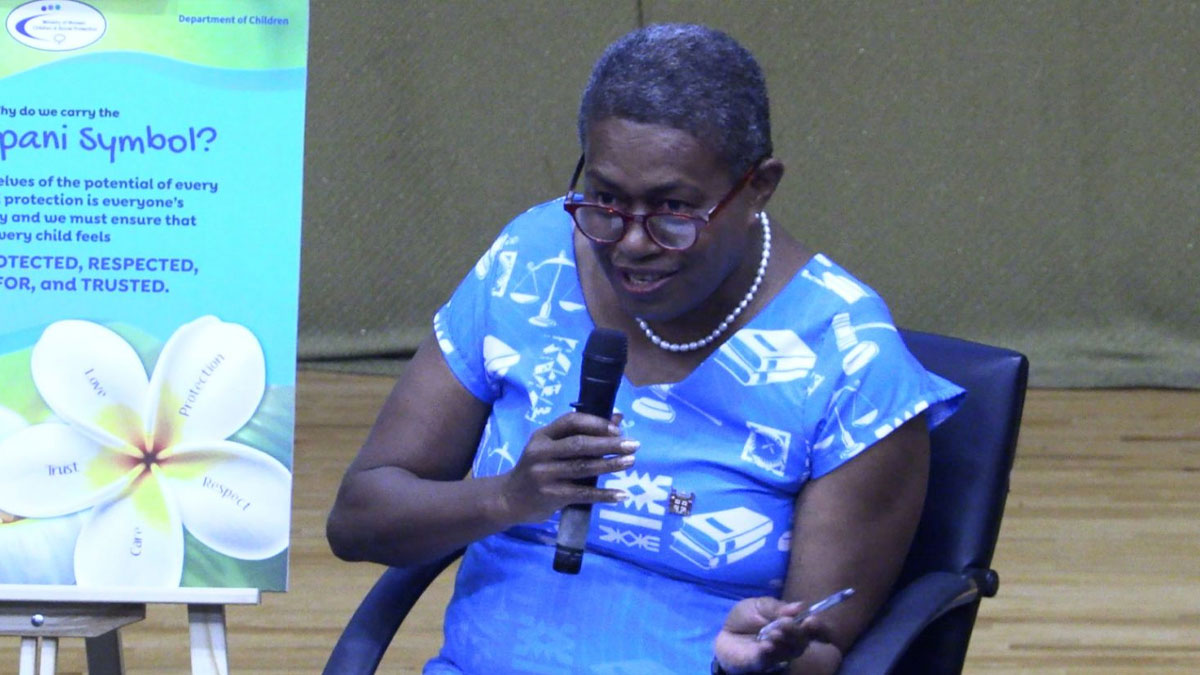
Permanent Secretary for Justice and Psychologist Selina Kuruleca says she sees corporal punishment not only as a legal violation but also as a symptom of a deeper challenge in our education ecosystem.
While speaking during the National Conversation on Corporal Punishment held at the USP Japan ICT Centre, Kuruleca says corporal punishment is unlawful but, more importantly, unnecessary.
She says that in many schools during the colonial era, scrubbing, weeding, or extra chores were used as forms of punishment.
She adds that even while caning was still being practised, teachers often turned to milder substitutes such as the naughty corner, standing on one leg, pulling ears, etc.
Kuruleca says these were seen as gentler options, but the psychology remained the same — pain, shame, and humiliation were used as teaching tools.
She also highlighted that when teachers or the Fijian Teachers Association call for the return of corporal punishment, it often stems not from cruelty but from frustration.
The Permanent Secretary says this frustration is a response to overcrowded classrooms, limited counselling services, and the emotional exhaustion of trying to teach without proper tools.
She says we must not blame teachers but instead invest in them and in building their capacity.

Stay tuned for the latest news on our radio stations