Consumption activity remains strong so far into the year in Fiji fuelled by higher disposable income and steady remittance inflow.
The Reserve Bank of Fiji says in the year to August, net Value Added Tax collections (3.3%), total vehicle registrations (23.9%) including for both new (29.3%) and second-hand (19.9%) vehicles, consumption related loans (31.2%), and electricity consumption (1.7%) all grew over the year.
The RBF also says that in the months ahead, consumption activity could strengthen further, supported by a reduced VAT rate and improved disposable income.
New investment loans rose by 4.2% in the year to August, led by higher lending to the real estate sector and households for investment homes.
Domestic cement sales in August alone was higher over the month (5.0%) and year (17.4%).
Building permits issued cumulative to June also points to an increased uptake of projects, as both the number (15.9%) and value (2.8%) of permits issued rose.
Tourism earnings bounced back in the second quarter of 2025, registering a 2.3 percent growth cumulative to June.
Inward remittances grew by an annual 6.3 percent in the year to August, with majority of the funds remitted via the mobile money channel.
The annual headline inflation dropped further to -3.5 percent in August, mostly reflecting the VAT rate reduction impact on applicable items in the Consumer Price Index basket, along with the bus fare subsidy that came into effect on 1st August.
Lower prices were recorded for the food and non-alcoholic beverages, transport, cooking gas and other fuel categories which outweighed annual price increases in the alcoholic beverages, tobacco and the restaurants and hotels categories.
Foreign reserves settled at around $3.8 billion in September, sufficient to cover 6 months of retained imports and is expected to stay adequate in the medium term.
The RBF says downside risks to the outlook persist due to the ongoing geopolitical tensions globally which can disrupt supply chains, impact global commodity prices and can potentially impact Fiji through the tourism, remittance and trade channels.
The approaching cyclone season adds a downside risk, with potential disruptions to infrastructure, agriculture and economic activity.

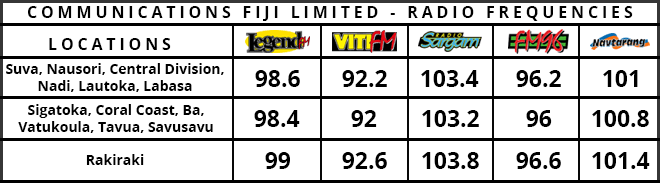
Stay tuned for the latest news on our radio stations