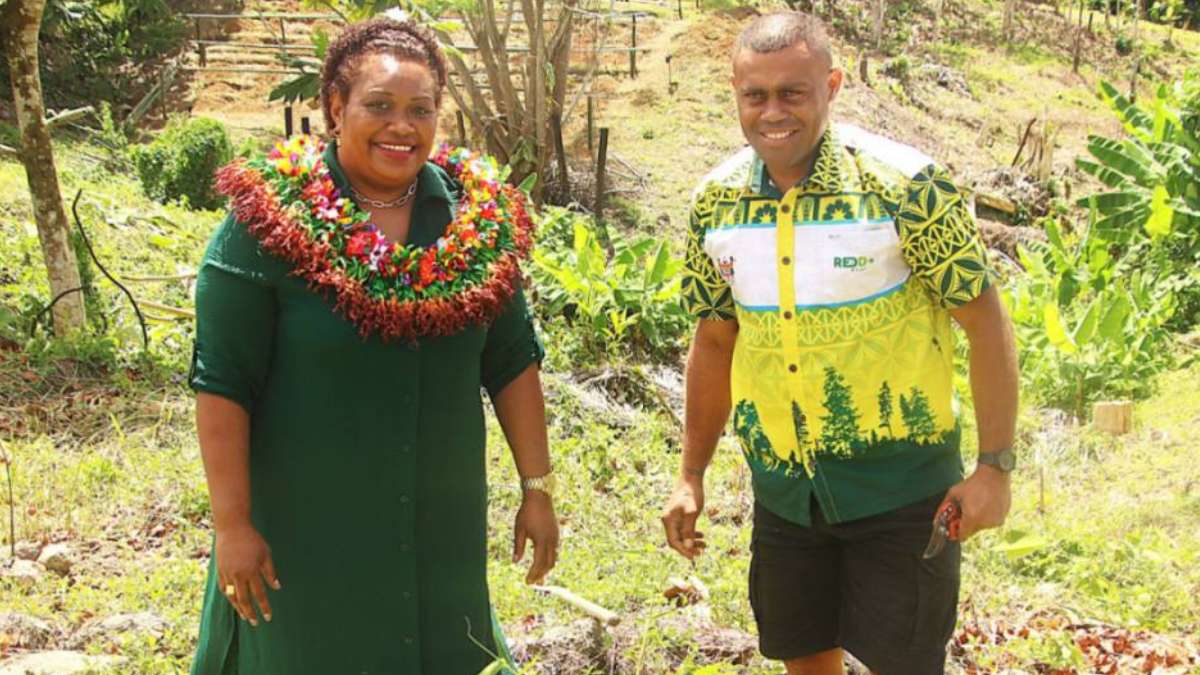
Bamboo is rapidly emerging as a game-changing resource for Fiji, offering renewable, climate-resilient, and economically inclusive solutions that could revolutionise housing, livelihoods, and sustainable development across the nation.
This was highlighted by Minister for Forest and Fisheries, Alitia Bainivalu, at the Fiji National University’s Koronivia Campus during the World Bamboo Day 2025 celebrations.
She describes bamboo as the timber of the 21st century, emphasising its rapid growth, exceptional strength comparable to steel, and its resilience against natural disasters such as cyclones and earthquakes.
The Minister outlined three key opportunities bamboo presents for Fiji, which include affordable, disaster-resistant housing, support for rural livelihoods and economic empowerment, and sustainable alternatives to man-made materials like steel, cement, and plastics.
She says significant progress has been made through the Ministry’s Research and Development initiatives and the Fiji Bamboo for Adaptation and Mitigation Project, supported by international partners including the New Zealand Ministry of Foreign Affairs and Trade, the Government of Ireland, and the Indonesian Embassy in Fiji.
The Minister says research confirmed that Bambusa vulgaris, locally known as Bitu Ni Vavalagi, has the strength suitable for structural use.
She says Fiji’s first rapid bamboo inventory assessment, conducted between May and July 2025 in Naitasiri Province, confirmed sufficient bamboo resources to support a local construction supply chain.
She adds that two policy recommendations are now being adopted by the Fiji Government to integrate bamboo into national forestry and construction frameworks.
Bainivalu also mentioned the exploration of Cement Bamboo Frame Technology, successfully tested in other countries, with feasibility studies currently underway in Fiji.
She says training programmes supported by the Indonesian Embassy will build skills in bamboo cultivation, harvesting, and product development.
The Minister praised the collaboration between government agencies, FNU, the Fiji Bamboo Association, private sector partners, and international organisations, thanking them for their role in advancing the bamboo industry.
She says these achievements mark only the beginning, and with continued support, bamboo can become a cornerstone of Fiji’s sustainable economy—providing climate-resilient housing, unique products, and new economic opportunities.

Stay tuned for the latest news on our radio stations